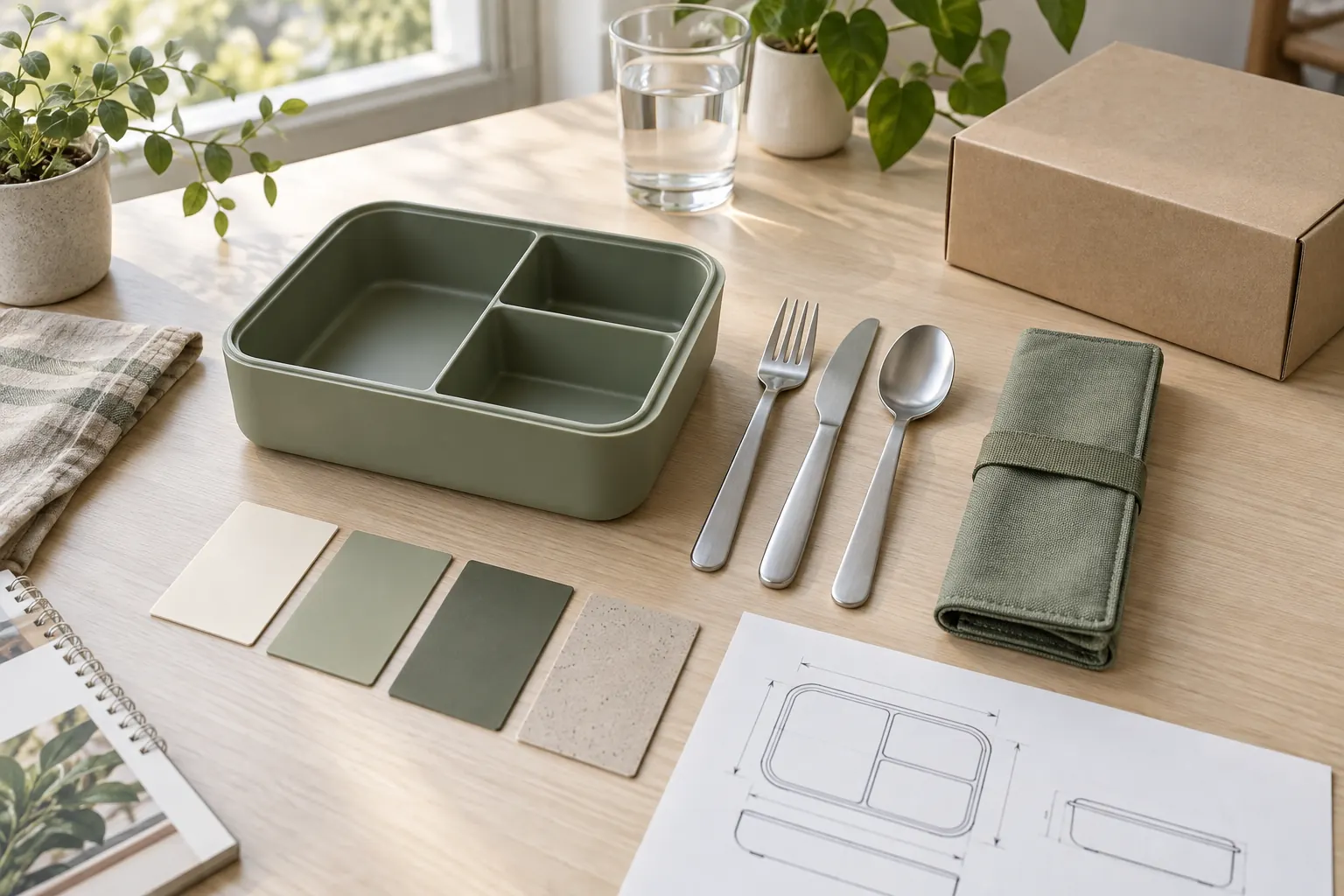
A custom tableware RFQ works best when it communicates the buying decision, not only the product idea. At Naike Tableware, a brief is easier to review when a buyer separates confirmed requirements from questions that still need technical discussion. That distinction lets a supplier identify assumptions before they become quote differences, sample revisions, or packaging changes.
This guide is for importers, retailers, brand owners, distributors, and product teams sourcing lunch boxes, portable dining sets, cutlery, cups, carry bags, or coordinated retail packs. It explains which details matter at the first quotation stage, what can be decided later, and how to compare supplier responses fairly.
You do not need a finished engineering drawing to start. You do need enough information for a supplier to understand what is being quoted, how the product will be used, and which parts of the project are fixed versus flexible.
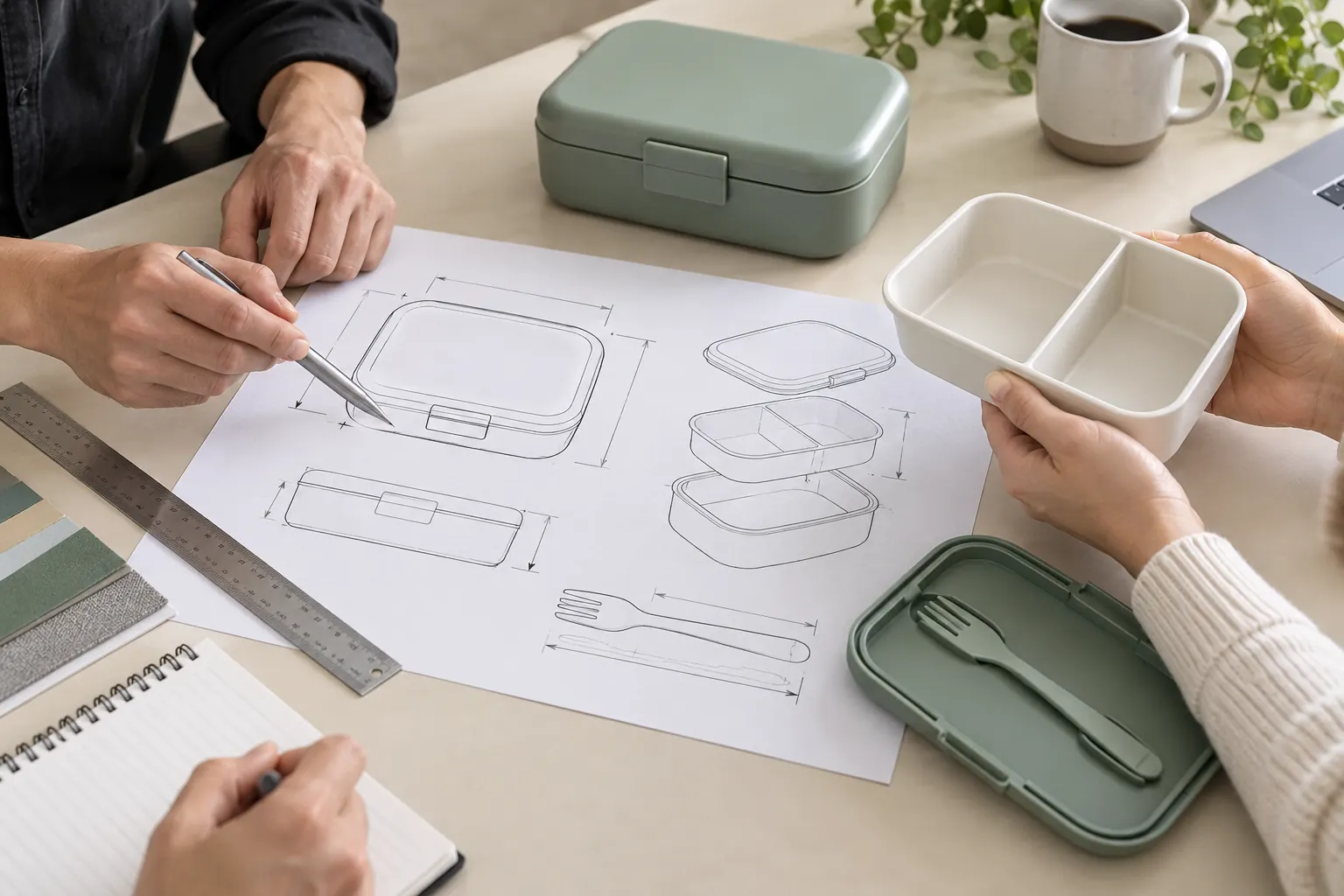
Why a Custom Tableware RFQ Needs More Than a Product Name
A line such as “custom lunch set, 10,000 pieces” is not yet a complete quotation basis. It does not say whether the quantity applies to each component or each set, whether the buyer expects an existing design or a new structure, or whether a carry pouch and retail box are included. Different suppliers may fill those gaps with different assumptions and return prices that are not comparable.
The RFQ should define the unit being purchased. A “set” might contain one lunch box and one utensil kit, or it might include plates, cups, a bottle, and a bag. Identify each item, the number of pieces per set, and any components that are optional or sold separately.
It should also describe the use case. A school lunch product, an office meal container, and a picnic dining kit can share components but have different priorities for portability, cleaning, packed volume, retail presentation, and user experience. The intended use gives the supplier a reason behind the specification, not just a list of dimensions.
Finally, a useful request separates “must have” from “nice to have.” That helps the supplier recommend an alternative without silently changing a critical requirement. It also makes it easier for your team to decide whether a lower-cost option is acceptable.
Start With the Set Architecture and User Scenario
Custom Tableware RFQ: define the set before requesting a price
Describe how many people the set is intended to serve and where it will be used. Specify whether it is designed for one person, a family picnic, travel, a workplace meal, or a retail gift program. If the product is used outdoors, say whether the user carries it by hand, packs it in a backpack, or transports it in a vehicle.
Write the configuration as a component list rather than a broad label. For example: one divided food container, one lid, one removable insert, one fork-spoon combination, and one textile carry pouch. If the set includes plates or cups, state their count and whether their sizes should nest or stack.
Indicate the purchase unit and quantity basis. “5,000 sets” is more useful than “5,000 pcs” when every retail unit contains multiple components. If the order may be split across colors, designs, or destination markets, note the anticipated split or label it as pending.
Where available, attach a reference image, sketch, benchmark product, packaging photo, or three-dimensional file. Explain what the reference is meant to communicate: appearance, function, dimensions, assembly, or packaging. A visual reference should not be treated as permission to reproduce another brand’s protected artwork or product.
Materials, Color, and Food-Contact Requirements
Name the preferred material for each component if it has already been selected. A set may combine a polypropylene food container, stainless steel cutlery, a silicone seal, and a textile carry pouch. Do not describe all of those parts with one generic material term.
If you are open to alternatives, say so and provide the decision criteria. A buyer might prioritize weight, rigidity, appearance, price target, cleaning method, or a specific market requirement. The supplier can then explain trade-offs, but the final material choice should be confirmed by component and documented in the approved specification.
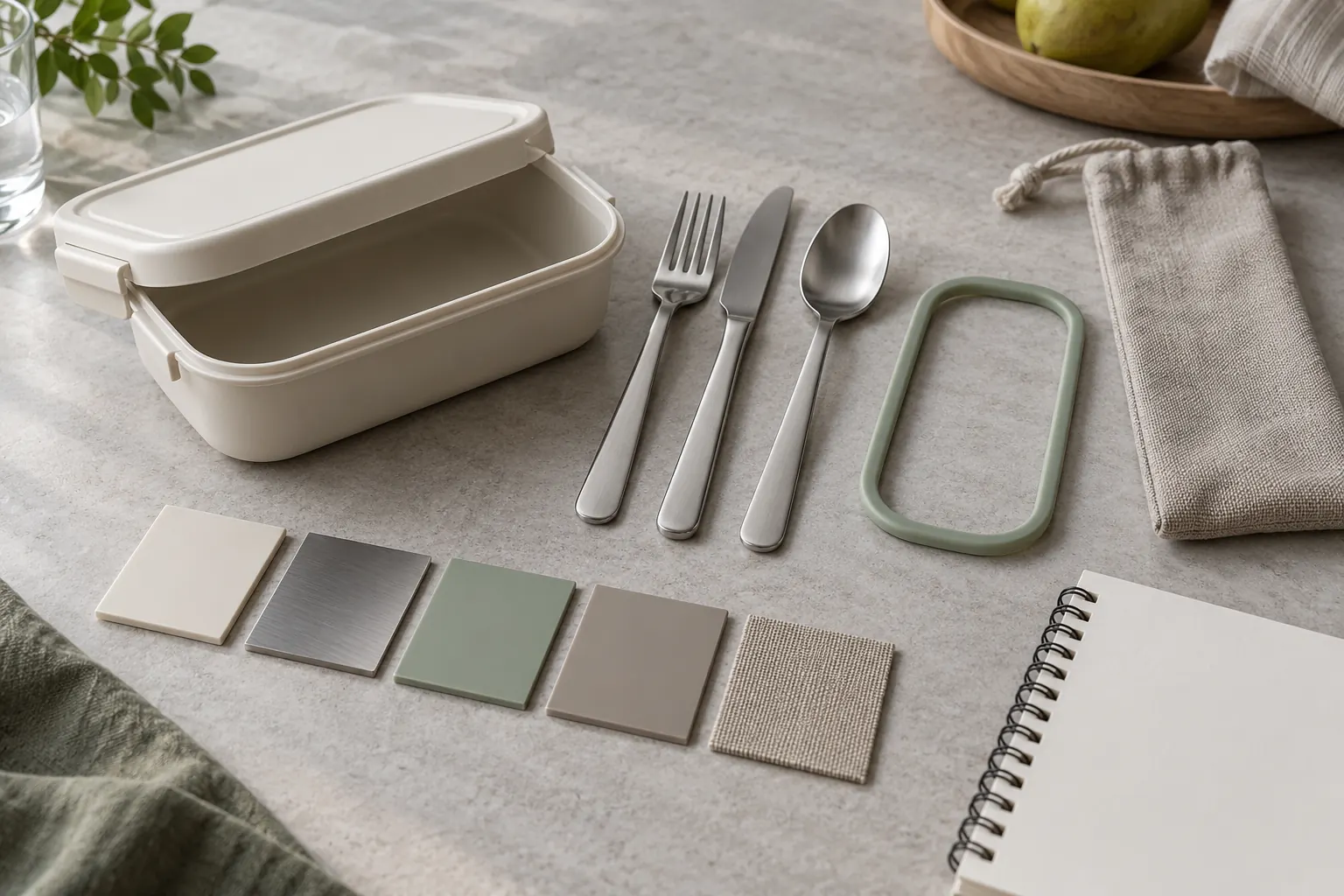
For color, provide a Pantone reference or a physical color sample when color accuracy matters. State which parts should share the color and which may remain neutral. A photo on a screen can communicate direction, but it is not a reliable approval standard for a production color match.
Food-contact and product testing requirements should identify the intended sales market and the exact SKU or material being evaluated. If your buyer, retailer, or local authority requires a particular standard or test report, name it or attach the requirement. Avoid asking a supplier to “meet all regulations” without defining the market and product scope.
Ask what evidence is available for the selected material and finished product, and how samples will be connected to the final production specification. Testing scope can differ by material, component, color, and market. Confirm any claims with the relevant documentation before using them in retail copy.
Dimensions, Capacity, and Performance Details
Include overall dimensions and capacity where they affect the product decision. For containers, specify internal or usable capacity if that is important to the intended portion size, and distinguish it from external dimensions. For cutlery, cups, plates, and bags, provide the key measurements needed to judge fit and use.
State how measurements should be interpreted. A drawing can show length, width, height, wall features, divider position, closure location, or nesting direction. If the supplier should recommend the dimensions, describe the target user, meal type, and storage constraints so the recommendation has a context.
Performance language should be specific enough to evaluate. Instead of saying “leakproof,” describe the expected use and what the product must contain or withstand. Instead of “easy to clean,” identify removable components, dishwasher expectations, or difficult areas that need attention. A supplier should not infer test results from marketing adjectives.
For a carry set, include packed-size limits and how components should be arranged. Buyers often focus on the open product and miss the volume of the complete set once packed. Ask for the proposed packed configuration, outer dimensions, and any assumptions about inserts or protective packaging.
Branding, Artwork, and Retail Packaging
Explain where branding should appear and which parts may carry a logo. Attach vector artwork when available, name the file format, and state whether you have a preferred placement or need a supplier proposal. If the artwork is still in development, mark it as pending and avoid treating a mock-up as production approval.
Describe the retail channel and packaging purpose. A product sold online may need protection and clear presentation in a parcel, while a shelf product may need a display box, hang feature, barcode, or multilingual information. Buyers should identify required packaging components separately from the product itself.
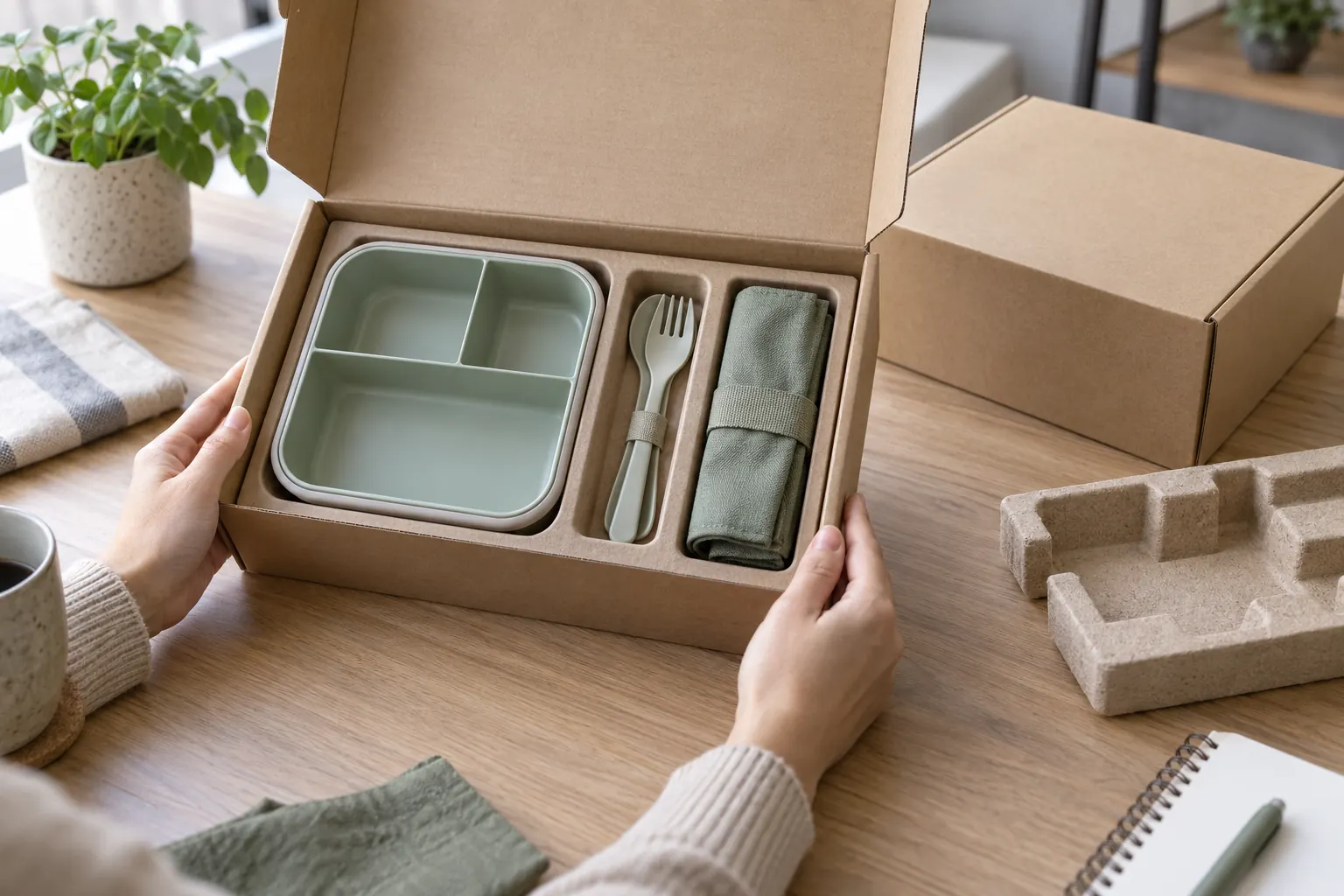
Attach packaging dielines or dimensions if they already exist. If the supplier is expected to recommend a box structure, share the number of components, retail display orientation, target packed size, and any labeling instructions. State which party supplies final legal copy, barcode data, translations, and artwork approval.
Ask how the sample will represent the intended retail pack. A product sample in a plain protective package is not the same as a fully branded packaging sample. Clarifying the sample scope prevents a later surprise when photography, retail review, or launch planning depends on the final presentation.
Compare Supplier Quotes on the Same Scope
When quotations arrive, check whether each supplier is pricing the same product and service scope. A lower total may exclude the bag, retail box, logo setup, sample work, or a requested component. A higher total may include items that another supplier left as assumptions.
Ask suppliers to identify what is included, excluded, or awaiting confirmation. If a detail changes the quote, ask for a separate option rather than blending it into one opaque number. This keeps the commercial comparison useful for procurement and for internal approval.
| RFQ area | Clear request | Why it improves comparison |
|---|---|---|
| Set contents | List every component and pieces per set | Prevents different suppliers quoting different set definitions |
| Material | State a material by component or invite a documented alternative | Separates product construction and testing scope |
| Customization | Mark logo, color, structure, and tooling as required, optional, or undecided | Makes one-time development assumptions visible |
| Packaging | Define retail pack, protective pack, and shipping requirements | Avoids comparing product-only pricing with packaged-set pricing |
| Quantity | Clarify quantity per component, set, color, and delivery lot | Reduces ambiguity in the quotation basis |
| Market and testing | Name destination market and required evidence | Aligns compliance discussion with the actual SKU and sales region |
| Timing | Give target sample review and delivery windows | Allows the supplier to identify schedule dependencies |
Commercial Inputs: Quantity, Timing, and Delivery
Share the estimated order quantity and how it may be allocated. If you have a forecast rather than a purchase commitment, say that plainly. Suppliers can then distinguish an early budgetary discussion from a firm production quotation.
Give a target launch or delivery window and explain any fixed milestone. For example, retail photography, packaging approval, seasonal selling, or a buyer review may happen before the final ship date. A schedule is more useful when it shows which dates are fixed and which are flexible.
Provide the destination country or market and the preferred delivery point if known. This helps the supplier understand whether the request concerns ex-works collection, port delivery, or another arrangement. Do not assume that the product quote automatically includes freight, duty, insurance, or destination fees.
Ask the supplier to state quotation validity and any key assumptions. For a project involving a new structure, tooling, or custom packaging, request those lines separately from recurring product costs. Keep one-time development charges and repeat-order items distinct in your internal comparison.
What Can Be Decided After the First RFQ?
Not every detail must be settled before the first conversation. A buyer may still be comparing materials, deciding between a stock item and a modified design, or waiting for brand artwork. The important step is to label unresolved points so the supplier does not mistake them for approved requirements.
Some decisions need samples or technical review. Exact color, lid fit, divider layout, logo appearance, carry-bag organization, and retail packaging presentation may require a physical or visual sample. The RFQ should state which decisions the buyer expects to make after reviewing that sample.
Other inputs should be clarified early because they can change product architecture or quote scope. These include the number of components, use scenario, key dimensions, destination market, quantity basis, and whether the design is existing, modified, or new. Waiting to define these items can make early quotations difficult to compare.
Use an “open / supplier to recommend” column for undecided requirements. Ask the supplier to show its proposed option and the consequences of that choice. This turns uncertainty into a documented decision instead of an invisible assumption.
B2B Buyer Checklist for a Quoteable Tableware Brief
Before sending the request, check whether another person on your team could understand what the supplier is expected to quote. A concise brief is better than a long narrative if it clearly identifies the product, decision criteria, and open questions.
| Check | Question | Why It Matters |
|---|---|---|
| Project scope | What product or coordinated set should be quoted? | Defines the commercial object being compared |
| Users and use | Who uses it, and in what setting? | Connects dimensions and features to a real need |
| Components | What is included in one retail or wholesale unit? | Prevents inconsistent set definitions |
| Material | Which material applies to each component? | Supports technical review and testing alignment |
| Size and capacity | Which measurements or use limits are essential? | Clarifies fit, portioning, storage, and packaging |
| Branding | Where should logo and color appear? | Separates product design from brand execution |
| Packaging | What retail and shipping protection is required? | Aligns quoted scope with the selling channel |
| Testing | Which destination market and evidence are required? | Connects claims to the actual product and SKU |
| Quantity | Is the quantity per set, component, color, or order? | Creates a clear quotation basis |
| Timing | What are the target review, launch, and delivery dates? | Surfaces schedule dependencies early |
| Attachments | Are drawings, references, artwork, or packaging files included? | Reduces avoidable interpretation gaps |
| Open items | Which points need supplier recommendations? | Prevents undecided details from being treated as approvals |
How to Send a Better RFQ in One Email
Use a short subject line that names the product and action, such as “RFQ: Custom Portable Lunch Set for Retail.” In the first paragraph, explain who you are, the product opportunity, the intended market, and the decision deadline. Keep the full technical detail in a numbered brief or a clearly labeled attachment.
Name files so that a supplier can identify them without opening each one. Include the project name, date, file purpose, and revision when relevant. If you replace a file, explicitly state which version should be used and which older version is superseded.
Ask a small set of decision-oriented questions. For example: Can you quote the current configuration and a simplified alternative separately? Which drawing or dimension is still unclear? What additional information is needed before a sample route can be confirmed?
Questions with a clear next decision make the first response more actionable. They also reveal whether a supplier needs one more file, a drawing revision, or a technical discussion before it can compare options.
Keep the scope consistent across suppliers. If one supplier receives an extra packaging specification or a different target quantity, the resulting quotes will not be directly comparable. Use the same brief and record any supplier-specific clarification alongside the response.
When a supplier asks for clarification, update the shared brief instead of replying with isolated answers that may be lost in an email chain. A controlled revision keeps procurement, product development, and quality teams aligned on the same requirement set.
Common RFQ Gaps That Slow a Custom Tableware Project
Using “set” without a component list. This leaves room for different interpretations of what is included. List the items and quantity of each item per unit.
Sending a mood board as the only specification. Inspiration images show a direction, but they rarely define fit, dimensions, material, or print position. Pair them with a written requirement or identify the exact feature each image represents.
Mixing confirmed and tentative details. If the target color, material, quantity, or packaging format may change, mark it as provisional. A supplier should not be expected to guess which details are binding.
Leaving out the destination market. Testing and labeling discussions depend on where the product will be sold and the applicable buyer requirements. State the market before asking for a compliance conclusion.
Requesting a price without naming packaging scope. A bulk-packed product and a branded retail set are different quotation requests. Specify whether packaging is included, optional, or to be quoted separately.
Assuming a concept image is production artwork. A creative reference is not a final dieline, logo file, color approval, or engineering drawing. Label each attachment by its purpose and status.
Frequently Asked Questions About a Custom Tableware RFQ
What does RFQ mean in tableware sourcing?
RFQ means request for quotation. In tableware sourcing, it is the information package a buyer sends so suppliers can price a defined product, set configuration, customization scope, packaging, quantity, and delivery assumptions.
Can I request a quote without technical drawings?
Yes. You can begin with reference photos, a product description, rough dimensions, and a clear use case. Mark uncertain details and ask the supplier what drawing, sample, or technical decision is needed next.
Should I include packaging in the initial RFQ?
Yes, if packaging affects retail presentation, protection, packed size, or the delivered buying unit. If the format is not decided, ask for product-only and packaged options to be listed separately where feasible.
How should a buyer describe a custom tableware set?
List every component, the quantity of each component per set, intended users, use scenario, material preference, dimensions or capacity, customization, and packaging. State whether any item is optional or still under consideration.
Which testing information belongs in an RFQ?
Name the destination market and any buyer or retailer requirements you already have. Ask the supplier to confirm available evidence for the specific material and finished SKU; do not assume one report applies to every component or market.
What if my quantity or design is not final?
Provide a realistic range or working estimate and label it as provisional. Separate confirmed requirements from open decisions so the supplier can identify which assumptions may change the quotation.
Turn Your RFQ Into a Clear Project Brief
Share your target set, quantity estimate, destination market, branding direction, and packaging needs. Naike Tableware can review the brief and identify which details are ready to quote and which need clarification.
Prepared for B2B buyers by Naike Tableware. Confirm market-specific testing and final product specifications for the selected SKU before making product claims or placing an order.