Insulated Lunch Bag Specification: Fit, Lining and Condensation
A factory-side framework for matching an insulated lunch bag to the actual meal set. It shows buyers how to review fit, construction and moisture behavior with a sample instead of relying on a vague “thermal bag” label.
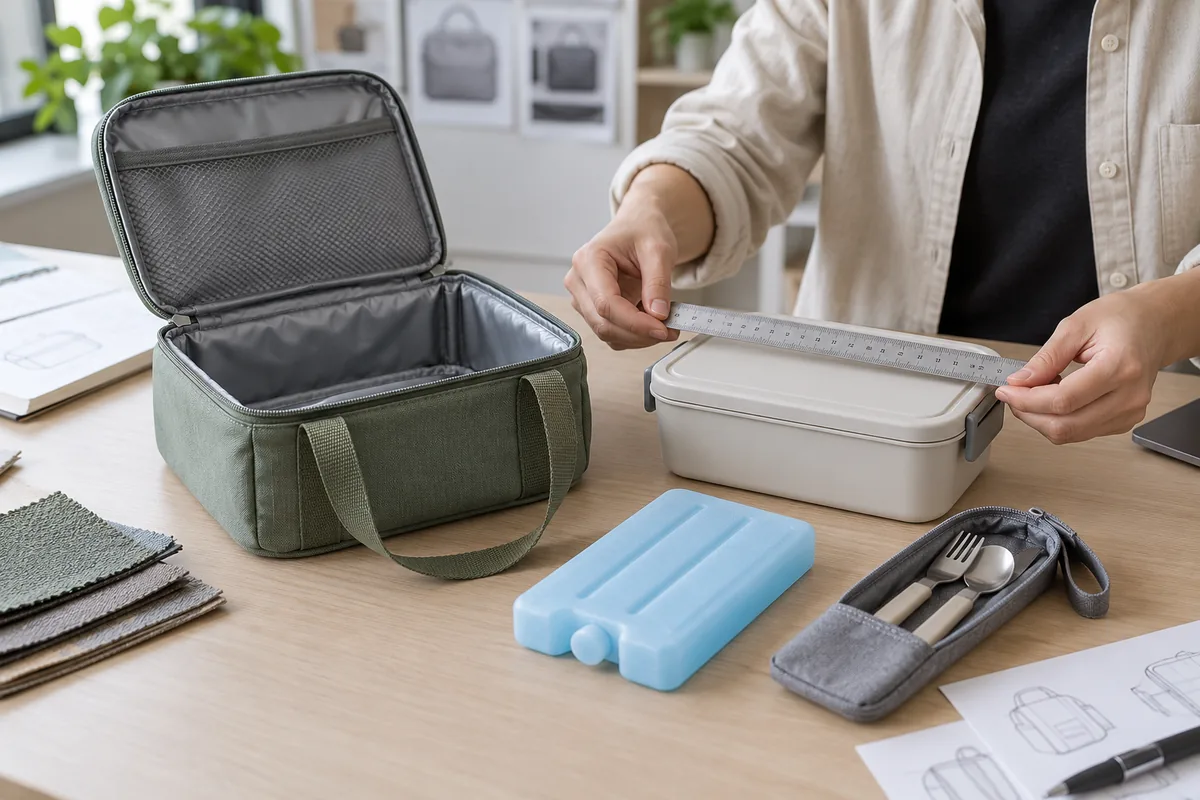
In a coordinated meal kit, the bag is not an accessory chosen after the food containers. Its internal shape affects which containers fit, how accessories are separated, whether a buyer can pack the set in a repeatable order, and how the finished retail unit is presented.
From a factory-side development perspective, the most useful brief replaces “make it insulated and roomy” with a checkable description. That brief gives a supplier enough information to review dimensions and sample construction without inventing temperature results, material claims or a universal fit.
What an insulated lunch bag specification should define
For a B2B program, the specification is the shared reference between the buyer, bag developer, tableware supplier, packaging team and quality reviewer. It should describe the intended set and the conditions under which the sample will be judged, not only the outside appearance of the bag.
Start with the product family and channel. An office lunch set sold as a coordinated gift, a retail bento kit, and a reusable meal set issued to employees may use similar containers but have different priorities for access, appearance, cleaning and packing presentation.
Then identify the components that must fit: primary lunch box, secondary container, cup or bottle if included, cutlery sleeve, napkin, removable separator, and any cold pack. State whether each component is required in every packout or is an optional SKU, because a single bag pattern may not serve every assortment equally well.
Insulated lunch bag specification: the minimum buyer data set
Record the component names, drawings or sample references, maximum external dimensions, intended orientation, loaded height and packing order. Include the zipper path, handle or strap requirements, pocket access, logo placement, color references, packaging format and any cleaning instructions that must appear on the product or retail pack.
Separate confirmed facts from targets. A buyer may have a fixed lunch-box dimension, a desired packed profile, and a hoped-for thermal outcome; only the first two are design inputs until a test method and acceptance threshold are agreed for the third.
Fit begins with the packed meal set, not nominal bag volume
Nominal volume can be a useful catalog descriptor, but it is weak evidence for fit. Two bags with similar stated capacity can behave differently when a rigid bento box must pass through a narrow zipper opening, sit beneath a lid panel or share space with a cylindrical bottle.
Measure the complete packed arrangement in the intended sequence. If the buyer expects users to place a lunch box flat, slide cutlery into a side pocket and add a cold pack to a separate sleeve, reproduce that sequence with physical samples before approving dimensions.
Soft goods introduce variation that rigid containers do not. Stitching allowances, seam positions, foam thickness, liner folds and zipper tape reduce usable space, so record clear internal dimensions at the locations that matter rather than relying on the bag’s outside measurements.
Test the opening as well as the compartment. A container may fit after the bag is fully open yet snag on a curved zipper, pocket edge or stiffened rim during normal insertion and removal.
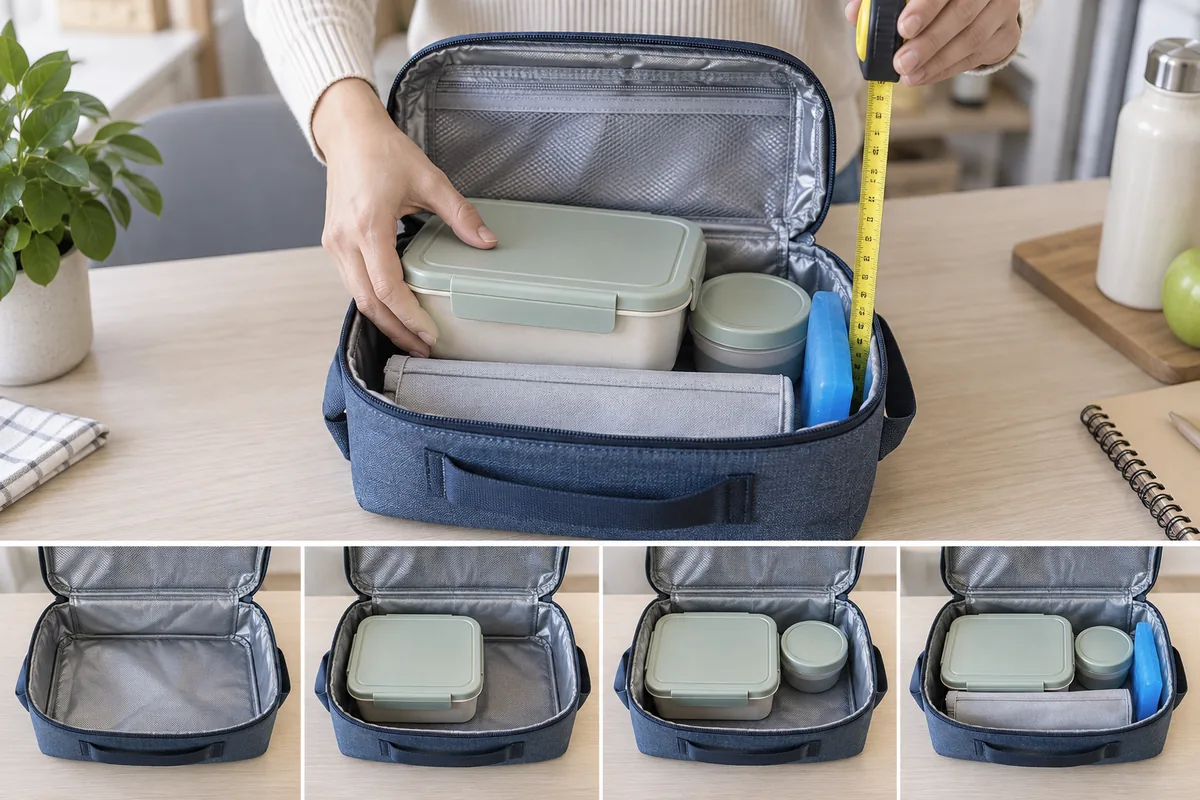
A practical sample review records more than “fits” or “does not fit.” Note whether the closure travels without pulling the sidewalls inward, whether the handle lifts the loaded set without distorting the opening, and whether the accessories remain where the packout plan places them.
For programs with multiple container sizes, test the smallest and largest approved combinations. If a shared bag is intended for different SKUs, state which variation is acceptable and whether a divider, elastic keeper or separate pocket is required to stop components from shifting.
Compare bag constructions by the job they need to do
Buyers often compare bags by their outer fabric or by a single insulation label. A better comparison separates the carrying job from the construction: how much structure is needed, where the lining must be accessible, whether the set requires dividers, and what the buyer expects to evaluate in a sample.
| Construction route | Useful when the program prioritizes | Questions to resolve before sampling |
|---|---|---|
| Unlined textile carrier | Simple carrying, low component count, flexible storage or a compact fold-down format | Will the bag hold its opening, protect the set, and keep the components organized without a liner or divider? |
| Insulated soft bag | A lined compartment, a defined carry format and space for a meal set with optional cold-pack placement | What liner and insulation layers are proposed, how are seams finished, and which sample conditions will be reviewed? |
| Structured insulated case | More stable shape, easier component organization or a retail presentation that needs a defined profile | Does added structure reduce usable space, increase packed bulk, or make cleaning and storage less convenient? |
| Modular bag with accessory pockets | Different SKUs or user preferences that need separation for cutlery, bottles or removable accessories | Which pockets are mandatory, what fits in each, and can the packed set still close smoothly? |
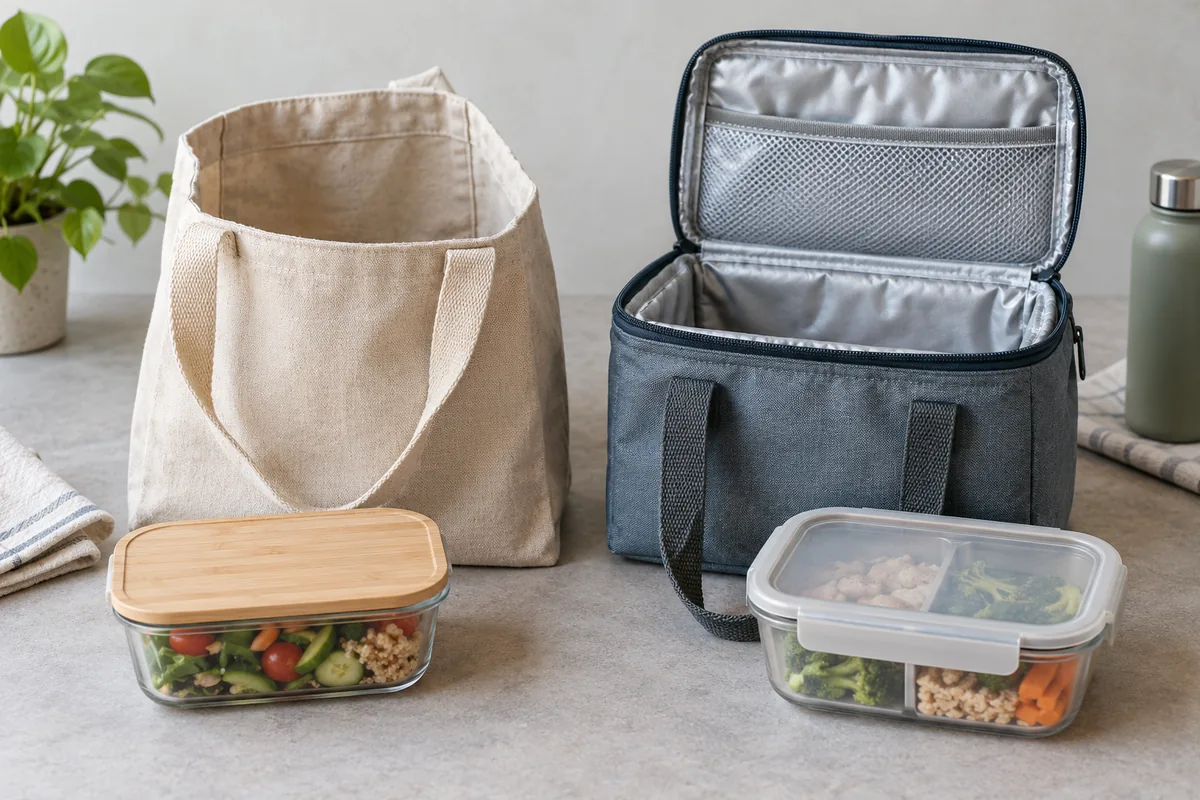
Construction terms should be unpacked in the quotation and sample brief. Ask the supplier to describe the exterior fabric, lining, insulation layer, seams, reinforcement, closure and pocket materials using the agreed product language, then confirm which materials or components need buyer approval.
Do not assume that a shiny lining, thicker wall or more rigid shape proves superior performance. Each design choice can affect weight, cost, foldability, cleaning access, packed volume and the way the bag sits around the tableware set.
Ask for alternatives only when a real trade-off exists. Comparing two well-defined constructions against the same component list and packout sequence is more useful than collecting several samples that differ in size, pocket count and materials at the same time.
Describe insulation as construction and test scope
“Insulated” is a product category description, not a complete performance specification. It does not, by itself, state how long contents stay within a temperature range, whether the bag is leakproof, whether it is suitable for a particular food, or whether the result is consistent across loading conditions.
If a program needs a defined thermal outcome, the buyer should first establish the intended contents, starting conditions, ambient conditions, load arrangement, closure state, test duration and measurement locations. The supplier and buyer can then decide whether the sample can be assessed against those conditions and what evidence will be recorded.
When the buyer does not yet have an internal standard, keep the initial review focused on observable design details: the presence and continuity of the lining, seam coverage, closure engagement, placement of any pockets, and the ease of loading the complete set. Record these as construction checks rather than presenting them as a validated thermal result.
Use sample language that does not overpromise insulation
A clear request might say: “Show the proposed liner and insulation construction, then provide a sample for evaluation with our specified container arrangement and review conditions.” That wording asks for a sample and useful information without implying an unverified temperature hold time.
If a supplier provides a test report, match it to the relevant bag version, materials, loading configuration, method and revision. A report for a different construction or an empty bag should not automatically be treated as evidence for a complete meal kit.
Material evidence also has limits. If the bag uses textile, foam, a polymer liner, coatings, print or trim, buyers should identify which components need documentation for their own market and intended claims; one document does not necessarily cover every part of the assembled product.
Make condensation review a repeatable sample check
Condensation is often discussed as though an insulated bag either “has it” or “does not have it.” In practice, visible moisture can depend on the temperature difference, humidity, cold-pack location, closure frequency, contents and the surfaces inside the bag.
The buyer should describe the use scenario before requesting a solution. For example, a cold pack placed directly beside a container creates a different contact condition from a cold pack held in a separate sleeve, while a frequently opened bag differs from a closed bag stored for a planned interval.
Agree on what the reviewer will observe. The sample can be inspected for moisture on the liner, around seams, on the outside of containers, in accessory pockets and at the base after a defined loading and handling sequence.
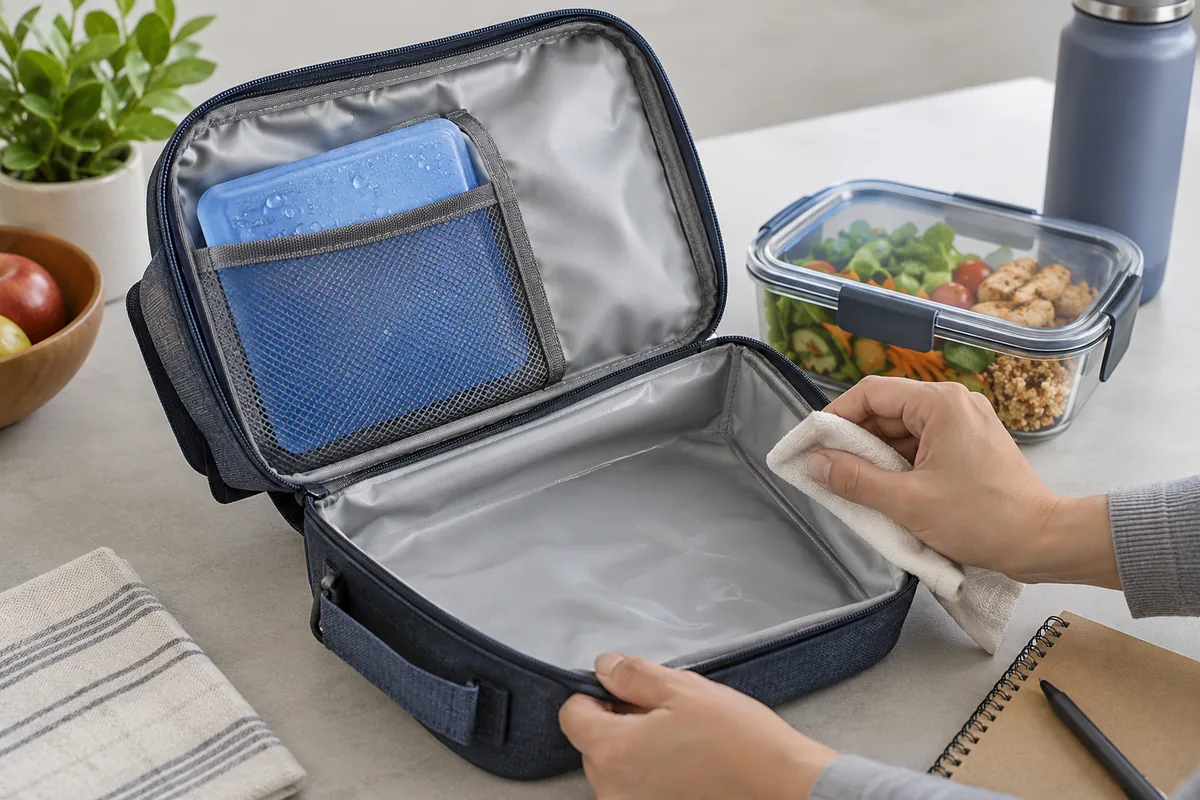
Decide whether a removable or wipe-clean liner is important, whether the cold pack needs a dedicated pocket, and whether wet items should be separated from cutlery or printed packaging. Those decisions are design requirements that can be discussed and checked with the sample.
For a repeatable review, record the sample ID or revision, actual packed contents, cold-pack location if used, opening and closing sequence, elapsed observation time, room or ambient description if relevant, and the locations where moisture was or was not observed. Do not convert an informal visual review into a formal claim unless the method supports that claim.
Coordinate comfort, branding and retail packaging
Fit is only one part of a buyer-ready lunch bag. Handle drop, strap adjustment, access for left- or right-handed users, exterior pocket placement and the balance of a loaded bag can all affect how the set is used and perceived.
Set the carry assumptions before finalizing the pattern. A bag intended to be carried by hand may tolerate a different handle length from one designed for shoulder carry, and a large bottle pocket can change the balance when filled.
Logo and color decisions should be reviewed on the material that will carry them. A color reference may look different across woven fabric, lining, coated surfaces and print methods, so identify which component is the visual priority and request physical approvals where needed.
Retail packaging must fit the final packed bag, not an earlier flat sketch. Confirm whether the bag ships folded or assembled, whether straps need restraint, how the tableware sits inside it, and what information the retail box or insert needs to communicate.
If the bag and tableware are sourced or developed as one system, keep part names and revisions aligned. The bag’s internal layout should refer to the approved container versions rather than a general family description that can change after sample review.
Buyer checklist for lunch bag samples
Use this checklist at quotation and sample stages. It is designed to expose missing decisions early, before branding, packaging or bulk planning depends on a bag that has not been checked with the final components.
| Check | Question | Why It Matters |
|---|---|---|
| Component list | Which containers, accessories and optional cold packs must fit each SKU? | Defines the actual load and prevents a bag being approved against an incomplete set. |
| Internal dimensions | Are usable width, length and loaded height measured at the constraining points? | Soft walls, seams, foam and zipper tape can reduce available space. |
| Opening and closure | Can the largest item be inserted and removed without forcing the zipper or sides? | Easy access is part of fit, not just a dimension on a drawing. |
| Packout order | Does the agreed loading sequence work with accessories and pocket access? | Repeatable packing reduces confusion across SKUs and retail presentation. |
| Layer description | Are outer fabric, lining, insulation, seams and reinforcements identified? | Gives buyers a clear construction reference for sample comparison and later revisions. |
| Moisture scenario | What contents, cold-pack position, closure pattern and observation points will be used? | Condensation expectations need a defined scenario rather than a blanket promise. |
| Cleaning access | Can the buyer inspect and clean the liner and relevant seams as intended? | Care expectations can affect pocket design, liner attachment and consumer instructions. |
| Carry review | Have handle, strap, pocket placement and loaded balance been reviewed? | Comfort and stability depend on the complete packed configuration. |
| Brand approval | Are color, logo placement, print method and component revision documented? | Prevents visual approvals from drifting between materials or sample rounds. |
| Retail packout | Does the approved packed bag fit the chosen carton or retail presentation? | Packaging may need a different fold, strap restraint or insert layout. |
| Acceptance record | Are sample photos, comments, revision and open issues recorded together? | Creates a traceable basis for the next sample and later production discussion. |
Organize the sample review around decisions
A useful sampling round should answer a small set of buyer questions. Before shipment, agree on which bag construction is being sampled, which tableware items will accompany it, and whether the review covers appearance, physical fit, carrying, cleaning access, moisture observations or packaging.
When the sample arrives, compare it with the agreed reference rather than relying on memory. Photograph the assembled packout from consistent angles, note where the bag walls compress, and record any difference between the planned arrangement and the way the contents actually sit.
Return comments as grouped decisions. Separate “must change” fit issues from preferences such as pocket styling, and distinguish an open technical question from a confirmed acceptance. This helps the supplier respond with a revised pattern, clarification or new sample instead of guessing which comments control the next version.
If the project changes the lunch box after bag sampling, reopen the fit review. Even a small increase in container height, a new clip, or a different lid profile can affect the opening and usable internal height.
For a multi-SKU program, document the approved bag-to-set mapping. A single exterior design may support several interior layouts, but the buyer should state which configuration is approved for each item code and whether packout instructions differ.
Information to send with a quotation request
Suppliers can provide a more useful first response when the brief includes the target market, sales channel, desired set contents, approximate project quantity, brand requirements and the intended role of the bag. If some decisions remain open, say so rather than presenting an early idea as a fixed specification.
Attach dimensioned drawings or reference photos for every rigid item that must fit. Include the preferred orientation, a packing sequence, the largest expected component, and any divider or pocket that is non-negotiable.
Describe the required review evidence separately from the design request. If the buyer needs a particular thermal or moisture assessment, specify the use scenario and acceptance method, or ask the supplier to discuss what can be supported for the proposed construction.
Finally, identify what the supplier should quote: an existing bag format, a color or logo adaptation, a revised pattern, a new sample, retail packaging, or a coordinated set. Clear scope helps the supplier identify the right sample route without assuming a universal MOQ or lead time.
Naike’s published range includes carry solutions and lunch-box categories, and its sourcing guides cover broader carry-bag design. Buyers can use those pages to frame a brief, then confirm the exact bag format, material, sample plan and commercial details for the chosen SKU.
Frequently asked questions about insulated lunch bag specification
What should an insulated lunch bag specification include?
Define the set contents, packed dimensions, orientation, opening, lining and insulation construction, pockets, carry method, branding, packaging and sample acceptance checks. Include a thermal or condensation test only when the conditions and method are clear.
How do I measure a lunch bag for a bento set?
Measure the largest approved component and the complete packed arrangement. Check usable width, length and height at seams and openings, then test insertion, closure and accessory placement with the actual samples.
Does an insulated lunch bag guarantee that food stays cold?
No. A label or construction description does not establish a time-and-temperature result. Any such claim needs a defined test method, loading conditions, relevant sample version and evidence reviewed for the intended market.
How can a buyer review condensation risk?
Agree on the contents, cold-pack placement, closure and handling pattern, then inspect the liner, seams, container surfaces and pockets at defined points. Record observations for the specific sample instead of treating one informal check as a universal guarantee.
Should the bag be sampled before the lunch box is finalized?
Early concept samples can explore shape, but final fit approval should use the approved lunch box and accessory revisions. If the container changes later, revisit usable dimensions and the complete packout before approving the bag.
Conclusion: approve the bag as part of the meal system
The strongest insulated lunch bag specification links construction to a real set and a defined buyer review. Start with component geometry and packout, document what the lining and insulation are, and agree on how fit, access and moisture observations will be recorded.
That process keeps design language separate from performance evidence and gives the buyer a practical way to compare samples. Share the set, market, quantities, branding and packaging direction with the supplier so the quotation and sample route can be reviewed against the same project brief.