
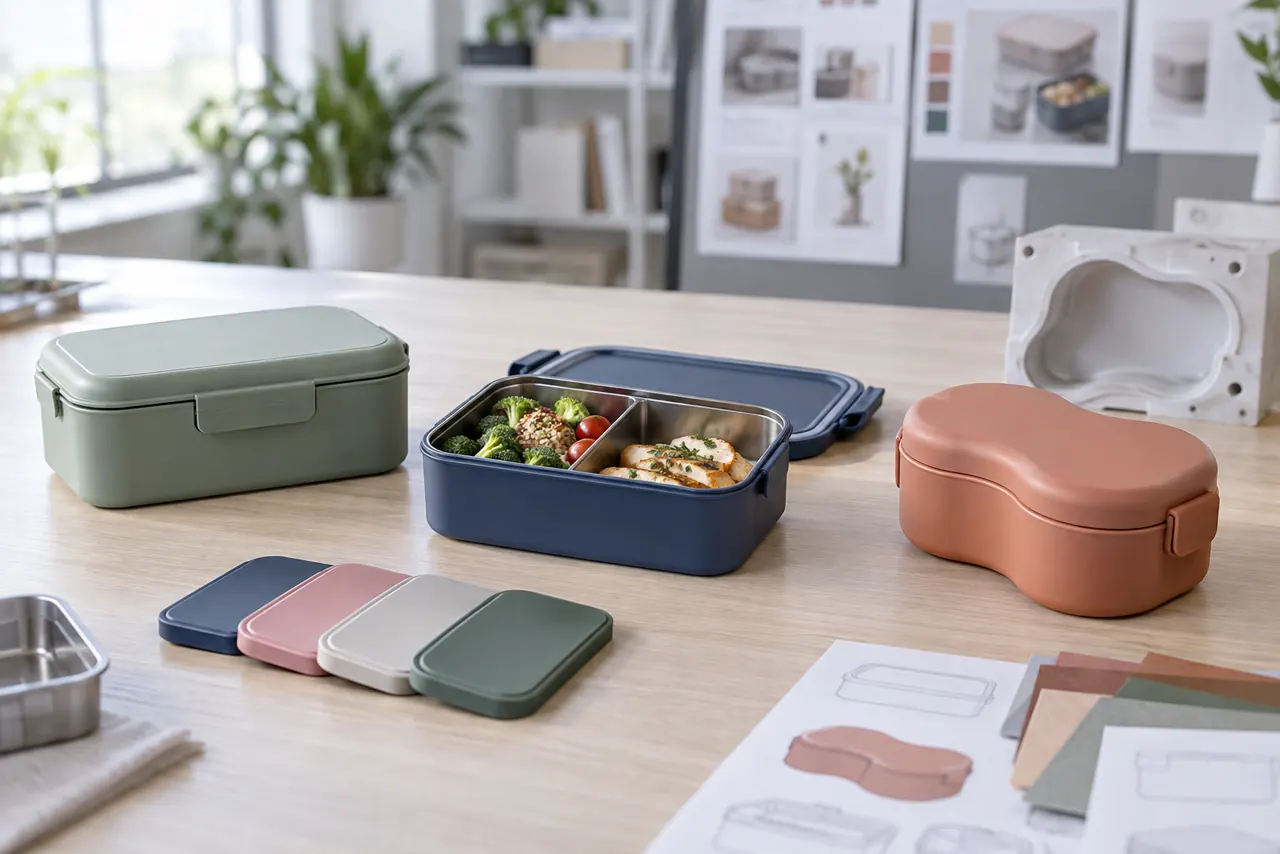
Direct answer: There is no single custom lunch box MOQ that fits every project. The practical minimum depends on whether a buyer selects an existing design, changes a standard design, or needs new tooling, and on how many colors, components, tests, and retail packs are included. Ask suppliers to quote the same defined scope before comparing quantities.
For a B2B buyer, the minimum order quantity is not just a factory number. It is the point where the product route, material purchasing, production setup, quality plan, and packaging plan can work together without changing the approved specification.
Custom lunch box MOQ starts with the sourcing route
When a buyer asks about custom lunch box MOQ, the first useful question is which level of customization the quoted number covers. The supplier should identify whether the discussion concerns a stock item, a configured set, a modified part, or entirely new tooling. Each route carries different preparation work.
At Naike Tableware, we separate those routes during project review because they affect the quote, sample plan, and production readiness in different ways. A buyer who wants a private-label program may only need a logo and retail carton on an existing product, while another buyer may need revised compartments, a new closure, or a new mold.
How custom lunch box MOQ changes across sourcing routes
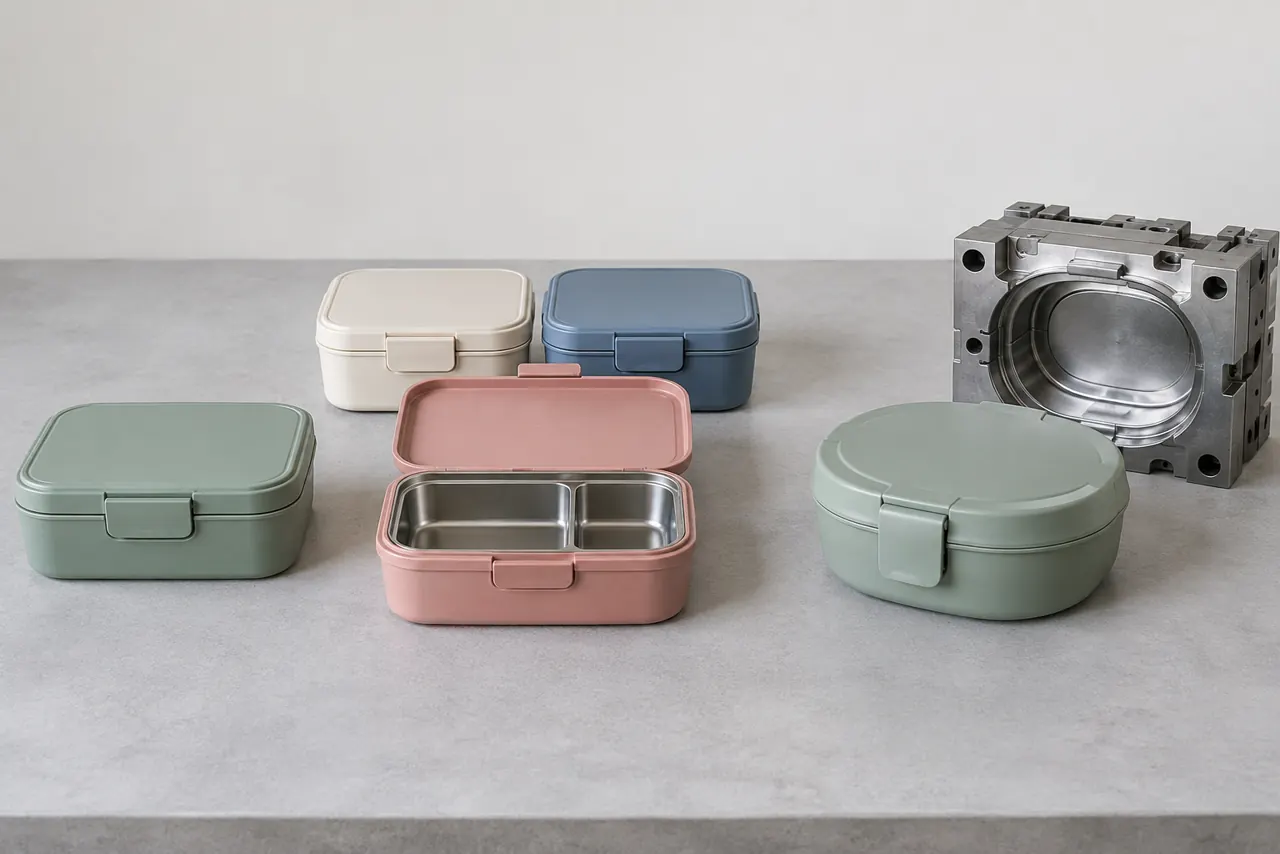
An existing product usually has the fewest engineering variables, but the requested color, logo method, set composition, and packaging can still affect the minimum. A configured set can combine available components, yet each added component must be available in the required quantity and fit the final pack-out.
A modified design adds review work because dimensions, fit, sealing surfaces, or tooling details may change. New tooling adds another layer: the buyer and supplier must agree what the tool produces, how samples will be approved, and which party owns or maintains the tooling under the commercial agreement.
| Sourcing route | What changes | MOQ discussion focus | Best fit for |
|---|---|---|---|
| Existing product | Logo, color, or pack selection may be limited to available options | Standard production and decoration batches | Market testing or a first private-label order |
| Configured set | Available lunch box, cutlery, cup, or carry components are combined | Component availability and set assembly balance | Retail or promotional programs built from existing parts |
| Modified design | Selected dimensions, dividers, colors, or details are revised | Engineering scope, sample approval, and any affected tooling | Buyers who need a differentiated product without a full new design |
| New tooling | A new part geometry or production tool is developed | Tool investment, trial process, and production batch planning | Programs with a clear design brief and longer-term demand plan |
What the quoted minimum must include
A quantity is only comparable when the quote states what is being counted. One supplier may quote finished lunch boxes, while another may quote complete retail sets that include a container, lid, divider, cutlery, sleeve, and printed carton.
Ask whether the stated amount applies to one design, one color, one artwork version, or the total order across variants. If a retailer plans several colors or regional packs, the total purchase quantity can look substantial while each individual production configuration remains small.
Confirm whether the quote includes decoration, assembly, inner packaging, master cartons, and inspection. If any of these are excluded, a low headline minimum may not represent the complete delivered program that your team intends to buy.
Material choices can change order planning
Material is a product decision first and a quantity decision second. A PP lunch box, a stainless-steel container, a bio-composite component, and a mixed-material dining set do not share identical sourcing, processing, or inspection steps, so the buyer should not assume one minimum applies to every material family.
For plastic items, color selection, resin specification, and the number of molded parts may affect production planning. For stainless components, the construction, finish, thickness, and forming route need to be defined before a supplier can assess the relevant batch plan.
Mixed-material sets bring coordination questions: does the bag come from the same production plan, are the utensils packed together with the box, and does the packaging protect all components in transit? These are useful quote questions because they identify whether the minimum refers to manufacturing, assembly, or the finished retail unit.
Color, logo, and packaging create separate minimums
Buyers often think of customization as one switch, but color, logo, and packaging can each have a separate production constraint. A single body color with one print may be easier to plan than multiple colors, several logo positions, and a different carton design for every market.
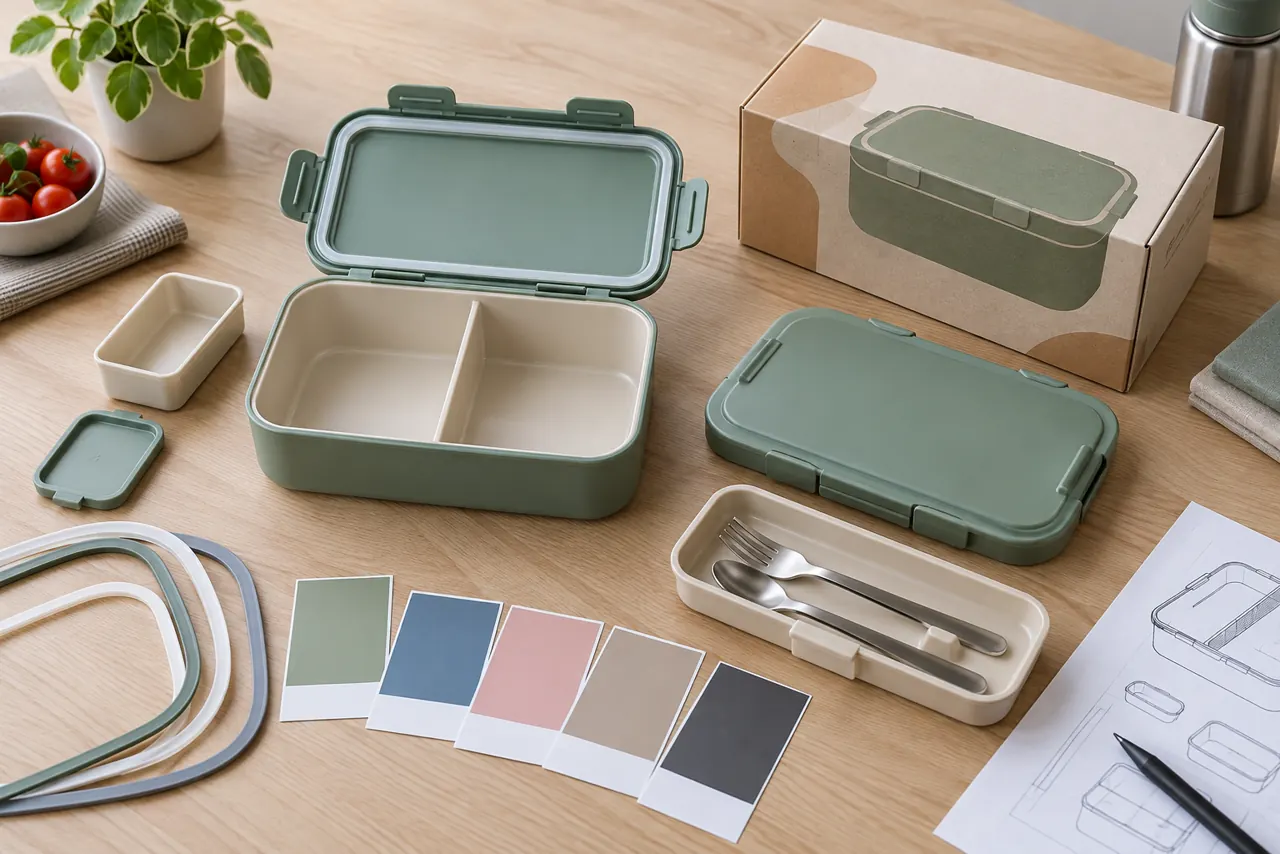
Provide a Pantone reference or physical color target, then state whether it applies to the container, lid, seal, cutlery, fabric carry bag, or all of them. A visual match across different materials should be reviewed as a coordinated target, not promised as an identical result without sample approval.
Packaging also deserves its own line in the quote. A plain protective pack, a branded sleeve, a printed retail box, and a set-specific insert use different artwork and purchasing inputs; the minimum for printed materials may not match the minimum for the product itself.
Why MOQ and unit price move in opposite directions
Production involves both variable costs and setup work. The product material and processing time contribute to each unit, while preparation tasks such as color changes, decoration setup, sampling, and packaging coordination may be spread across the order.
This is why a larger batch can sometimes reduce the quoted unit cost without making it the right business choice. Inventory carrying cost, storage space, cash tied up in stock, product obsolescence, and the risk of an untested market launch also belong in the buyer’s decision.
Request a tiered comparison where the supplier can support it, but make the assumptions visible. Each tier should use the same product specification, decoration, packaging, delivery basis, and destination so that price differences reflect volume rather than hidden scope changes.
Separate product MOQ from packaging MOQ
Retail packaging can have its own print or purchase quantity. If cartons are custom printed, the packaging vendor may require a run that differs from the product batch; if packaging is generic or uses a label, the buyer may have more flexibility.
Ask the supplier to identify whether unused packaging can be stored for a repeat order, who owns the printed materials, and whether artwork changes would make existing inventory unusable. These details affect the real cost of a first order even when the product quantity itself looks manageable.
For a multi-SKU launch, consider whether one shared carton structure can fit several products through inserts or labels. That approach may reduce artwork complexity, but only if it protects the product, communicates the correct information, and fits the retail channel.
Use sampling to reduce the risk of choosing the wrong minimum
Before committing to a production quantity, agree what kind of sample is needed. A stock sample helps review an existing product, a configured sample checks the proposed component combination, and a tooled sample may be necessary when a new or modified part must be evaluated.
Do not treat every sample as proof of mass-production readiness. The sample should be checked against the intended dimensions, closure feel, compartment use, finish, color target, logo placement, and package layout that matter to the buyer’s launch.
Record the approved version with clear photos, revision identification, and written acceptance criteria. When a project has multiple colors or pack variants, make sure the approval record identifies which version is approved and which differences still need review.
Testing requirements should be tied to the SKU and market
Testing is not a universal label that can be assumed from the product category. Requirements depend on the material, construction, intended use, claims, destination market, and the buyer’s compliance program, so the buyer should identify the sales market before requesting a final test plan.
Discuss which finished SKU, color, component, and packaging version will be evaluated. If a set contains plastic, metal, bio-composite, and fabric parts, the evidence relevant to one material may not automatically cover every component or the finished product.
Ask who arranges the testing, what sample quantity is required, and how the report will be connected to the approved product version. These questions prevent a testing requirement from appearing late, after packaging or production quantities have already been agreed.
Build a forecast before choosing a launch quantity
A responsible order plan starts with the sales channel and replenishment rhythm. An online launch, a seasonal retail program, a promotional campaign, and a wholesale distribution plan can have different demand shapes even when they use the same lunch box.
Share the expected launch date, initial channel count, planned color range, and likely reorder window. A forecast is not a purchase commitment, but it helps the supplier distinguish a one-time test from a program that may justify more engineering effort or a more efficient batch plan.
Where storage and cash flow matter, ask whether the order can be divided into production and shipment releases. This is not always available, and the supplier should confirm the conditions in writing, but a clear forecast makes the conversation more practical than asking for the lowest possible number in isolation.
Compare quotes using the same scope
Two quotes should be normalized before a buyer compares their totals. Put the product format, materials, dimensions, colors, logo method, package configuration, inspection expectations, delivery term, and destination on one shared specification sheet.
Then ask suppliers to mark what is included, what is optional, and what remains to be confirmed. If one quote assumes a standard box and another assumes a new mold, their minimums and prices are answering different commercial questions.
A useful comparison also covers communication and approval gates. Buyers should know who confirms drawings, when a sample is submitted, what happens after sample comments, and which written approval releases the next stage of the project.
Estimate a workable first order without inventing a number
Start with the number of finished sellable units you need for the first launch window, then add only the variants that have a business reason to exist. Avoid dividing the volume across colors or package versions before checking whether each configuration creates its own purchasing or setup requirement.
Next, compare that demand with the supplier’s route-based quote. If the quantity falls below the supplier’s practical batch, ask which scope changes would reduce the minimum: an existing design, fewer colors, a shared carton, a different logo method, or a phased launch.
Finally, weigh the alternative costs. A higher unit price on a smaller pilot may be commercially safer than holding slow-moving inventory, while a new mold may be justified only when the design advantage and expected repeat demand support the investment.
Prepare a buyer brief that makes the MOQ answer useful
A supplier can give a more precise answer when the first inquiry explains the project rather than asking for a number alone. State the product type, target market, expected order range if known, material preference, customization, packaging, and target launch period.
If some decisions are open, say so explicitly and ask for route options. A supplier can then separate a standard-product quotation from a modified-design or new-tooling discussion instead of forcing every unknown into one premature estimate.
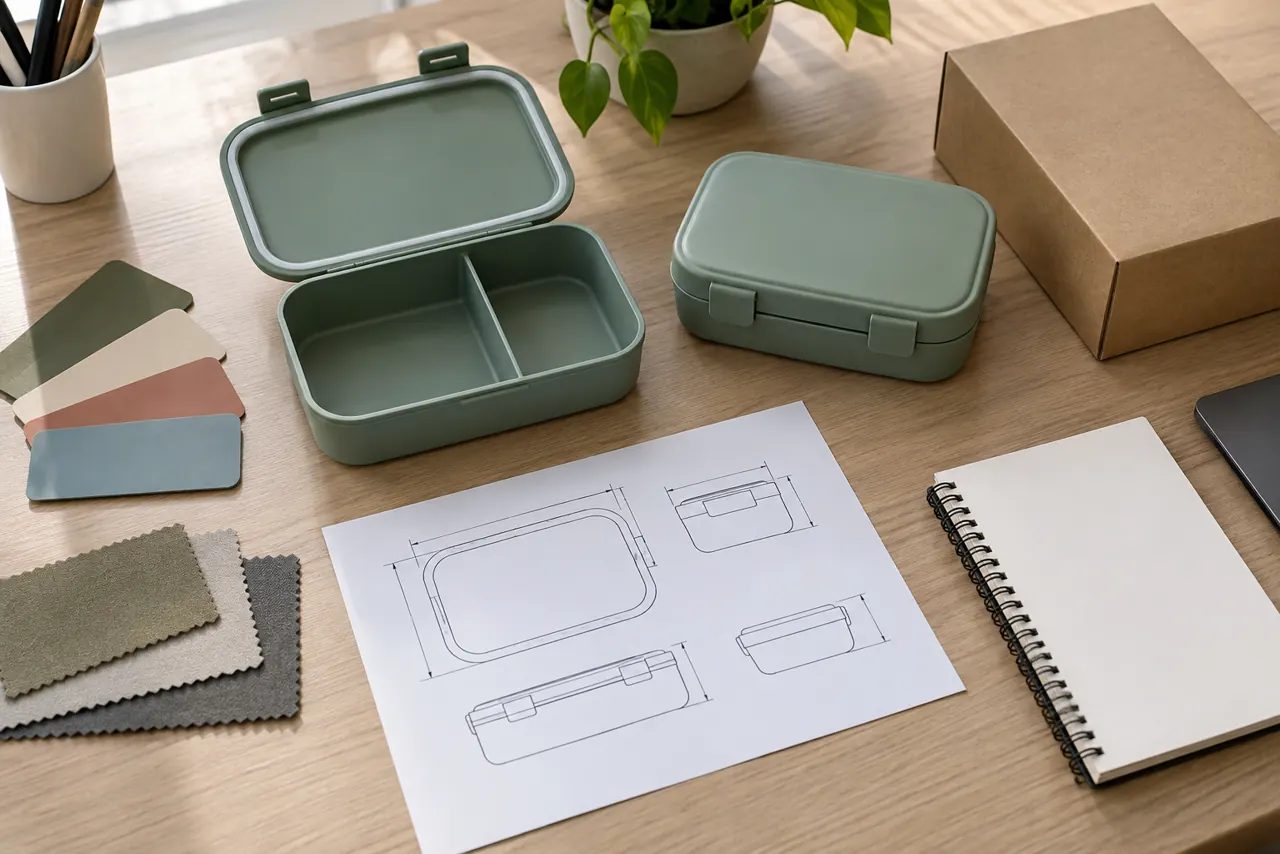
Attach a sketch, reference photograph, dimension range, or existing product link when available. Identify which elements are fixed and which can change, because that distinction helps the engineering and sales teams focus on the choices that actually affect the quotation.
B2B buyer checklist for a custom lunch box MOQ quote
Use this checklist before sending the inquiry or comparing supplier replies. It keeps the minimum tied to a defined product and helps your team see where a quote is complete versus where a decision is still pending.
| Check | Question | Why It Matters |
|---|---|---|
| Product route | Is this an existing item, configured set, modification, or new tooling project? | The route determines engineering work, sampling needs, and the basis of the quoted minimum. |
| Finished unit | What exactly counts as one sellable unit, including components and accessories? | Prevents a component quantity from being mistaken for a completed retail set. |
| Variant plan | How many colors, logos, sizes, or regional versions are required? | Each variant can affect setup, packaging, and order allocation. |
| Materials | Which material and construction are intended for each part? | Material choices can change processing, sourcing, and the applicable quality plan. |
| Packaging | Is the pack plain, labeled, sleeved, or a fully printed retail carton? | Printed packaging may have a separate purchase minimum from the product. |
| Sample route | Will a stock, configured, modified, or tooled sample be reviewed? | The sample must represent the route and features the buyer intends to approve. |
| Testing | Which SKU and market-specific requirements must be confirmed? | Testing scope should match the finished product and destination market. |
| Delivery plan | Is the order one shipment or a proposed release schedule? | Release options affect inventory planning and must be confirmed with the supplier. |
| Reorder outlook | What demand or replenishment pattern is expected after launch? | A forecast helps the supplier assess whether tooling or batch planning fits a repeat program. |
Questions to resolve before purchase approval
Before a purchase order is released, check that the quotation and approved sample describe the same product. The color, component count, logo, packaging, inspection scope, and delivery basis should not be left to informal assumptions.
Ask the supplier to identify open items in writing and assign a decision owner on the buyer side. A fast response on artwork or dimensions can prevent a small unresolved detail from delaying sample approval or changing the production plan.
When a project includes custom tooling, clarify the commercial terms for tool payment, storage, maintenance, permitted use, and any future revision. These terms are specific to the agreement and should be documented rather than inferred from the product price.
Frequently asked questions about custom lunch box MOQ
Is there a standard custom lunch box MOQ?
No single figure applies to every custom lunch box. The minimum depends on the sourcing route, material, configuration, color and logo plan, packaging, and any buyer-specific testing or approval requirements.
Can I order a small quantity with a private label?
Possibly, if the chosen product and branding method fit an available route. Ask the supplier to compare existing-product options with the requested logo and pack, and confirm whether packaging has its own minimum.
Does new tooling always require a larger order?
Tooling scope and production quantity are related but are not the same commercial item. A new tool involves design review and sample approval, while the order minimum for finished goods still depends on the product and production plan.
Can one MOQ cover several colors?
Sometimes a supplier can quote a total across colors, but the allocation rules must be confirmed. Ask whether each color has a separate setup or purchasing requirement and whether the retail packaging remains shared.
How should I compare two suppliers’ minimums?
Compare only after both suppliers quote the same product scope, variants, decoration, packaging, testing assumptions, and delivery basis. If the routes differ, request separate quotes for the same existing, modified, or tooled option before making a decision.
Conclusion: make custom lunch box MOQ fit the program
Custom lunch box MOQ is most useful when it describes a specific route and a complete sellable unit, not a headline quantity detached from the buyer’s needs. Define the product, variants, packaging, sample route, market, and delivery plan before you ask suppliers to compare options.
For an initial order, balance unit cost against inventory exposure, launch timing, and the value of customization. Send Naike Tableware a concise project brief so our team can review the product route and identify which details need SKU-level confirmation.