
Which portable lunch set components should buyers include?
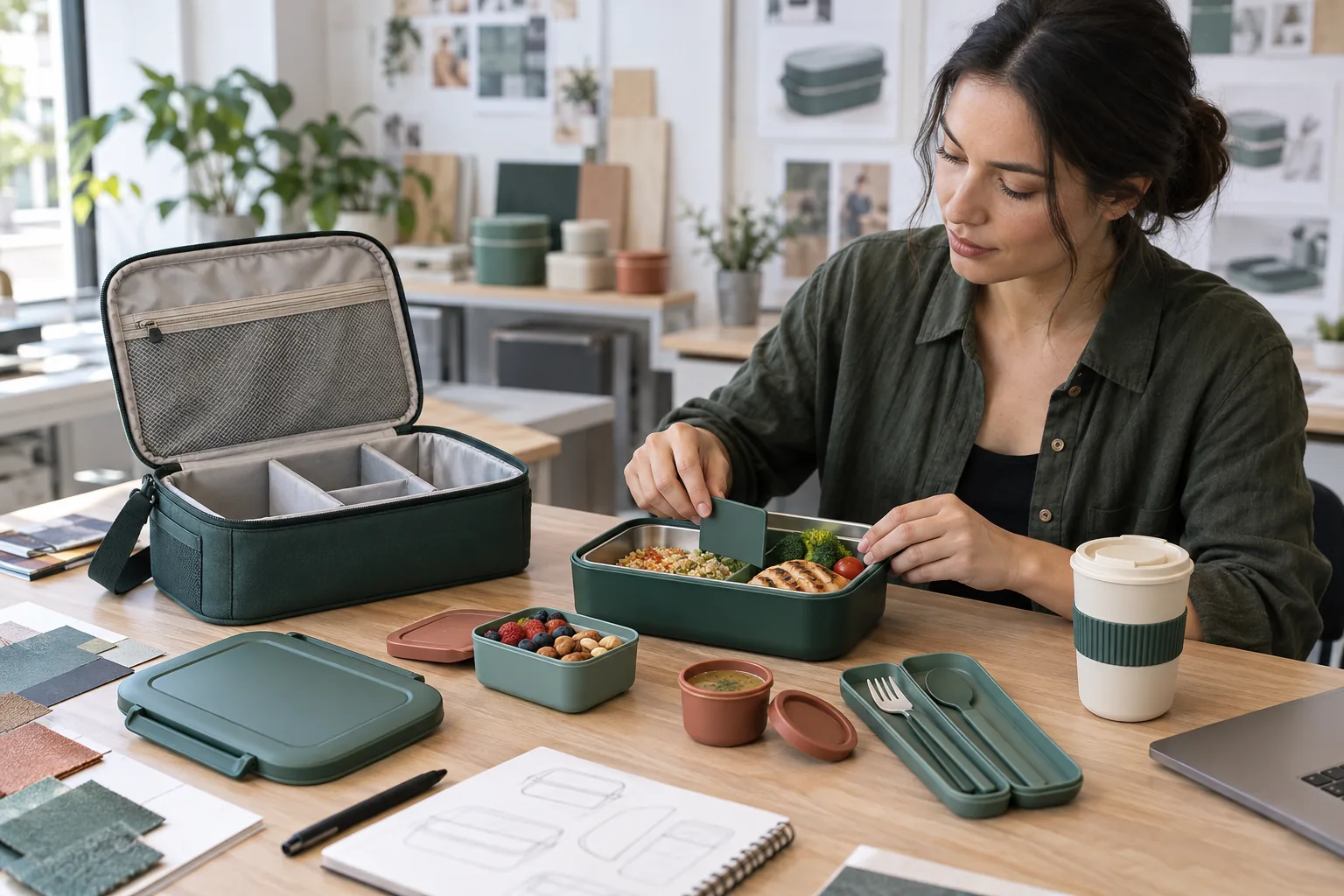
Portable lunch set components should be selected around the meal occasion, user, transport route and target price instead of maximizing piece count. Start with the main food container, then add utensils, dividers, snack or sauce containers, cups, bottles and a fitted bag only when each part has a clear role in the complete packed system.
portable lunch set components planning checklist
- Target user, meal occasion and channel
- Core and optional component roles
- Nesting and packed configuration
- Carry bag layout and movement control
- Material and care requirements by component
- Logo, Pantone, packaging, MOQ and sample route
What Should a Portable Lunch Set Include
A practical portable lunch set should include only the components needed for the intended meal, user and transport route. Most programs start with a primary food container, then add dividers, snack or sauce containers, reusable cutlery, a cup or bottle and a carry bag when those pieces solve a defined use or merchandising requirement.
A portable lunch set is purchased and used as one system even when it contains several separate components. For brands, retailers, importers and distributors, this means the component list cannot be selected only by piece count or visual fullness. Each item changes packed size, weight, cleaning behavior, packaging volume, target price and the approval workload.
Naike Tableware develops lunch and bento programs around a controlled set specification. The process connects the target user and meal occasion to component roles, material choices, nesting, carry construction, branding, packaging and SKU-level evidence. This guide explains how buyers can build a clear quotation brief without assuming that one configuration suits every market.
Why Portable Lunch Set Components Need a System Plan
The consumer experiences the container, accessories and bag as one product. If the lunch box fits the meal but not the bag, if the sauce cup moves during transport, or if the cutlery has no clean storage position, the set feels unfinished even when every individual component is usable.
For procurement teams, every added component creates another specification. Dimensions, material, color, lid fit, decoration, cleaning instructions, packaging position and inspection points must all be connected to the correct product revision.
Does a Higher Piece Count Create More Value
Only when each added piece solves a real task. A compact office-lunch set may create more value with one reliable container, a sauce cup and protected cutlery than with several loosely related accessories. An expanded retail kit may justify a cup, bottle or insulated bag when the channel, price position and consumer routine support them.
Compare Three Practical Lunch Set Architectures
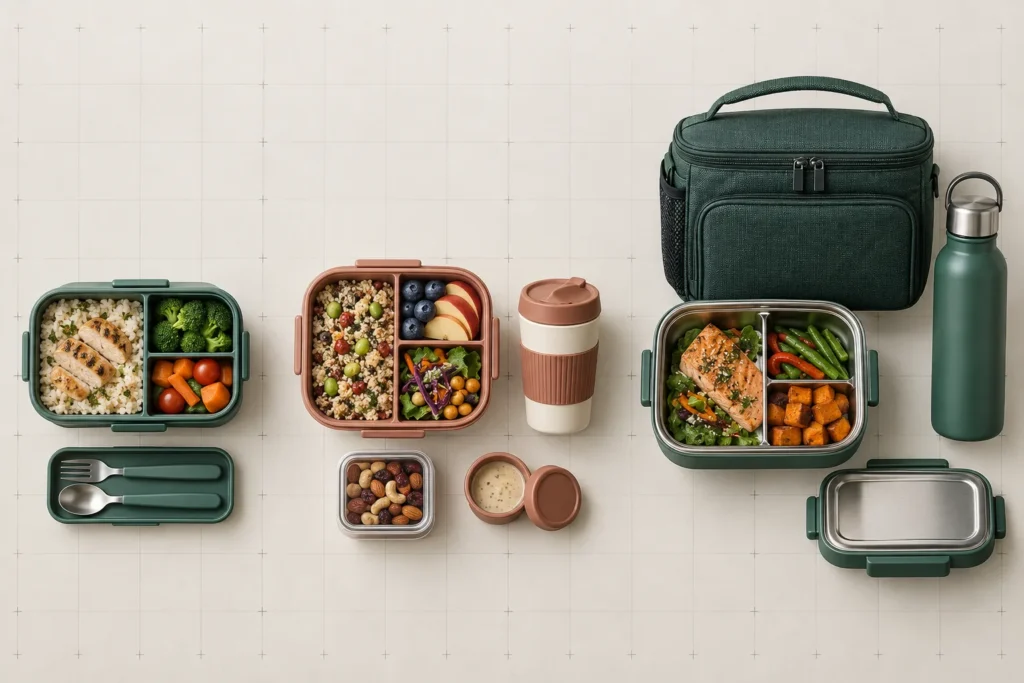
| Configuration | Typical Components | Best Fit | Buyer Review |
|---|---|---|---|
| Compact | Primary lunch box and protected cutlery | Daily office lunch, compact retail packs and promotional programs | Portion capacity, closure, utensil storage and packed dimensions |
| Standard | Lunch box, divider, snack pot, sauce cup, cutlery and reusable cup | Complete lunch routines and mid-range retail assortments | Component roles, nesting, cleaning and color coordination |
| Expanded | Multi-compartment container, snack module, cup or bottle and fitted insulated bag | Premium private label, travel dining and gift-ready programs | Total weight, bag architecture, insulation, packaging volume and replenishment |
Define the Function of Every Component
Primary Food Container
The main container establishes capacity, portion layout and most of the packed footprint. Buyers should define whether foods must remain separated, whether an insert is removable, how the lid closes and how the container will be carried and cleaned.
Dividers and Removable Inserts
Dividers can create flexibility, but they must be reviewed for movement, cleaning access and actual food-separation expectations. A removable stainless-steel insert may support a different product position from a molded PP divider and creates a separate material and fit specification.
Snack and Sauce Containers
Small containers are useful when they protect a named food or condiment. Their lids, fill level, storage position and replacement logic should be specified. A small accessory that cannot be packed securely may add complexity without improving the user experience.
Cutlery Cups and Bottles
Reusable cutlery needs a hygienic storage position and dimensions that work with both the meal and carry architecture. Cups and bottles add drinking functionality but also affect height, weight and the internal bag layout. Connected lids, seals and closures require repeated-use and fit review.
Engineer Before Packing Packed and Carrying as One Sequence
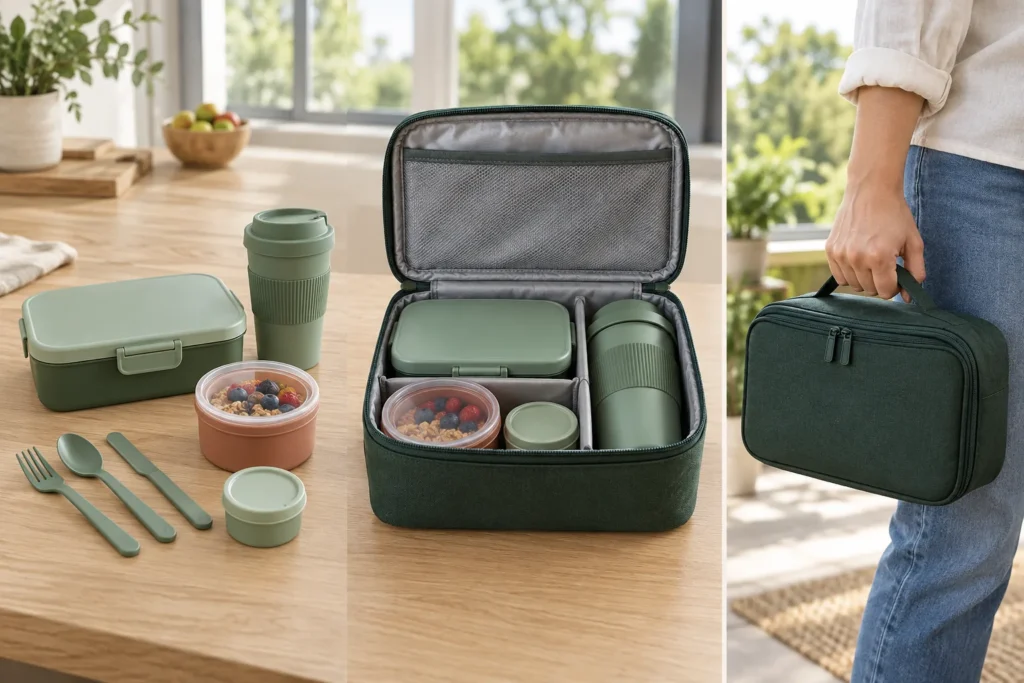
Carry development should begin with the approved component dimensions rather than a generic bag size. The internal layout must account for the packing order, vertical and horizontal movement, access, insulation, cleaning and protection. A fitted bag can also provide a clearer private-label presentation than a container placed loosely inside an oversized tote.
What Should Be Recorded About Packed Size
Record the closed dimensions and weight of each component, the complete packed dimensions, the orientation inside the bag and any space needed for insulation or packaging protection. Photographs and approved packing instructions help keep sample review, quotation and production inspection aligned.
Buyer Checkpoint
Do not approve the carry bag from an external dimension alone. Review the real components inside the proposed internal structure, close the bag, carry it and repeat the packing sequence before the layout becomes the production reference.
Match Materials to Component Roles
Food-grade PP can support molded containers, dividers and accessories where shape freedom, color and nesting matter. Silicone may be used for seals, flexible lids or collapsible parts. Stainless steel can support durable inserts or containers, while textile and insulation materials define the carry structure.
A mixed-material set needs a material map by component. Testing evidence and claims should identify the exact material, finished SKU, intended use and destination-market requirement. One report should not automatically be treated as evidence for every color, accessory or construction in the set.
Buyers can compare the practical routes on the Food-Grade PP, Silicone and Stainless Steel pages, then connect the selected configuration to a project-specific testing plan.
Coordinate Logo Color and Packaging Across the Set
Logo placement should be reviewed on the assembled set, not one isolated component. Printing, molded marks, laser marking, woven labels and bag graphics create different artwork and process requirements. Pantone direction also needs physical approval because material, thickness, texture and finish affect perceived color.
Retail packaging should be trialed with the final component list and carry format. The pack must control movement, communicate the included pieces and leave room for required labels, instructions and market-specific information.
Build a Quotation Brief Buyers Can Compare
| Brief Section | Information to Provide | Why It Matters |
|---|---|---|
| Target user | Office worker, student, traveler or another defined user | Guides capacity, access and portability |
| Meal scenario | Meal type, transport time and eating environment | Clarifies component and carry functions |
| Component list | Required, optional and replaceable pieces | Creates a comparable quotation basis |
| Materials | Preferred route and performance expectations by component | Controls construction and evidence review |
| Branding | Logo method, color references and artwork areas | Defines process and approval samples |
| Packaging | Retail channel, pack format, labels and inserts | Connects presentation to packed volume |
| Commercial inputs | Quantity, color split, target price and launch timing | Supports MOQ, sampling and lead-time review |
Start with the Lunch Boxes and Bento Sets collection when you need product references. Use Set Engineering when the project requires new component relationships, modified geometry or a custom packed format.
Portable Lunch Set Components FAQ
What are the essential components of a portable lunch set
The essential starting point is a primary food container and a clean way to carry any required utensils. Dividers, snack pots, sauce cups, cups, bottles and bags should be added only when they support the intended meal and channel.
Can existing products be combined into one custom set
Existing components can often be reviewed as a proposed set. Dimensions, fit, color, material evidence, cleaning and packaging must still be approved together before the combination becomes the order specification.
When does a custom mold make sense
New tooling is appropriate when an important capacity, interface, nesting, closure or brand requirement cannot be met with existing geometry and the expected volume supports development.
Should every component use the same material
No. Mixed materials can provide useful functional differences. The project should document the material and construction of each component and connect evidence to the exact finished SKU.
How should a carry bag be sized
Size the bag around the approved stack, packing orientation, movement allowance, insulation and access requirements. Validate it with real samples before production approval.
What information is needed for MOQ and lead-time review
Provide the component list, materials, colors, logo methods, packaging, testing expectations, quantity and target schedule. MOQ and timing depend on the final configuration rather than one universal figure.
Conclusion Build a Lunch Set That Can Be Controlled
The strongest portable lunch set is not necessarily the set with the most pieces. It is the smallest coherent system that supports the user, meal, transport route and sales channel while remaining clear to quote, test, pack, inspect and reorder.
Naike Tableware can review existing components, material combinations, carry formats, private-label requirements and new-tooling opportunities against one controlled project brief.