Meal Kit Compliance Documentation: Buyer Guide
A comparison-led factory guide for brands, importers and wholesalers that need plastic, silicone, steel, textile and packaging evidence to match the exact reusable meal kit they plan to sell.
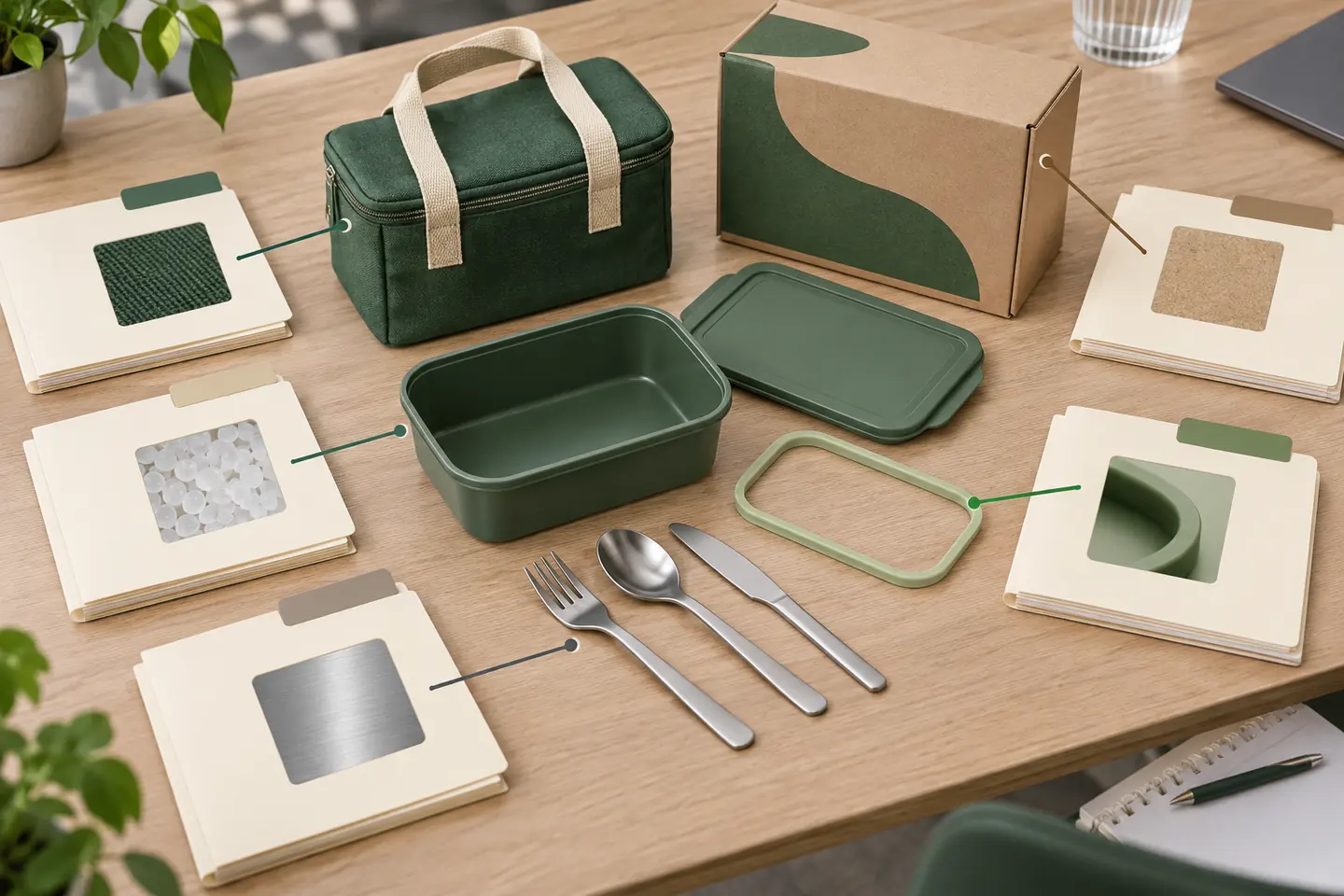
A mixed-material meal kit may combine a molded container, lid, seal, stainless cutlery, textile bag, printed insert and carton. Those parts do not share one material route, one supplier or one evidence question. Buyers who ask only for “the certificate” can receive a large file set that still leaves the final SKU unclear.
From the factory side, the first task is not selecting a test name. It is establishing traceability between the product the buyer will sell and the samples described by available documents. The correct route depends on the actual material, construction, intended use, market and buyer requirements, so this guide focuses on evidence architecture rather than promising a universal test package.
Why meal kit compliance documentation often looks complete but is not
A document can be authentic and still be irrelevant to the purchased SKU. It may cover a different resin, color, thickness, coating, supplier, article number or intended use. A title page alone rarely provides enough information to confirm that relationship.
Another gap appears when a complete set is treated as a single material. The PP box may have one evidence route, the silicone seal another, and the stainless utensil another. Textile and paper components can also carry claims that need their own support, even when they never contact food.
Define the meal kit compliance documentation boundary
List which decisions the evidence pack must support: food-contact suitability, material claims, product labeling, buyer specifications, destination-market review or retailer onboarding. Do not merge these into one undefined word such as “compliant.” Each decision has its own scope and owner.
State which commercial variants are included. Color, decoration, lid style, coating, textile construction and packaging language can create meaningful differences. A matrix makes those variants visible before the buyer assumes one report covers all of them.
Compare evidence routes by component and buyer decision
The table below shows why one mixed-material set needs a structured review. It does not prescribe a universal testing program or legal conclusion. Buyers should confirm the applicable requirements with qualified compliance resources for each destination market and product use.
| Component group | Typical evidence question | Scope details to verify | Common mismatch |
|---|---|---|---|
| Molded plastic container and lid | Does the documented material and finished construction match the selected food-contact part? | Resin family, formulation or supplier reference, color, part identity, use conditions and sample description | A report for clear natural resin is applied to a colored or composite production part |
| Silicone seal or valve | Is the elastomer route and actual seal identified separately from the rigid lid? | Material, color, geometry, supplier, intended contact and temperature/use context | The lid document is assumed to include a removable seal that was not sampled |
| Stainless cutlery or inner tray | Does the evidence relate to the metal grade, finish and decorated state supplied? | Material identity, coating or decoration, item dimensions and sample photos | Base metal information is used to support a finished coated or painted item without review |
| Textile bag, lining and trim | Which material, restricted-substance or marketing claims apply to the actual fabric system? | Fiber, coating, lining, foam, webbing, zipper, color and claimed recycled content | A fabric swatch document is extended to the whole sewn bag and all trims |
| Retail package and printed insert | Are material and claim statements aligned with the packaged SKU and market? | Substrate, inks/finishes, artwork revision, disposal or material claims and language | Artwork makes a claim that the product evidence pack was never designed to support |
The question is not whether every line always needs a new report. The buyer needs a justified coverage decision. Existing supplier evidence, component testing, finished-product review or additional verification may each play a role, but the decision should be recorded rather than inferred from a filename.
Build the evidence matrix from the released component BOM
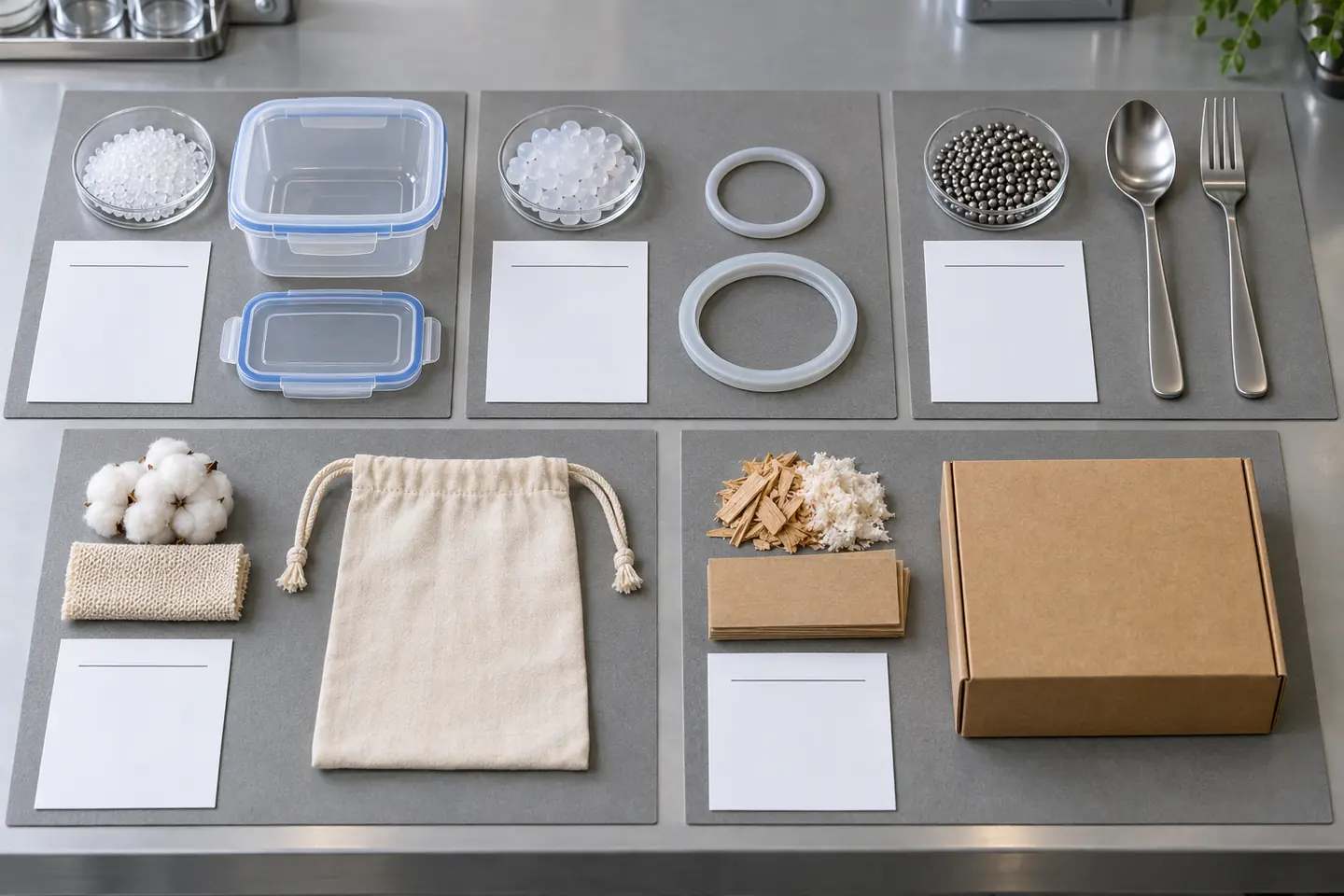
Use the controlled bill of materials as the left side of the matrix. Every relevant BOM line should show material, color, finish, intended use and source status. Then add document identifiers, sample descriptions, dates, issuing organization, covered market decision and current review status.
Do not reduce an evidence record to “pass.” Capture what was examined and under which stated method or requirement. The result may be useful only for a material, only for a component, or for a defined finished sample. Recording scope prevents teams from expanding coverage accidentally during the next order.
Record gaps as decisions, not missing attachments
A blank matrix cell should have an owner and planned resolution. The action may be to obtain a current supplier declaration, clarify a report sample, submit a component, revise a claim or remove an unsupported statement. This turns the evidence pack into a project-control tool.
Use status labels that cannot be confused: available but unreviewed, scope confirmed, gap open, sample pending, buyer accepted, or superseded. “On file” says nothing about relevance. A document can exist while the commercial risk remains unresolved.
SKU matching requires more than a product photograph
Photographs help identify shapes and colors, but they may not reveal resin formulation, coating, seal compound or internal construction. Match evidence using multiple anchors: item code, BOM revision, material specification, supplier reference, color, sample date and an image or drawing. The more variable the route, the stronger the identification should be.
A sample described only as “lunch box” is difficult to defend when several similar boxes exist. Ask whether the dimensions, lid design, color and component list correspond to the planned SKU. If they do not, determine whether the existing evidence can still support a defined part of the decision.
The same principle applies to reports issued before a design change. A new latch may not affect material evidence for the container body, while a new seal compound may. The matrix should separate what remains valid from what needs review instead of automatically accepting or discarding the entire pack.
Color and decoration can change the evidence scope
Color is not only a visual approval issue. A colored plastic, coated metal or printed surface may involve inputs that differ from an undecorated reference sample. Buyers should identify whether available evidence covers the actual production color or whether an additional evaluation is needed.
Decoration location matters. Artwork on an exterior carry bag follows a different exposure route from printing on a food-contact component. The buyer should specify decoration method, surface, cure or finish, and intended contact so the supplier can map the correct sample and evidence question.

When several colors share one base formulation, document the rationale for coverage rather than assuming it. The factory may be able to group variants, or the buyer may require separate confirmation. That judgment must follow real formulation and market information, not a universal rule.
Supplier documents and finished-SKU evidence play different roles
Supplier declarations and raw-material documents can establish useful traceability, but they do not automatically represent molding conditions, assembly, decoration or contamination controls in the finished article. Finished-sample evidence can answer broader product questions, yet it still needs a traceable link back to the production materials and revision.
A balanced pack shows both directions. Upstream records identify what entered the product; downstream records identify what was evaluated as the sold item. The BOM, change records and approved samples connect them.
Keep original files and review notes separate. The buyer-facing index can summarize status, while the source documents remain unchanged. Translating or renaming a file for convenience should never obscure the original issuer, reference number, date or sample description.
Market and claim decisions must be visible in the matrix
A document acceptable for one internal review may not answer another market, retailer or claim. Record the destination and decision the evidence is intended to support. This prevents teams from reusing a pack in a new country or channel without a fresh gap assessment.
Marketing language also needs traceability. Statements about material content, recycled inputs, reusability or care should align with the actual SKU and available support. The evidence team should review claims before artwork is released, because removing or correcting a printed claim later can delay packaging.
This guide does not replace legal or laboratory advice. The factory can organize product and supply information, but the buyer remains responsible for confirming obligations in the destination market and selecting qualified testing or compliance partners where required.
Change control keeps the evidence pack current
Define which changes trigger review: material supplier, formulation, color, coating, textile, component geometry, intended use, artwork or destination. A change does not always invalidate every document, but it should trigger a documented impact assessment. That decision then becomes part of the release history.
Set an effective point for the new revision and distinguish old from new stock. If evidence for a changed component is pending, decide whether production pauses, the claim changes or the component returns to an approved route. Do not let schedule pressure turn a visible gap into an undocumented assumption.
Buyer checklist for meal kit compliance documentation
| Check | Question | Why It Matters |
|---|---|---|
| SKU identity | Are product code, BOM revision, color and artwork revision clearly stated? | Evidence cannot be matched reliably to a vague product family. |
| Component map | Are plastic, silicone, metal, textile and packaging parts listed separately? | Different materials and uses can require different evidence decisions. |
| Intended use | Are food contact, use conditions, user group and care assumptions defined? | Scope depends on how the actual product is intended to be used. |
| Destination | Which markets, retailers and buyer specifications must the pack support? | A generic file set may not answer the real commercial decision. |
| Sample match | Can every relied-upon document be tied to a material or finished sample? | Authentic evidence may still cover the wrong variant. |
| Claims | Are material, recycled-content and other artwork claims supported and reviewed? | Packaging can create obligations beyond the base product description. |
| Gap status | Does every open item have an owner, action and decision point? | Visible gaps can be managed; vague assumptions cannot. |
| Source records | Are original documents preserved with issuer, date and sample details? | Summaries should not replace traceable source evidence. |
| Change triggers | Which material, color, source or design changes require reassessment? | The pack must remain aligned with future production revisions. |
| Release owner | Who confirms the matrix is ready for the buyer's commercial decision? | One accountable release path prevents conflicting interpretations. |
Frequently asked questions about compliance evidence
Can one report cover every component in a mixed-material meal kit?
Only when the stated scope and sample identification genuinely cover those components and the intended market decision. Separate materials, colors, coatings or variants may require separate evidence or a documented coverage rationale.
Does a supplier certificate replace finished-product review?
No. A supplier document can support material identity, but it does not automatically prove the construction, color, decoration and use conditions of every finished SKU. It should be one layer in a traceable pack.
When should compliance documentation be updated?
Review it when a material, color, source, finish, artwork, component, intended use or destination market changes, and according to the buyer's own control schedule. Record which evidence remains applicable after each change.
Should textile bags and retail packaging appear in the evidence matrix?
Yes. They may follow different requirements from food-contact components, but they remain part of the commercial SKU. Include relevant materials, claims, artwork and document status rather than excluding them from the product record.
What should a buyer send for an evidence review?
Send the BOM, material and color specifications, intended use, destination markets, product drawings, artwork, packaging claims, existing reports and planned variants. Mark open decisions so the factory can identify gaps instead of guessing the intended scope.
Conclusion: make meal kit compliance documentation SKU-specific
Meal kit compliance documentation becomes actionable when it mirrors the product that will be ordered and sold. Map every component to the released BOM, verify material and sample identity, separate evidence routes by component, record market and claim decisions, and reassess the matrix whenever a controlled input changes.
For a Naike Tableware project, send the selected set, component BOM, target market, materials, colors, decoration, existing documents and packaging claims. The team can organize a SKU-specific evidence discussion for the selected route without claiming universal certification, test coverage or market acceptance.
Editorial note: the images are original conceptual visuals for procurement education. They are not laboratory records, certificates or verified test results.