Custom Meal Kit BOM: A Buyer Control Guide
A factory-side guide for importers, brands and wholesalers who need every container, lid, seal, utensil, textile part and package to remain traceable from sample approval through repeat orders.
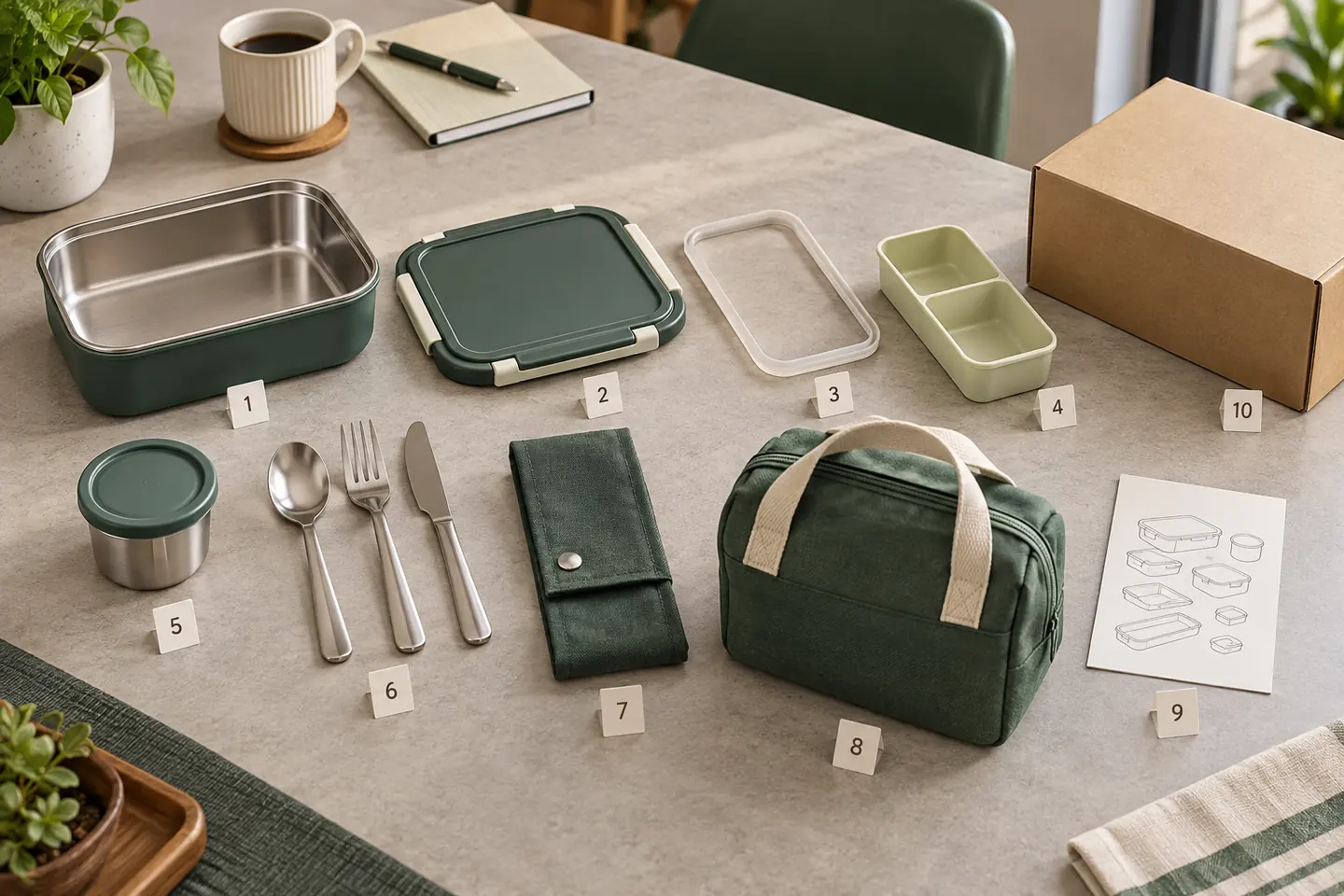
A meal kit looks like one product to the end customer, but it behaves like a small system inside the factory. The container, lid, seal, divider, utensils, pouch, bag, artwork and carton can follow different production routes. If the buyer controls only the finished set name, hidden component changes can appear between samples, purchase orders and repeat runs.
The custom meal kit BOM is the commercial and technical bridge between those routes. It tells purchasing what to source, engineering what must fit, quality what to count, assembly what belongs together and the buyer what has actually been approved. A strong BOM does not need to expose confidential supplier details, but it must be precise enough to prevent silent substitution.
Diagnose the gaps before building a custom meal kit BOM
Begin with the buyer's promise to the market. Is the SKU a lunch box with included cutlery, a branded employee kit, a retail-ready set with a carry bag, or a platform with optional modules? The answer defines which items are mandatory, optional, replaceable or shared across several SKUs.
Next, spread one representative set on a table and count every separate item. Include loose seals, dividers, straps, instruction cards, spare parts, labels and protective pieces. Components that disappear inside another component are still BOM lines if they must be made, purchased, inspected or replaced.
Define the custom meal kit BOM boundary
State where the BOM begins and ends. A product BOM may stop at the completed carry bag, while a commercial SKU BOM should continue through the retail sleeve, barcode label, insert and shipping configuration. Buyers should usually keep both views connected rather than force one long list to serve every department.
Separate permanent assemblies from serviceable parts. A welded or bonded subassembly may be managed as one item during final packing, yet its critical materials can still require controlled evidence. A removable lid or seal needs its own identity when it may be reordered, substituted or stocked as a replacement.
Give every component a stable identity and revision
A descriptive name such as “green lid” is not enough. Use a stable item code that remains tied to a defined geometry, material and application, then track approved changes through revisions. The code should not be rebuilt from temporary supplier names or a color description that may change.
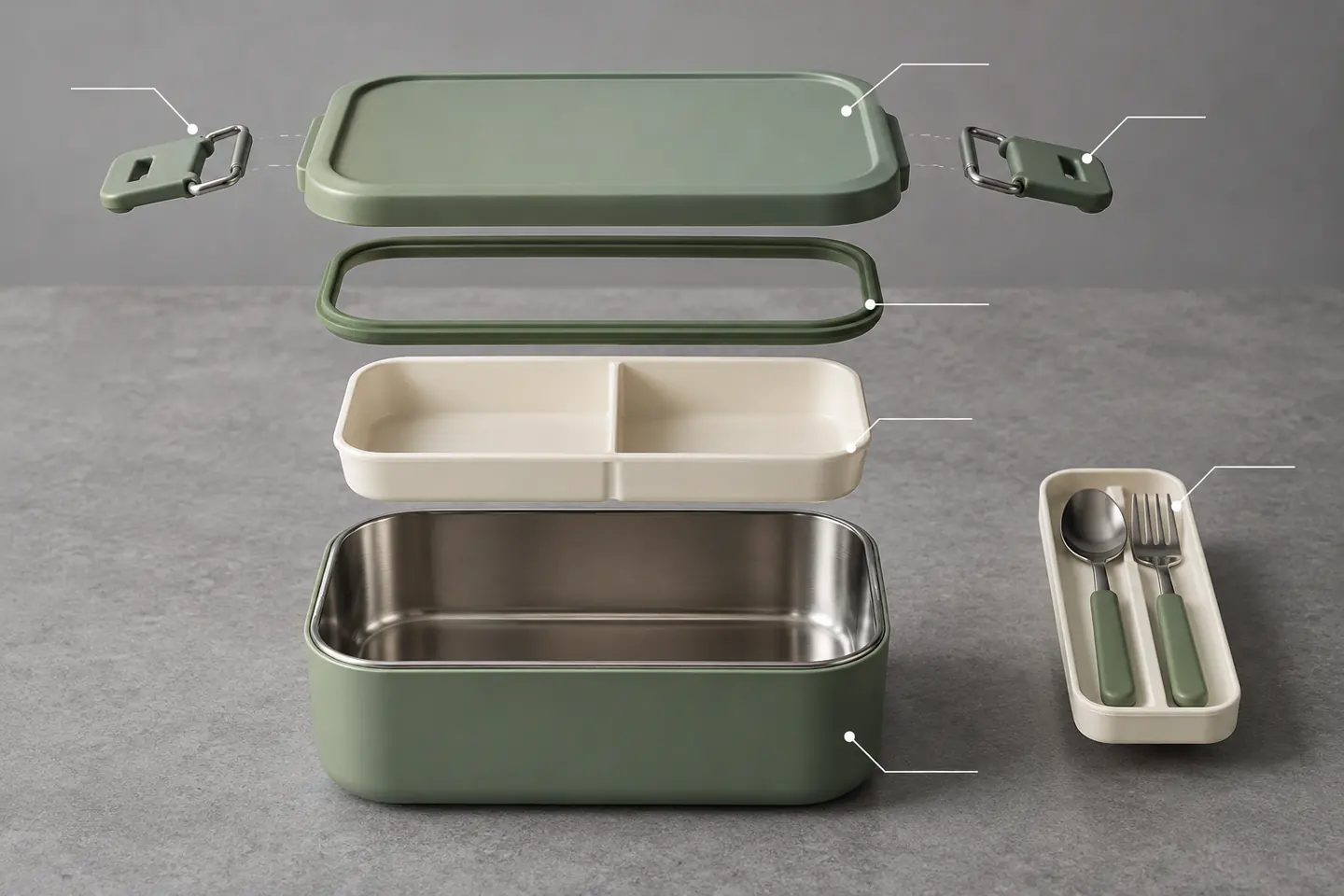
The description should help a human recognize the item without pretending to replace its drawing or specification. For example, the line may distinguish an outer lid from an internal divider and identify the intended parent SKU. Dimensions, material grade, finish, color reference and artwork revision can live in controlled fields or linked documents.
Quantity per set must be explicit. A three-piece cutlery bundle should not alternate between one “set” and three “pieces” across purchasing and packing records. Define the unit of measure so the factory can convert supplier packs into the exact quantity placed into each finished kit.
Which BOM fields protect a B2B buyer from ambiguity?
The table below is a practical control model, not a universal software template. A simple project may use a spreadsheet, while a larger program may connect product lifecycle, purchasing and quality systems. The essential point is that each decision has one governing location and one current revision.
| BOM field | What it should control | Risk when missing | Typical linked evidence |
|---|---|---|---|
| Item code and revision | Stable identity for the exact component state | Old and new parts are mixed or reordered incorrectly | Drawing, specification or signed sample |
| Description and parent SKU | Human recognition and where the item is used | Similar lids, seals or inserts are confused | Exploded view and product architecture |
| Quantity and unit | Exact count required for one sellable kit | Short packs, overpacking and inconsistent quotations | Packing standard and count sheet |
| Material, finish and color | Approved construction and visible result | Uncontrolled changes affect fit, appearance or evidence | Material declaration, color master and finish sample |
| Source status | Approved, alternate, buyer-supplied or pending route | An unreviewed component enters production | Source approval and change record |
| Replacement relationship | Which service part fits which product revision | After-sales stock does not fit fielded products | Compatibility matrix and fit check |
| Packaging level | Product, retail unit, inner pack or master carton | Packaging items are omitted from cost and count | Artwork, dieline and packing instruction |
Do not fill fields with copied assumptions. If a material, source or color is still open, mark it pending and assign an owner and decision point. False precision is more dangerous than a visible gap because teams may believe the component is already approved.
Link the BOM to fit, material and approval evidence
The BOM identifies what belongs in the set, but it should point to the documents that define acceptance. A lid line can reference its drawing, approved material, color master and functional sample. The main table stays readable while the linked evidence carries the detail required for engineering and quality.
Evidence must follow the actual component. A general material report cannot automatically support every color, formulation, supplier and finished SKU. Buyers should ask the factory to map available documentation to the relevant BOM line and destination-market requirement without treating one certificate as universal proof.
Fit relationships deserve explicit control. A seal fits a defined lid groove, a divider fits a defined container, and a utensil pouch fits a defined cutlery length. When either side changes, the BOM or compatibility record should trigger a review of the paired component.
Control variants without creating duplicate confusion
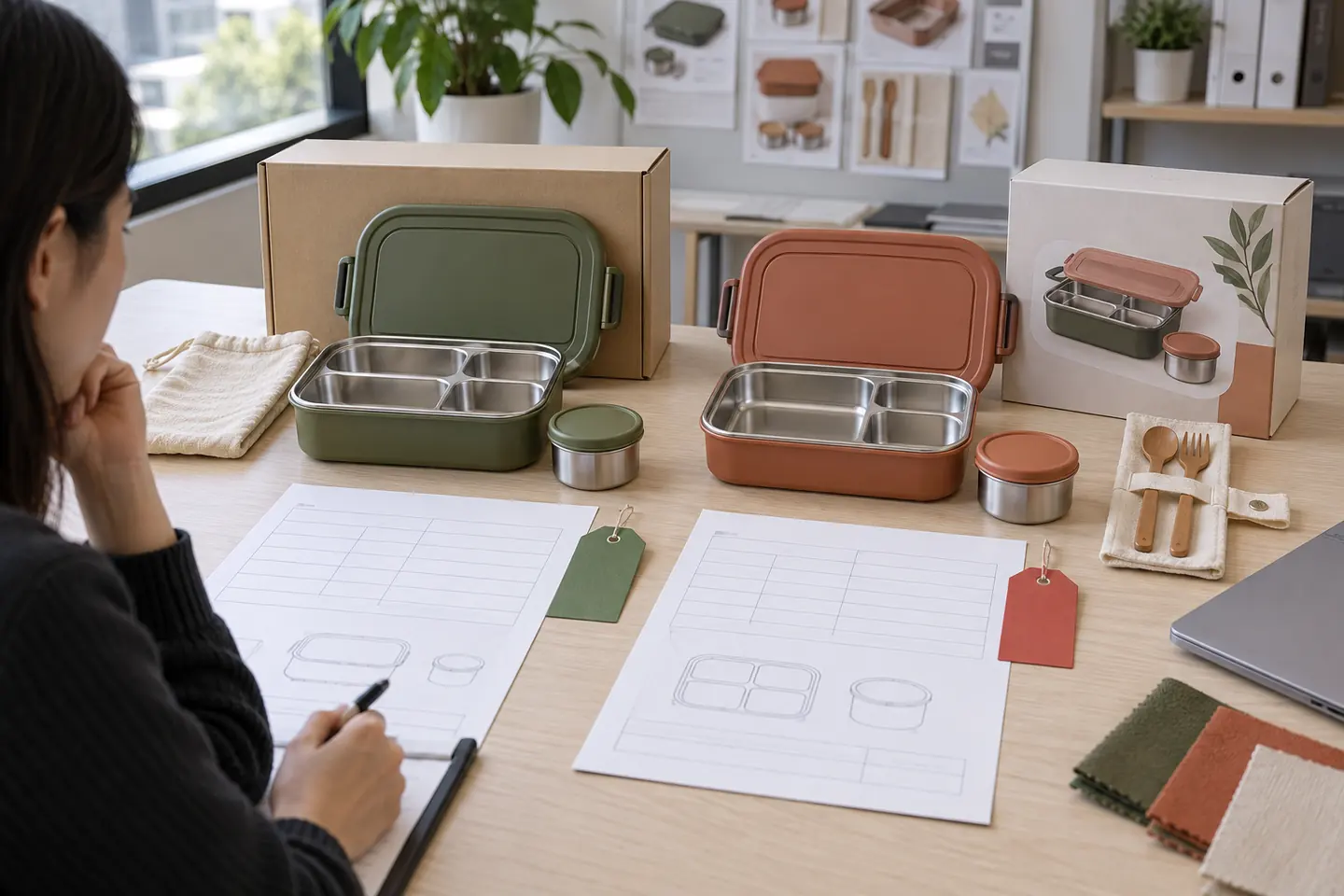
Custom meal kits often share a platform while changing color, artwork, utensils or packaging. A base BOM can hold genuinely common components, while variant BOMs identify what differs for each sellable SKU. This reduces repeated data without hiding commercial differences.
Do not assume that two visually similar parts are interchangeable. A color change can involve a different resin or finish route, and a printed lid can carry market-specific artwork. Shared codes should be used only when the component is intentionally identical and approved for every listed application.
Use effectivity for phased changes
A revision needs an effective point: a purchase order, lot, date or serial range that tells teams when the new state begins. Without effectivity, approved old stock may be scrapped unnecessarily or mixed with new parts without a decision. The buyer should agree how transition stock is handled before the change reaches assembly.
For repeat orders, preserve the previous released BOM and issue a new revision rather than overwriting history. This allows the factory and buyer to explain why two shipments differ and which replacement parts remain compatible. It also makes commercial changes visible during quotation review.
Substitution rules separate resilience from uncontrolled change
Supply continuity may require alternate sources, but “equivalent” must be defined. An alternate can match dimensions yet change gloss, odor, textile hand feel, closure force, packing volume or documentation. The BOM should show whether an alternate is pre-approved, conditionally approved or prohibited without buyer review.
Classify change impact instead of treating every revision equally. A carton print correction may need artwork approval, while a new seal material can require fit, use and evidence review. The change notice should state affected BOM lines, reason, remaining stock, sample requirement and proposed effective point.
Buyers should keep one release owner. Comments from marketing, quality and logistics are valuable, but the factory needs one consolidated decision. A clear approve, adjust or reject status prevents partial comments from becoming an accidental production release.
Packaging belongs inside the controlled product system
Retail packaging is not an afterthought when it identifies, protects and completes the SKU. Include the carry bag, paper insert, sleeve, label, color box, divider, inner pack and master carton at the appropriate BOM level. Link artwork revisions and barcode destinations to the exact market SKU.
Packaging quantities require the same discipline as product quantities. One instruction card per set, a defined number of sets per inner pack and a defined number of inner packs per carton create a hierarchy that can be checked. If mixed colors or assortments are allowed, describe the assortment rule rather than leaving operators to infer it.
The BOM should also connect to the packed-dimension decision. Adding a spare seal, thicker booklet or alternate pouch can change the closed carrier and retail carton. A packaging revision may therefore require more than an artwork check.
Release the BOM through samples, not spreadsheet confidence
A spreadsheet can look complete while the physical set still fails. Build a representative kit from the proposed BOM, pack it in the approved order and compare every line to the actual contents. Confirm fit, appearance, quantity, removal sequence and packaging before freezing the production revision.
Keep the approved complete set or identified component masters according to the project. Photographs help teams locate parts, but they should not replace physical fit evidence or controlled specifications. Store the approval date, revision and decision owner with the record.
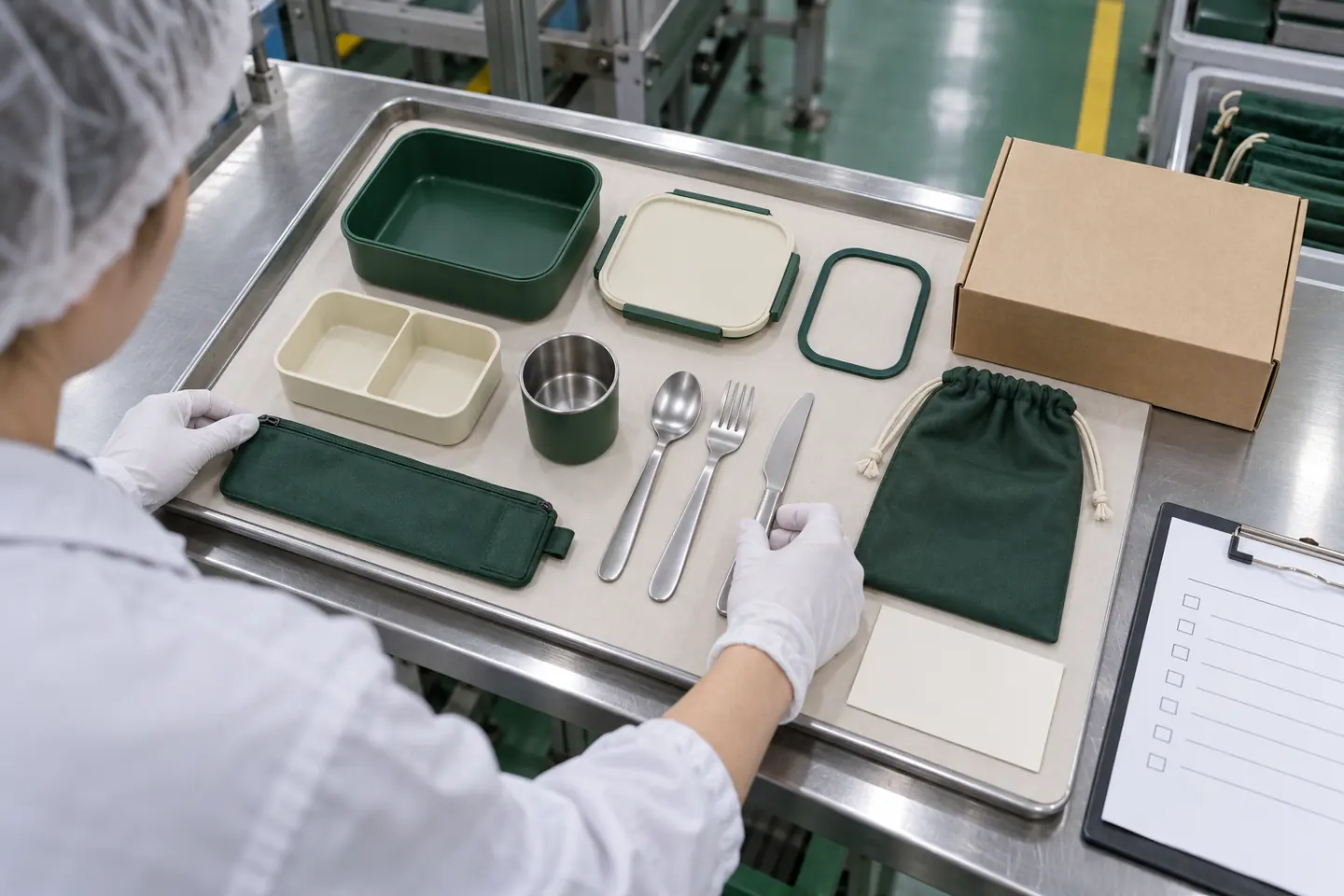
At assembly, use a count method that suits the risk. Trays, component staging, weight checks or final visual verification can support completeness, but none should be claimed as universally sufficient. The factory should confirm the method for the selected components and packaging route.
Buyer checklist for a controlled custom meal kit BOM
| Check | Question | Why It Matters |
|---|---|---|
| Commercial boundary | Does the BOM cover the complete sellable SKU, including carry and retail packaging? | Hidden items otherwise disappear from costing and pack control. |
| Stable identity | Does every controlled component have an item code and revision? | Names and colors alone cannot prevent part confusion. |
| Quantity basis | Is quantity per set stated with a consistent unit of measure? | It prevents short packs and quotation mismatch. |
| Linked specification | Are material, finish, color, drawing and sample references current? | The BOM must point to the evidence that defines acceptance. |
| Fit relationships | Are paired parts and compatibility rules documented? | A small revision can make a lid, seal or insert unusable. |
| Variant logic | Which parts are common and which are unique to each SKU? | It avoids both duplicate records and silent differences. |
| Substitution status | Which alternates are approved, conditional or buyer-review only? | Supply resilience should not become uncontrolled change. |
| Effectivity | When does a new revision begin and how is old stock handled? | It prevents mixed production and unexplained shipment differences. |
| Physical verification | Has one complete representative set been counted, packed and approved? | A complete spreadsheet does not prove a workable product. |
| Release owner | Who consolidates comments and authorizes production? | One decision path prevents conflicting approvals. |
Frequently asked questions about a custom meal kit BOM
What is a custom meal kit BOM?
It is the controlled list of every sellable, functional and packaging component required to make one approved kit. It records quantity, identity, revision and the information needed to connect each item to its specification and approval evidence.
Should packaging appear in the same BOM?
Yes, packaging should be linked to the commercial SKU. Retail inserts, labels, bags and cartons may sit at different hierarchy levels, but the complete shipped unit must remain countable and revision controlled.
Can a factory substitute an equivalent component?
Only through the agreed change process. The substitute should be reviewed for fit, material, appearance, evidence, packaging and commercial impact before release, even when its headline dimensions appear similar.
When should the BOM be frozen?
Freeze the production BOM after representative components, the complete set and packaging are approved. Keep a documented route for later revisions rather than treating the freeze as permission to overwrite history.
What should a buyer send to start a meal kit BOM?
Send the set concept, component quantities, target market, materials, dimensions, branding, packaging, reference samples and any parts that must remain interchangeable. Mark unknowns clearly so the factory can propose decisions instead of filling gaps with assumptions.
Conclusion: use the custom meal kit BOM as the source of truth
A custom meal kit BOM is effective when it controls the product customers receive, not merely the parts a buyer remembers during quotation. Give every component a stable identity, define quantity and hierarchy, link specifications and samples, control alternates and revisions, and verify one complete packed set before release.
For a Naike Tableware project, send the intended set, target quantity, destination market, reference products, materials, branding and packaging direction. The team can help structure the component review for the selected SKU without assuming universal MOQ, lead time, testing result or production capability.
Editorial note: the images are original conceptual visuals created to explain BOM control. They are not product specifications, test records or certification evidence.