Reusable Meal Kit Replacement Parts: How to Plan
A factory-side planning guide for importers, brands and distributors who need to support reusable meal kits after launch. Learn how to identify a part, verify fit, define service stock and keep replacement orders tied to the correct set revision.
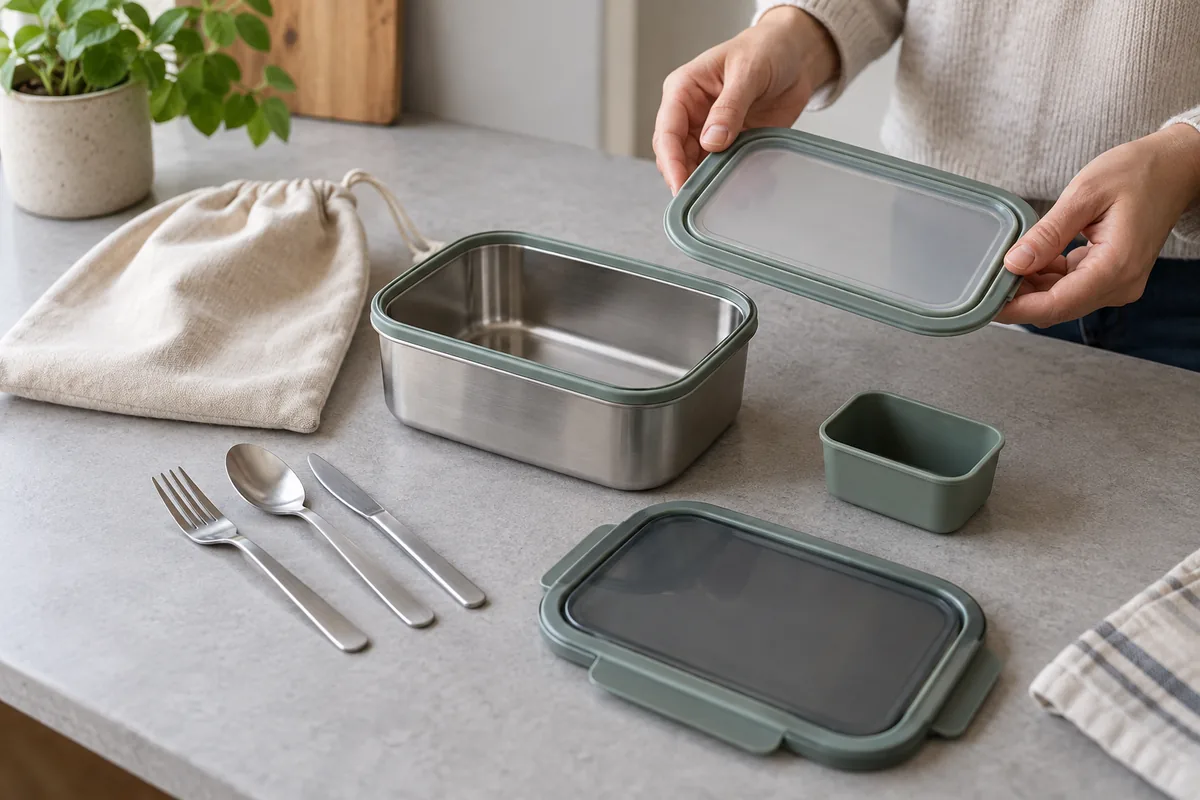
Start with the replacement scenario, not the spare list
“We need spare parts” is a useful signal, but it is not yet a sourcing specification. A distributor may want to resolve damaged components, a brand may want to support long-term product availability, and an institutional buyer may need a practical way to replace one missing item without repurchasing an entire set.
Those are different service problems. Before asking a supplier to quote, describe who will request the replacement, what event triggers it, whether the complete set is still in use, and how quickly the buyer expects the replacement to be available.
Start with the customer-facing promise that the business is actually prepared to make. If the program does not promise that every component will remain available indefinitely, avoid wording in the replacement plan that implies permanent compatibility or unlimited support.
Separate a one-time launch spare from an ongoing service part. Launch spares may be allocated for a defined rollout or sample program, while service parts need a product record, a replenishment decision and a process for handling later changes in materials or construction.
At the factory-side discussion, the first questions are practical: Which set is involved? Which component is missing or damaged? Those answers define the issue that needs a service response.
Is the original sample or drawing available? Has the product changed since that set was approved? Those answers decide whether a supplier can identify a part directly or needs to resolve the interface first.
How reusable meal kit replacement parts fit into the product record
A meal kit is a group of components, but service demand usually concerns one part at a time. A buyer who records only the set name may not be able to distinguish two lid shapes, two container depths, a divider used in one version, or a carry item configured for a specific assortment.
Give each sellable set a stable identifier, then give its components their own part references where the program needs them. The identifiers can be the buyer’s item codes, the supplier’s part references, or a mapped combination, provided both sides can identify the same version without relying on a photo or a memory of the launch sample.
Reusable meal kit replacement parts: minimum record fields
For each candidate part, record the parent set SKU, component name, revision, physical reference, material or material family, color, and the interface or fit feature that matters. Add the approved drawing, sample photo, target market, pack quantity and replacement channel if those details affect how the part is sourced or delivered.
Use dimensions where they help discriminate between similar parts. A lid’s outline is not always enough; buyers may also need the rim profile, closure locations, depth, fit direction or a named container revision to identify the correct match.
Do not force all data into a consumer-facing label. A retailer may need a short replacement-part name, while the buyer’s internal item record needs a fuller description, revision history and link to the original set. Keep the service-facing identifier easy to understand without losing the technical traceability behind it.
For a multi-component set, decide which parts are independently replaceable. A cutlery item may be easy to identify as a single part, while an insert, lid, seal or carry bag may be dependent on an exact container or pack configuration.
That distinction matters when a buyer revises the set. A changed container height can affect the divider, lid and carry case together, even if the set keeps the same retail name. Record which child components were reviewed when the parent configuration changed.
Compatibility decisions that prevent the wrong part being reordered
Replacement errors often begin with a plausible visual match. Two parts can have similar colors and silhouettes but differ in a closure detail, edge, attachment point, material, or revision that affects how they work with the original set.
Build a compatibility check around the mating parts. For a lid, identify the container version and the surfaces or closure features that engage; for a divider, identify the compartment layout; for a fabric carrier, identify the packed components and the internal arrangement used for approval.
Use the physical approved sample whenever it is available. A drawing or photo helps communicate the reference, but the buyer should confirm whether it represents the current released version and whether any later change superseded it.
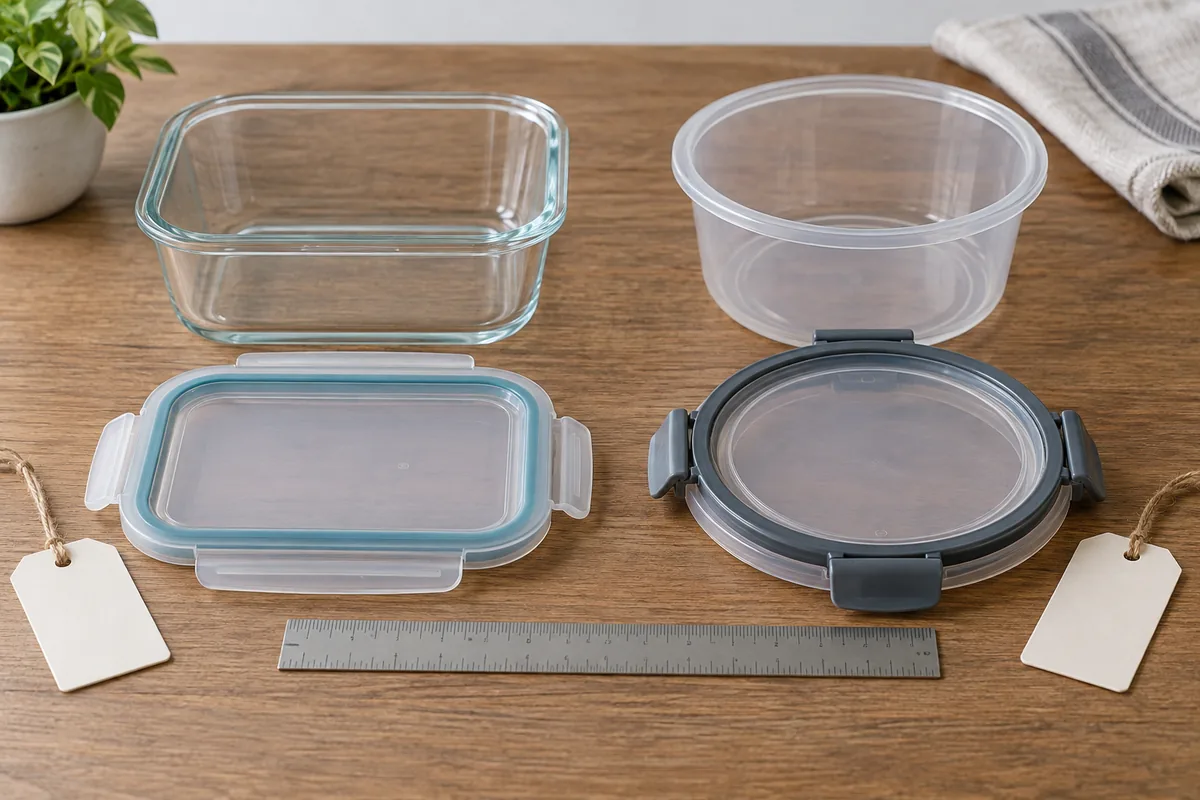
Ask the supplier to state the basis of the match. The answer might refer to an approved sample, drawing revision, physical dimensions, tooling reference or another documented item identifier; the buyer should make clear which evidence is necessary for the intended service channel.
When the original part is unavailable, send the best available references and label the uncertainty. A photo with scale, several views, a measurement sketch, package label and parent set details can help start identification, but the supplier may still need a sample or further review before confirming compatibility.
Make “compatible with” a controlled statement rather than a casual note. Specify the exact parent SKU and version, list any exclusions, and retain the approval record with the replacement part’s own description.
Compare three service models for replacement parts
There is no single service model that suits every product range. The correct choice depends on how often parts are needed, how clearly the buyer can identify them, and whether a replacement must be delivered as an individual item or as a ready-to-issue set.
| Service model | Useful when | Buyer decisions to document |
|---|---|---|
| Individual part on request | A single component can be identified and handled independently. | Part reference, parent set compatibility, order route, protective packing and whether the part is offered separately. |
| Defined service kit | Several components are normally needed together or the buyer wants one simple service item. | Kit contents, quantity of each item, compatible revisions, kit label and how substitutions are controlled. |
| Buyer-held spare allocation | The buyer wants some parts available close to the market or service location. | Planning assumption, ownership, storage conditions if applicable, stock review point, replenishment trigger and obsolete-stock treatment. |
An individual-part approach can reduce the need to replace a complete set when only one item is needed. It also requires better identification and picking discipline, because a similar component from another version can be selected by mistake.
A service kit simplifies the request if its contents match a real service pattern. It may be less useful when a customer needs only one piece or when multiple set versions share a retail name but have different components.
Buyer-held stock can shorten the internal handling path, but the business takes on storage, counting and obsolescence decisions. The buyer should decide who owns the stock, who can issue it, how the part is labeled, and what happens when the parent set changes.
These routes can coexist for different components. A buyer might manage a small allocation of a high-priority part while ordering less common components when a service case arises, but that policy should be explicit rather than assumed by the factory or distributor.
Replacement parts demand has no universal spare ratio
There is no universal percentage of spare lids, cutlery or bags that applies to every meal kit program. Actual demand depends on the customer group, product use, channel, warranty policy, replacement promise, shipping route, service history and the cost of holding inventory.
If the buyer has service data, use it carefully. Separate confirmed requests from one-off launch needs, distinguish missing parts from defects, note the age and version of the set, and check whether a single customer incident produced several replacement items.
For a new program without history, make an explicit planning assumption rather than calling an estimate a forecast. The assumption can be reviewed after the buyer has a defined period of sales or service observations; the precise review interval should suit the business’s operating calendar.
Assess the impact of being out of stock. A missing spoon may not block use of the rest of the set, while a missing closure component could make the main container unusable for the intended packout. Rank parts by consequence and ease of replacement rather than by visual prominence alone.
Consider the order path as well as demand. If parts can only be replenished alongside a broader production order, a buyer may plan differently from a program with a local service stock route. Confirm the available sourcing and fulfillment options with the supplier for the exact component instead of assuming every part has the same ordering conditions.
Include storage and identification costs in the decision. A small piece can still be hard to manage if it is easily mixed with similar revisions, while a larger soft item may be simpler to count but occupy more space. The right plan is the one the buyer’s operation can maintain accurately.
Keep revisions, labels and packaging aligned
Replacement items may travel separately from the original retail set. Their packaging should help a service team identify the part, preserve it through handling and connect it to the intended parent product without suggesting an unverified compatibility range.
Agree on the information carried by the package or label. Depending on the route, this may include the part name, buyer item code, revision, compatible parent set, pack quantity, destination language or handling note; the buyer should confirm which details are required for its market and process.
For tiny pieces, the outer pack may be the only practical place to preserve the item identity. For a consumer-facing replacement, the packaging may also need instructions on how to identify the parent set or where to ask for help, but those statements should match the buyer’s actual service policy.
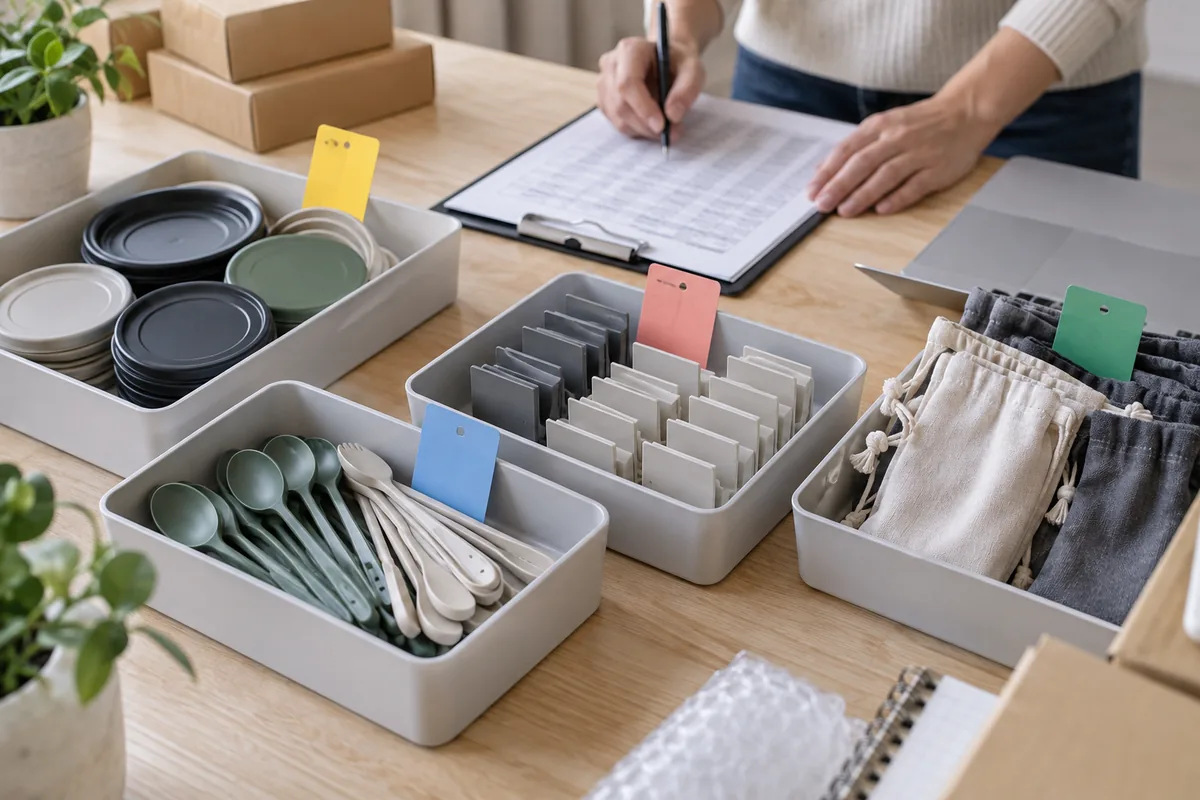
Keep labels and internal descriptions synchronized when a component changes. A revised lid can remain visually similar while requiring a different compatibility note, so the old label should not remain active simply because the customer-facing product name did not change.
Decide how superseded parts are handled. A buyer may sell through, isolate, rework or retire old inventory depending on its own rules, but any decision should account for which set revisions the old part supports and whether the customer can distinguish them.
Packaging approvals should be connected to the part revision. If the replacement is sold as a kit, record its contents and count; if it is sent as a single item, make sure the pack protects the piece and keeps its reference readable through the buyer’s receiving process.
What should buyers verify before approving a replacement component?
A replacement sample should answer fit and identification questions, not just appearance questions. Buyers should review the actual mating part, check any feature that differentiates the revision, and confirm that the package or record will prevent the wrong item being reordered later.
For a lid or closure, follow the specified engagement sequence and inspect the contact points. For an insert or divider, place it in the matching container and check orientation; for a carry component, use the approved set configuration and packout sequence.
Record what was actually checked and what remains open. If the buyer approves color but has not checked fit, say so; if a sample is accepted only for one parent set, keep that limit visible on the part record and in the supplier instructions.
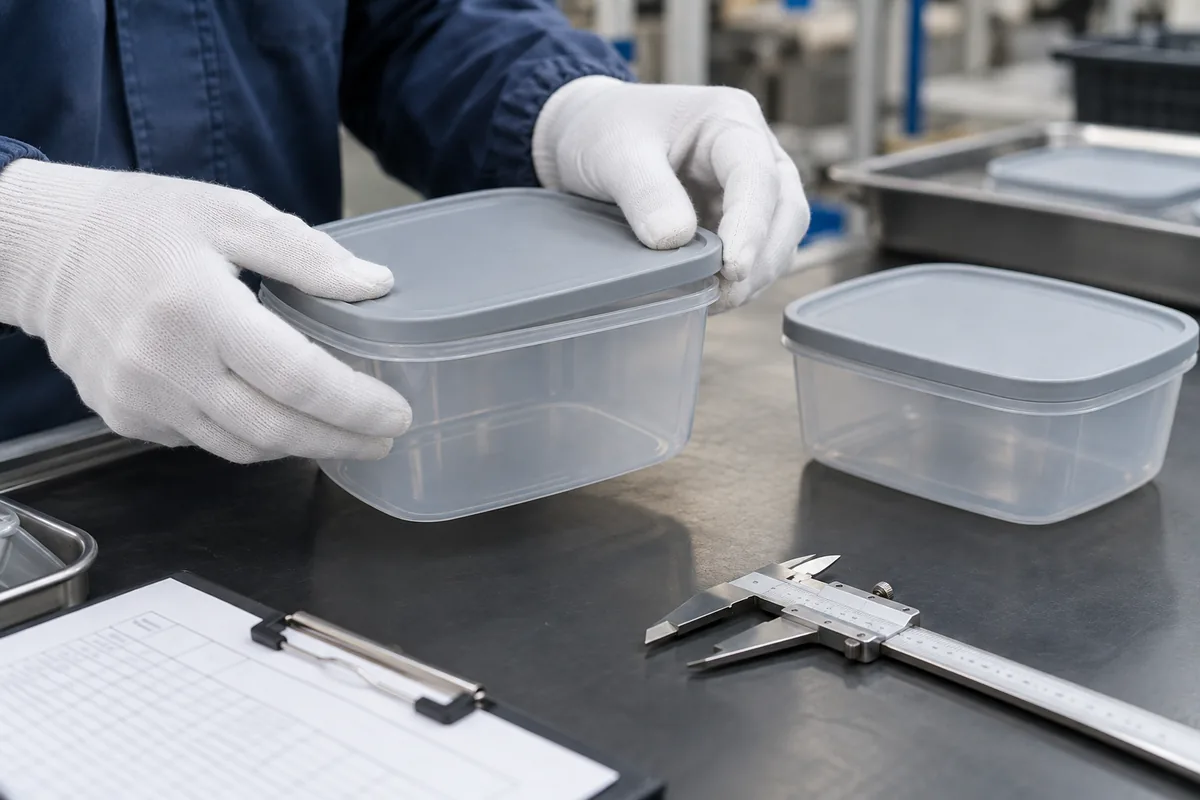
Use the same review logic for later revisions. Compare the replacement against the released reference, document any approved difference and update the buyer’s records before that revision is used for service orders.
Where market-specific testing, material documentation or labeling applies, the buyer should define the scope and confirm the evidence for the relevant component and intended use. A document for a different material, color, supplier or finished SKU should not be assumed to cover the replacement automatically.
Buyer checklist for reusable meal kit replacement parts
Use this three-column checklist to organize a supplier conversation before requesting a quotation or sample. It separates the question to ask from the operational reason for asking it.
| Check | Question | Why It Matters |
|---|---|---|
| Parent product | Which buyer SKU, set name and released revision does this part belong to? | Prevents a similar-looking component from being assigned to the wrong set. |
| Part identity | What is the part name, buyer code, supplier reference and current revision? | Creates one reference the buyer and supplier can use during reorders. |
| Fit interface | Which dimensions, contact surfaces or attachment features determine compatibility? | Visual similarity alone may not prove the part mates with the intended component. |
| Reference evidence | Can the match be checked against an approved sample, drawing or controlled photo? | Shows what evidence supports the fit decision and whether it is current. |
| Replacement route | Will the buyer request an individual item, a defined kit or stock allocation? | Changes identification, packaging, fulfillment and inventory responsibilities. |
| Demand assumption | What sales, service or launch information supports the planned quantity? | Keeps an estimate visible as an assumption when historical data is limited. |
| Revision control | How will obsolete and current versions be labeled and separated? | Reduces mix-ups when a product name stays the same but a component changes. |
| Pack and label | What item identity, quantity, language and compatibility note must appear? | Helps receiving and service teams select the correct replacement. |
| Market evidence | Which component documentation or labeling requirements apply to the destination market? | Keeps the evidence request tied to the specific material, part and use. |
| Open decisions | What has been approved, and what still requires a buyer decision or sample check? | Stops a partial review from being mistaken for full release approval. |
Plan the supplier discussion around evidence and responsibilities
When asking a supplier to review replacement support, include the parent product, target market, part description, expected service scenario and any records already available. If the component is unknown, describe what failed or went missing and share the references that can help identify it.
State which party owns each decision. The buyer may control the item code, compatibility promise, destination-market requirements and service policy, while the supplier may need to confirm whether the referenced part can be identified and what sample or technical information is needed to validate it.
Ask the supplier to separate confirmed facts from questions. A response should not turn a photo-based guess into an approved compatibility statement; where a drawing, sample or revision confirmation is missing, keep that item open until the reference is resolved.
Commercial details should be requested for the actual scope. Availability, MOQ, pricing, lead time, tooling responsibility and shipping method can vary by component, revision and order route, so buyers should request current terms rather than borrowing conditions from a different product or project.
For a first discussion, send a concise package: the parent set name and SKU, a component list, images or drawings, the requested spare route, destination market, labeling needs and questions about fit or documentation. Note any unknowns so that the supplier can identify what must be resolved before a sample or quote can be treated as final.
After the discussion, save the agreed part map with the buyer’s product record. Include supplier references, revision, approved fit evidence, packing details and the date or release status, so the next service request can start from a controlled reference rather than a new round of guesswork.
Frequently asked questions about reusable meal kit replacement parts
How should a buyer identify a replacement part for a reusable meal kit?
Use the original set SKU and revision, component name, dimensions or interface reference, material and color, plus an approved sample or drawing where available. Confirm against the exact parent set rather than matching by appearance alone.
Can a replacement lid fit more than one container?
It may be possible, but buyers should not assume cross-compatibility from a similar outline. Compare the relevant rim, closure features, dimensions, material and released revisions, then verify the fit with the intended samples.
Should replacement parts be sold individually or as service kits?
That depends on the service issue, channel and fulfillment workflow. Individual parts support precise replacement when identity is clear, while a defined kit can simplify handling when several components are normally needed together.
How many spare parts should a buyer stock?
There is no universal spare ratio. Consider service history, launch scope, part criticality, replenishment constraints, storage cost and the buyer’s service target, then document the estimate as a planning assumption that can be reviewed.
What should be included in a replacement-part quote request?
Share the parent SKU and revision, part name and quantity, photos or drawings, fit reference, material and color requirements, destination market, packaging and labeling needs, and the intended replacement scenario. Ask the supplier to flag unresolved compatibility questions before finalizing the order.
Tie each replacement order back to its released set
A practical replacement-parts plan begins with the service scenario and ends with a controlled identity, compatibility reference and fulfillment route. It helps a buyer replace the right component without implying that visually similar items are interchangeable or that every part will remain available under unchanged conditions.
Record the parent SKU and revision, verify the fit against an approved reference, select an individual-part or kit approach, and keep labels and packaging aligned when designs change. If you are developing a reusable meal kit, share the component list, target market, replacement need and open questions so the supplier can review the appropriate sourcing and sample steps.