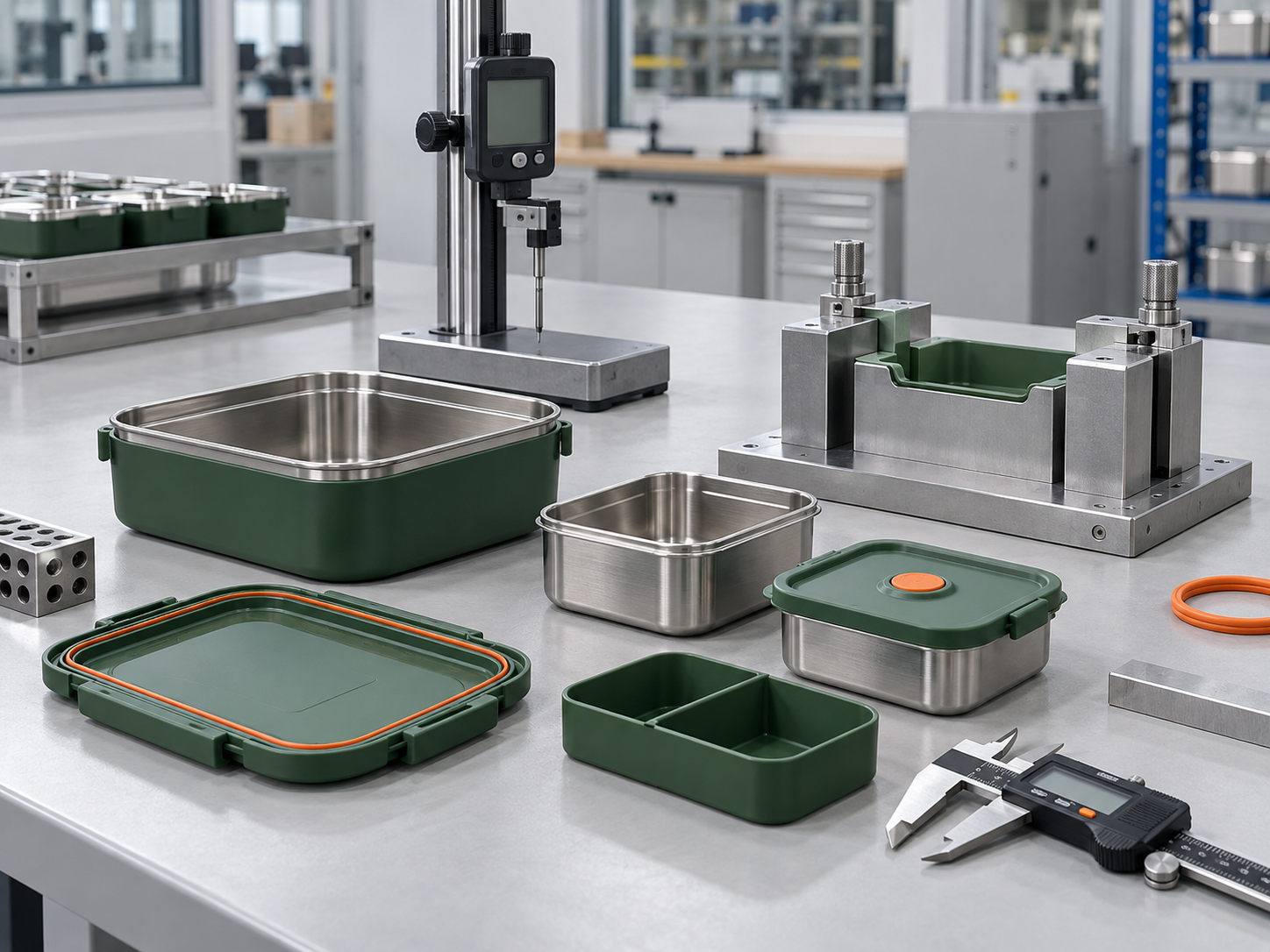
Specification Control
Dimensions And Appearance.
Agree measurable checkpoints, appearance limits and the approved reference sample before production release.
Quality Planning
Define the destination market, use conditions, acceptance criteria and document needs before samples and production are approved.
Project Control
Each gate gives your team a clear point to review specifications, samples and evidence before the project moves forward.
Intended market, user, food-contact context, cleaning method, transport and storage conditions.
Material route, construction, dimensional checkpoints, appearance limits and packaging plan.
Agree the sample checks, document set and applicable laboratory or inspection work.
Use the approved sample, signed specification and quality plan as the production baseline.
Already have a test protocol or inspection checklist?
Buyer-Visible Evidence
The exact checks depend on the selected product, material, intended use and destination market. These illustrations show the review stages; request project-specific evidence for the selected configuration.
Specification Control
Agree measurable checkpoints, appearance limits and the approved reference sample before production release.
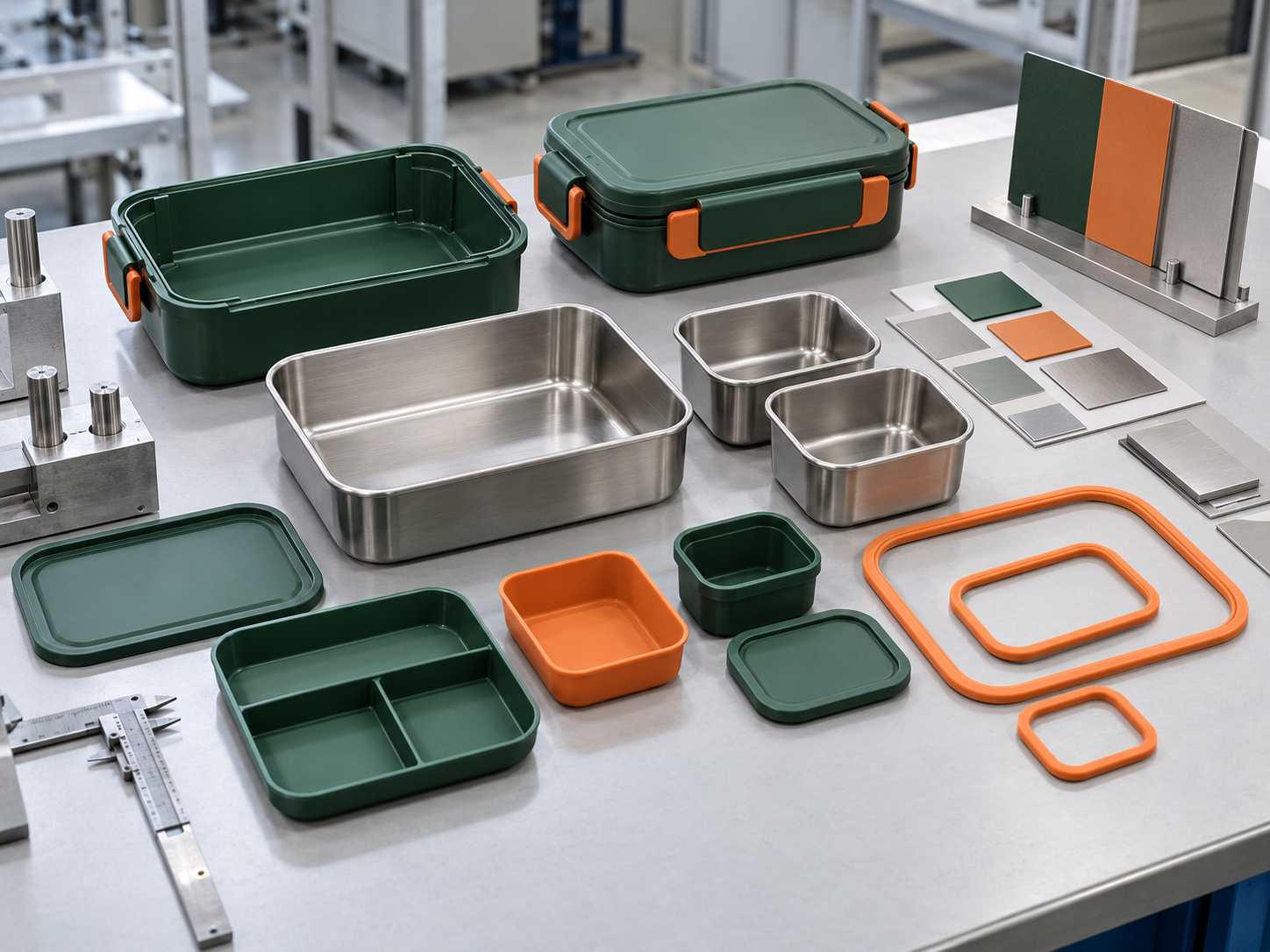
Process Review
Confirm the material route and review component fit, color and assembly checkpoints for the selected configuration.
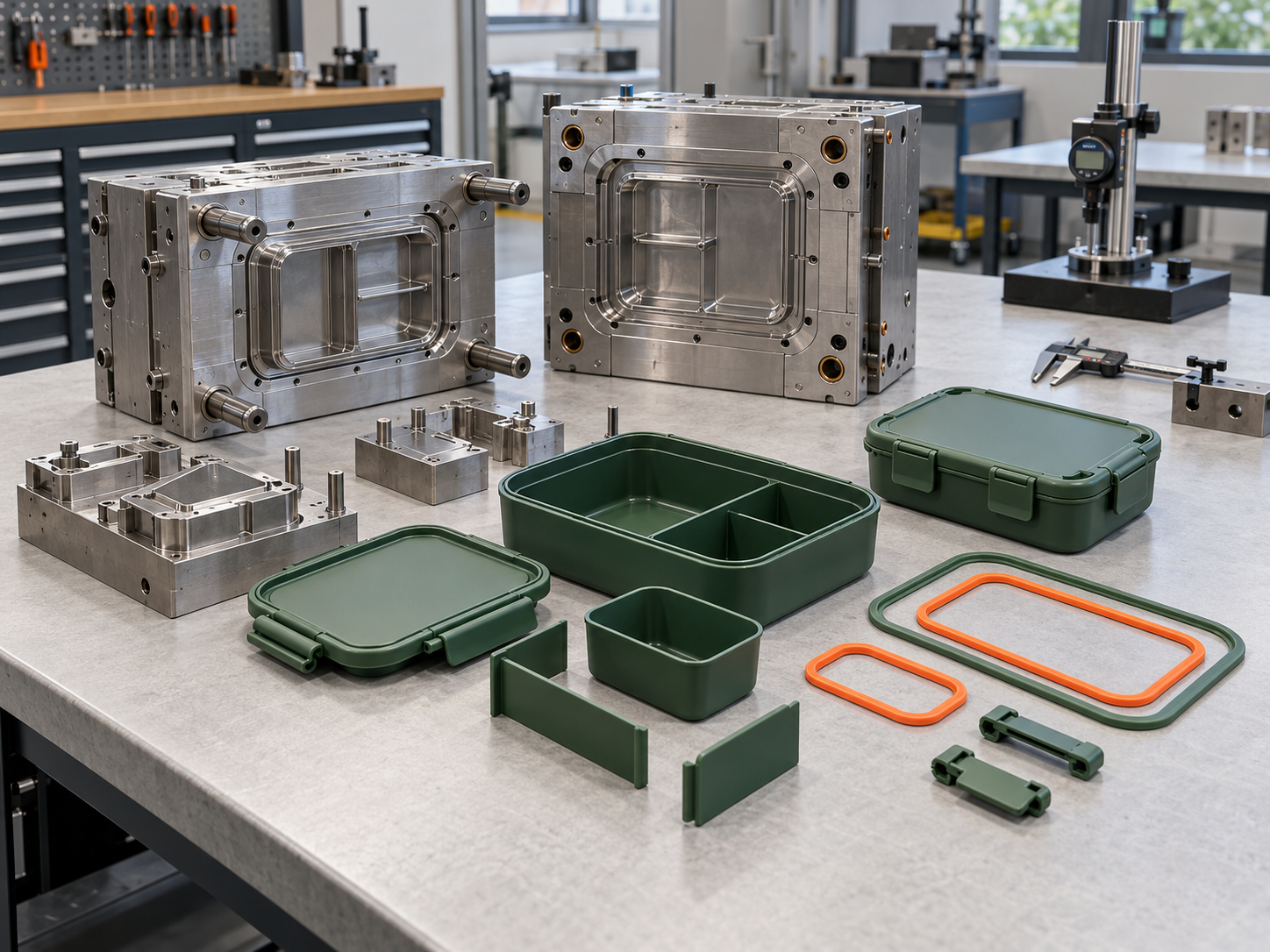
Tooling Validation
For modified or new-mold projects, record trial findings, corrections and the approved production baseline.
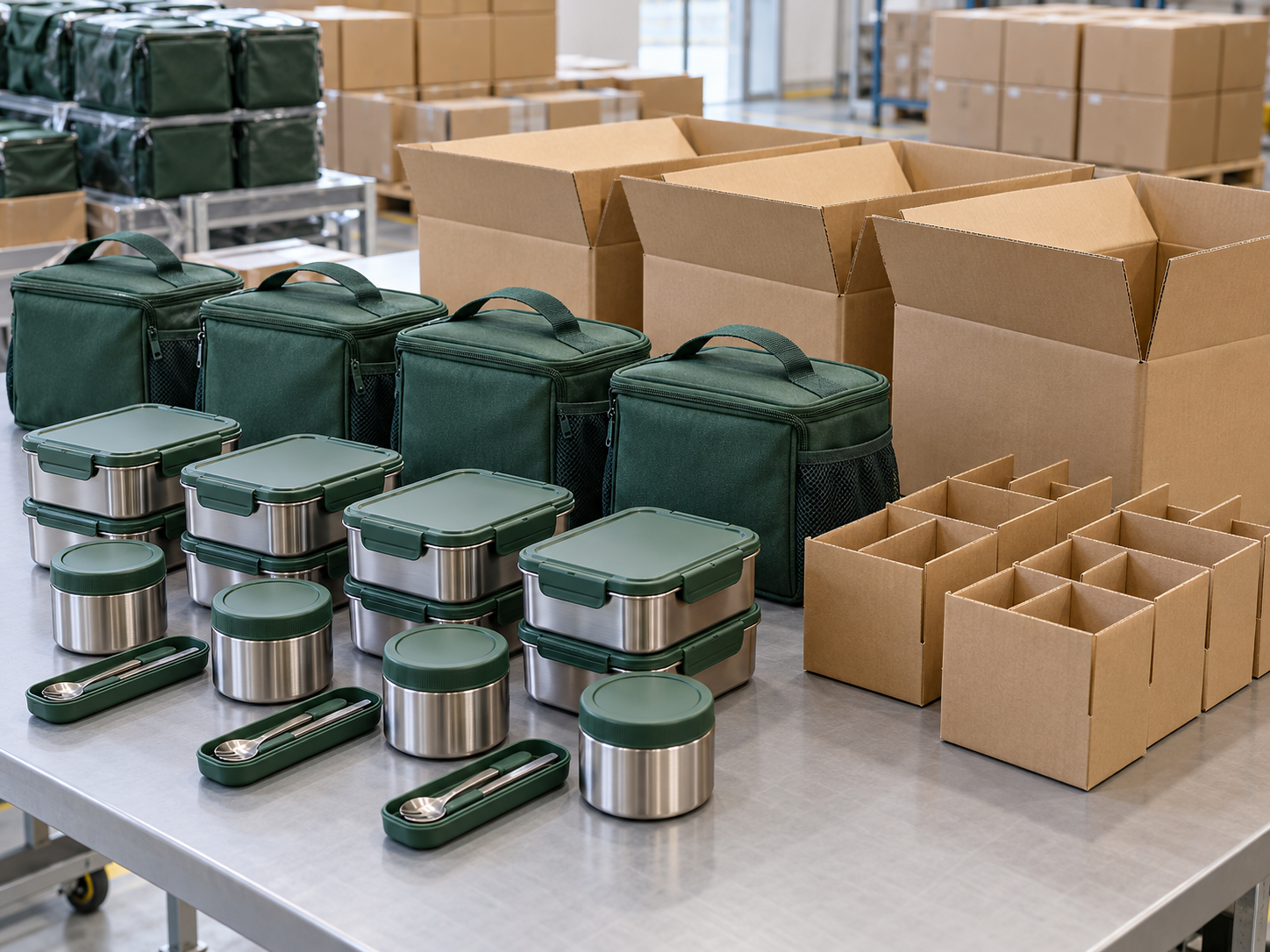
Final Release
Review assortment, carton marks, packaging condition and agreed final-inspection records before dispatch.
Buyer Checklist
Requirements should be tied to the exact configuration and intended market, not copied from an unrelated product.
Quality Requirement Guide
Quality planning is most useful when the buyer describes the intended result, the condition of use and the evidence required for approval. The exact plan should follow the selected configuration rather than a generic checklist copied from another item.
A request for a material or food-contact document should identify the component, intended use and destination market. A lunch system may combine stainless steel, molded parts, seals, textiles, coatings, printed packaging and accessories, and the relevant review scope may differ across those parts.
Buyers should state whether food will contact the component, whether the product is intended for hot or cold meals, how it will be cleaned and whether reheating is expected. Naike can then review the requested material route and the project-level document needs against the selected product.
A material name by itself does not prove that every finished configuration meets every market requirement. Final claims should be based on the approved specification, applicable evidence and the conditions under which the product will be sold and used.
Words such as leakproof, durable, insulated or easy to clean can mean different things to different teams. A useful RFQ explains the condition behind the claim.
For leak control, identify the food type, fill level, closure method, transport orientation and expected carry period. For thermal planning, describe the starting temperature, duration, surrounding conditions and whether an insulated bag or cold pack is part of the system.
For drop or handling checks, state the assembled product, fill condition, height, surface and acceptance criteria. Cleaning requirements should describe the expected method and the areas that must remain accessible.
These inputs allow the sample plan to focus on the buyer’s actual risk instead of producing a generic pass statement that may not support the intended use.
Sample approval should record more than an email saying the product looks acceptable. The approved configuration should be connected to the product name, component list, material direction, dimensions, color references, decoration location, packaging structure and agreed functional checks.
If a sample is approved with open points, those points should be listed before production release. For modified or new-mold projects, trial findings and corrections should be traceable to the relevant sample round.
This helps purchasing, product and quality teams review the same baseline and reduces the chance that an earlier prototype is mistaken for the production reference. Physical samples, signed specifications and approved artwork each control different details; the project should state which record governs when a difference appears.
Inspection checkpoints should reflect the selected product and the buyer’s acceptance criteria. Incoming review may cover identified materials or components.
In-process review may focus on dimensions, color, assembly, closure fit or appearance. Final inspection may cover the completed set, quantity, labeling, accessories, packaging condition and carton presentation.
Buyers can provide their preferred sampling plan or ask for a proposed project plan. Acceptance limits should be agreed before inspection, not created after a shipment has been completed.
When third-party inspection or laboratory work is required, the responsible party, sample selection, method, report format and timing should be discussed in the commercial plan. Inspection records provide evidence for the agreed checkpoints; they do not replace accurate product definition or appropriate market review.
Quality RFQ Inputs
State the destination market and channel; describe the meal, transport and cleaning conditions; identify requested materials and documents; list the claims or functions that need validation; and define the inspection or approval records your team expects. Include retailer protocols, artwork controls or packaging tests when they apply.
If a requirement has not yet been confirmed, flag it for review rather than treating it as an approved claim. These inputs let the quality discussion begin early, when product and packaging decisions can still be adjusted.
Change Control
When a material, color, component, supplier process, artwork or packaging detail changes after sample approval, record what changed and decide whether the specification, evidence or inspection plan also needs an update. The impact depends on the selected product and the nature of the change.
Buyers should avoid approving substitutions through separate conversations that are not reflected in the final project records. A controlled change log helps purchasing, product, quality and production teams work from the same current baseline, especially when several colors, assortments or shipping destinations are included in one program.
Wholesale · OEM · ODM
Share your market, quantity, preferred configuration and development route. MOQ starts at 500 pcs.