Tableware Mold Selection: Existing, Modified or New?
A buyer-side decision guide for tableware importers, brand owners and distributors evaluating tooling for a custom lunch box, dining set or component program. It compares fit, modification scope, new development, ownership and approval evidence from the buyer’s perspective.
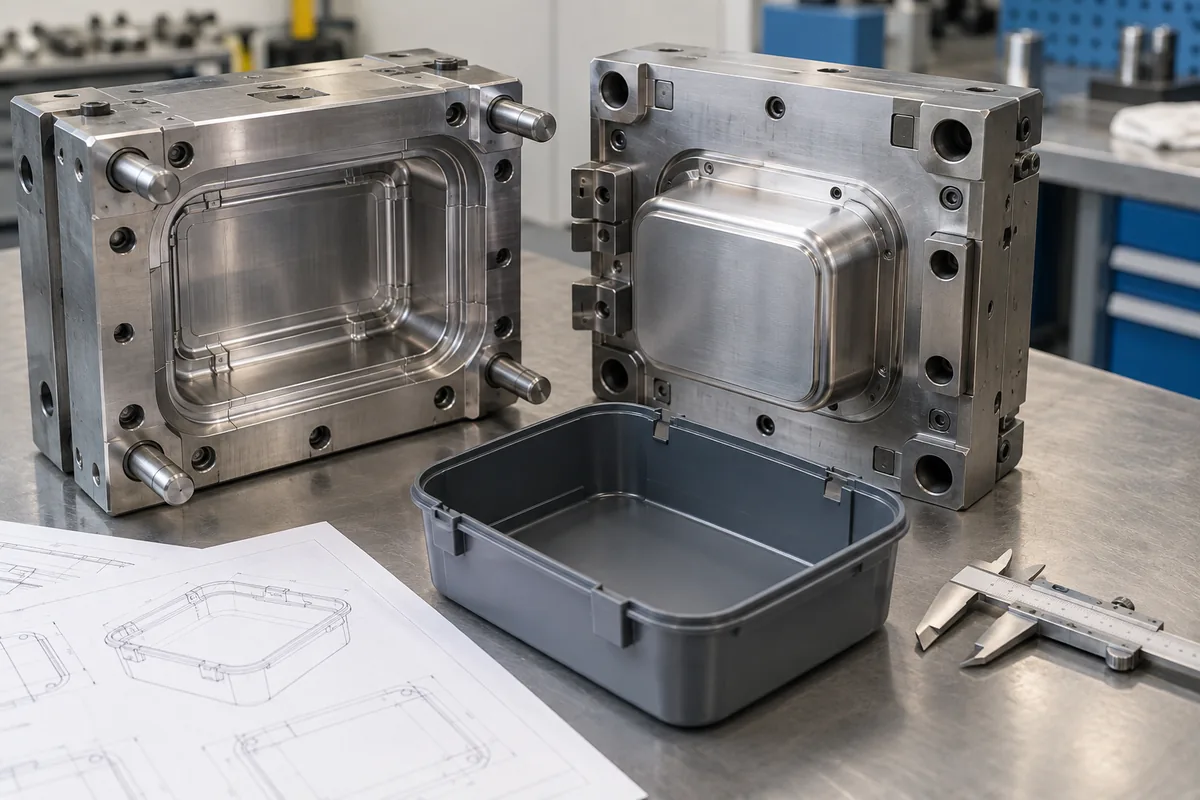
Begin tableware mold selection with the product gap
A tooling conversation often starts with a request for a custom mold, but buyers should first describe what the market-facing product must do. A reference image may communicate style, yet it rarely captures every dimension, closure, partition, stack interface, utensil location, or packing constraint that determines whether an available mold is suitable.
Write down the gap between the current reference and the required product. Is the difference mainly color, logo placement, surface appearance, or packaging? Or does the buyer need a changed capacity, compartment layout, rim, wall, closure, nesting feature, handle, or accessory interface?
This distinction does not automatically tell you which route is possible, but it makes the supplier review more precise. A color change and a structural change are not interchangeable requests, and neither should be quoted from a mood board alone.
For a multi-component set, map the gap by part rather than saying that “the set” needs a new mold. The container, lid, divider, cup and utensil may each have different references and tooling implications. The buyer can then see whether only one component requires development or whether changes across parts must be coordinated.
State what is fixed and what can change. Product use, destination-market requirements, a planned carry case, retail shelf dimensions, and existing brand standards may constrain geometry, while color, print, assortment, or packaging may offer more flexibility.
As a factory-side reviewer, we would ask for the actual product brief before recommending a route: intended configuration, material, target market, reference samples or drawings, must-keep features, acceptable alternatives, and the decision owner for each open point. The recommendation is only as reliable as the inputs it is based on.
Existing molds: a fit decision, not a catalog shortcut
An existing mold may be attractive because it appears to reduce development work, but “existing” does not mean “ready for this project.” The buyer needs to establish whether the physical tool and the part made from it match the required product. It is also necessary to confirm whether that tool can be used for the intended program and what changes or validation remain.
Tableware mold selection: verify the reference before assuming fit
Start by comparing the actual molded part with the current product specification or approved reference. Review the overall envelope, critical dimensions, fit surfaces, compartment geometry, closures, nesting contacts, and any interface to another set component. The relevant checks depend on the product and the buyer’s intended use.
Ask the supplier to identify the exact sample, drawing revision, mold reference and material basis used for the comparison. A photograph can help identify a family resemblance, but it cannot confirm every dimension, production condition, or permission to use the tool.
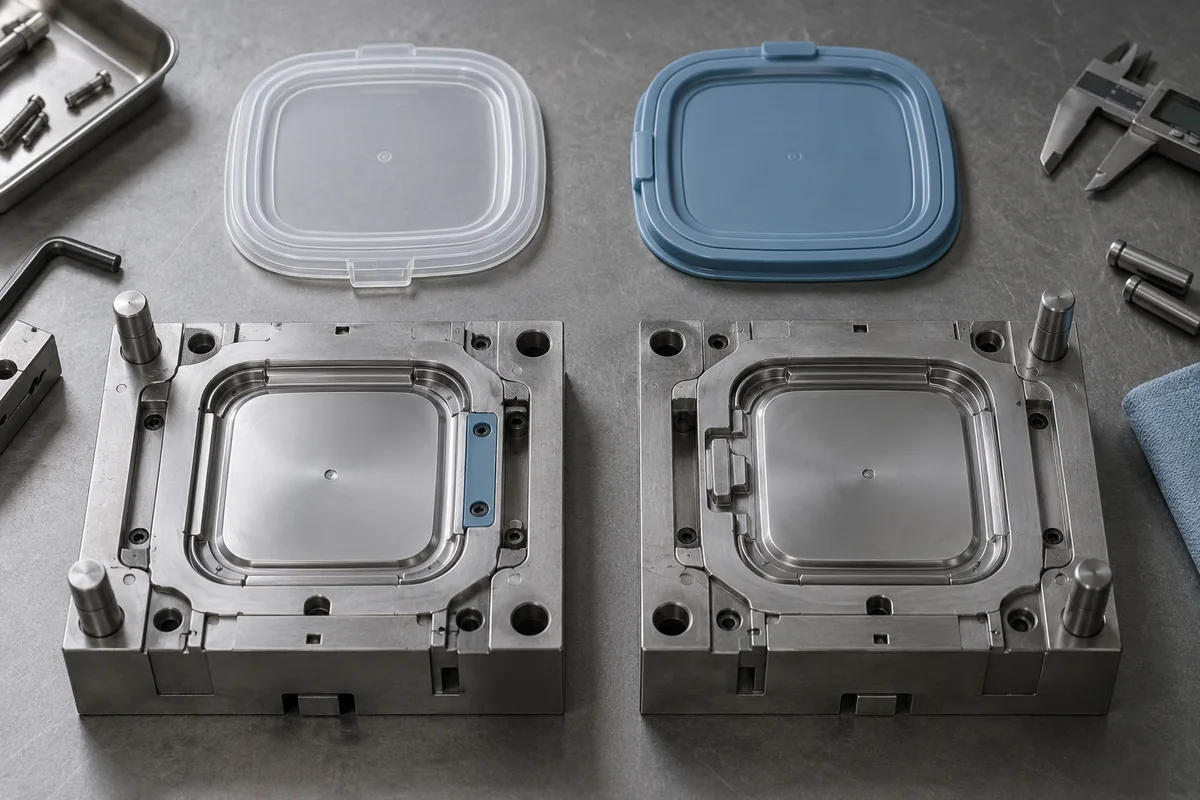
Check the parts as a system when the product depends on assembly. A container that looks right on its own may not meet the intended lid, divider, cutlery, or carry-case arrangement. Ask which interfaces are included in the review and which are still open.
Then confirm commercial permission. The tool may belong to a supplier, another customer, or the buyer, and use may be limited by an agreement or defined product scope. Ask who owns it, what products can be made from it, whether branding or market restrictions apply, and how access is handled if the commercial relationship changes.
Finally, document tool condition and maintenance expectations at a level appropriate to the project. A buyer should understand what the supplier has actually reviewed, what is assumed, and whether a sample or production trial is needed before final acceptance. Do not convert a verbal “we have a similar mold” into an approved specification.
Modified tooling: define what changes and what stays controlled
A mold modification can be a middle route when the existing tool provides a sound base but one or more defined features need adjustment. Whether that is feasible depends on the tool’s construction, the geometry involved, the intended material and process, the effect on other features, and the supplier’s engineering review.
Separate change requests into categories. Cosmetic or identification changes may be different from a dimensional change to a fit surface; a logo insert may be different from adding a partition; adjusting one interface may affect stacking, lid engagement, wall thickness, or another part of the assembly.
Ask the supplier to show the proposed boundary of the change and identify the affected cavity or insert. Confirm which dimensions are intended to move and which existing features must remain unchanged. Agree what sample, drawing or trial will demonstrate the result.
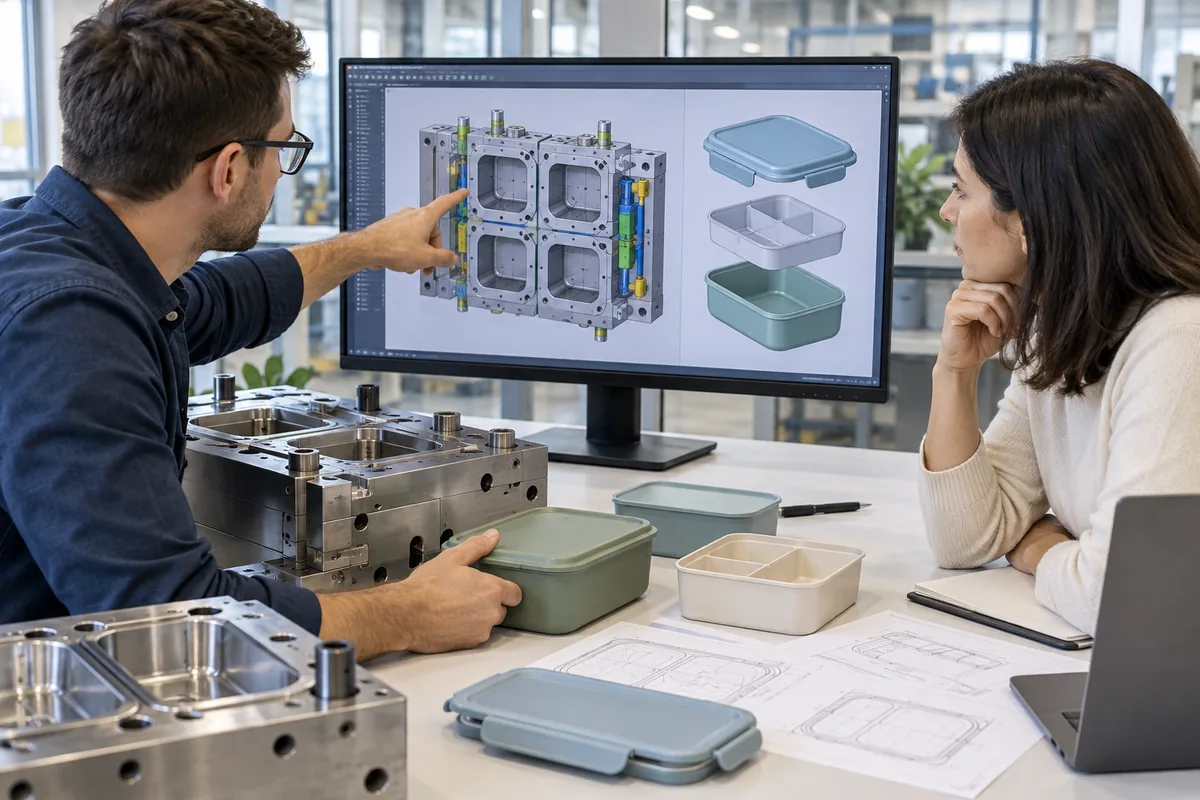
For a set program, consider downstream dependencies before approving a local edit. Changing a container’s external dimension can affect a lid, divider, insert, carry bag or retail tray. The sourcing team should record which child components require a fit review and which are explicitly unaffected.
Clarify responsibility for modification cost, tool access, drawing approval, sample review, maintenance and later changes. The exact commercial arrangement varies by project, so request current written terms rather than assuming that the original tooling quote answers every ownership or future-use question.
Keep a controlled before-and-after reference. Identify the original tool or part version, the requested revision, the approved change, and the resulting sample status. If the change is rejected or revised, the buyer should still be able to distinguish the previous approved version from the work in progress.
New molds: when the required geometry has no suitable base
New mold development is worth reviewing when the product requires geometry or interfaces that cannot reasonably be provided by available tooling or an acceptable modification. Examples of the decision trigger could include a distinct compartment arrangement, a different product outline, a unique mating feature, or another structural requirement; these are prompts for assessment, not a promise that any concept is technically feasible.
Before design work proceeds, translate the brief into a controlled set of inputs. Provide drawings or CAD where available, dimensions and tolerances that matter, material assumptions, part relationships, use conditions, target market, branding and packaging requirements, and any details that remain provisional.
Agree how decisions are released. The buyer may need to approve concept geometry, detailed drawings, prototype or sample parts, color or finish, and final production references. The number and sequence of review stages should be scoped to the project rather than treated as a universal timeline.
A new tool introduces questions that should be resolved before commercial commitment. Confirm who owns the tool, how the cost is structured, what products and markets it may support, where it will be held, how maintenance is handled, what records are delivered, and what happens if the design changes or the program ends.
Request the commercial scope in writing. Tooling charges, sample charges, production pricing, minimum quantities, lead times, shipping and payment terms are project-specific; they should not be inferred from another SKU or from an early design discussion.
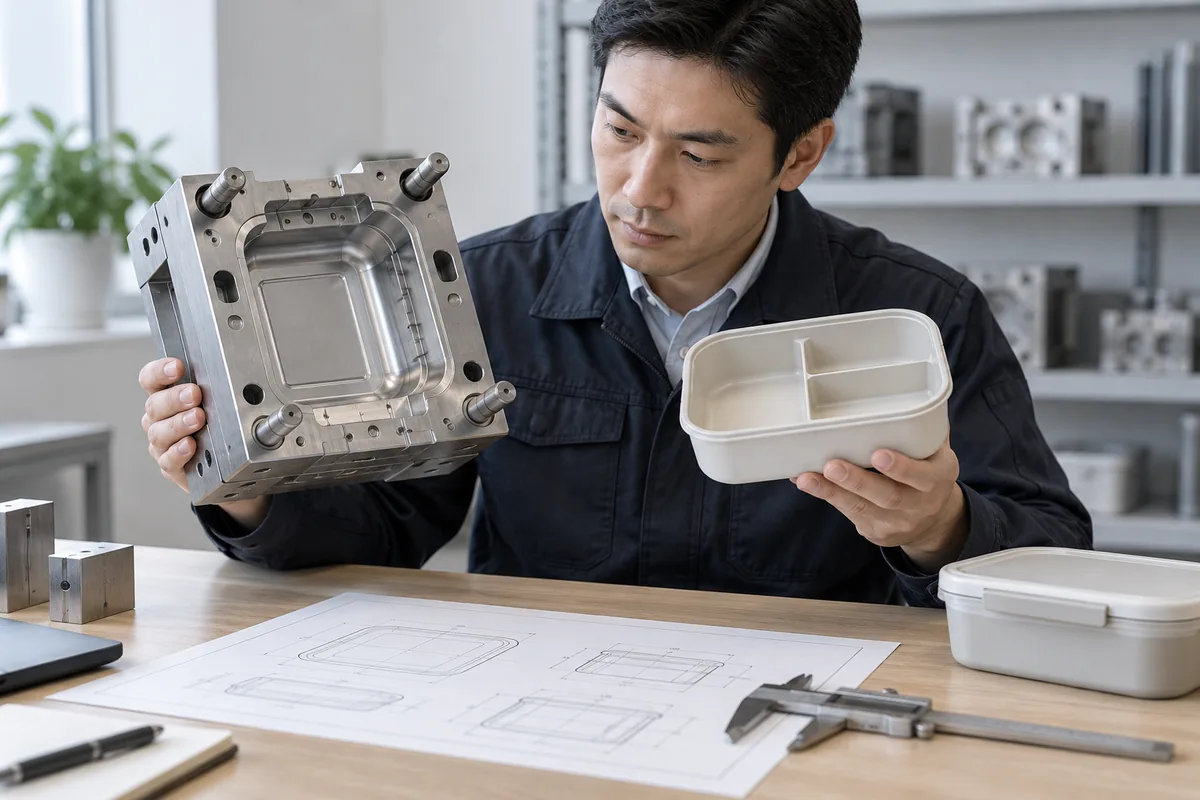
Do not treat new tooling as a quality guarantee. A new mold can enable a required design, but the released product still depends on a clear specification, appropriate material decisions, sample review, agreed inspection criteria and controlled production revisions.
Existing mold vs new mold: compare each route by project risk
The useful comparison is not simply “lowest tooling cost versus highest tooling cost.” Buyers should compare each route against product fit, evidence, rights and project decisions. Also consider downstream compatibility and the consequence of changing direction after approval.
| Tooling route | Best reviewed when | Key buyer checks | Questions to resolve before commitment |
|---|---|---|---|
| Existing mold | A current tool may already produce the required geometry and material route. | Actual sample and drawing match; critical interfaces; tool condition; use permission. | Who owns it? What exact product scope is permitted? What verification remains? |
| Modified tooling | A defined feature gap may be addressed without replacing the full tool. | Change boundary; affected dimensions; dependent components; revised sample approval. | Can the requested change be made? What else may be affected? Who funds and owns the revision? |
| New mold | Required geometry or interfaces are not supported by available tooling. | Design inputs; approval gates; ownership; validation plan; record handover. | What is in scope, what is excluded, and what decisions must be frozen before fabrication? |
For each route, list evidence as confirmed, assumed, or still needed. For example, a buyer may have a confirmed reference drawing but no physical fit sample; or a supplier may identify a possible existing base while tool ownership remains unconfirmed. Keeping those states separate helps prevent a proposal from sounding more certain than it is.
Compare the total project path. An existing tool that needs extensive adaptation may not be the simpler route; a new tool may add upfront decisions but better match a core geometry requirement. The right choice is the one that satisfies the intended product brief with a commercially acceptable, reviewable path—not the one with the shortest description.
Protect ownership, permitted use and revision records
Tooling control is a commercial issue as well as an engineering issue. The buyer should distinguish ownership from possession, permission to manufacture from ownership, and project use from unrestricted future use. Put the agreed interpretation in the relevant contract or purchase documentation.
Record enough identifiers to connect the tool to the product program. Depending on the agreement, that may include the tool reference, product family, approved parts, buyer item codes, revision, storage location, maintenance responsibility and permitted scope. The specific fields should match the parties’ operating process.
For a modification, preserve the relationship between the original and revised state. Identify which version is approved, whether old samples remain valid, and what must happen to previous drawings or production references. A part name alone may not distinguish the revision that matters.
For new tooling, define what documentation is delivered and when. Buyers may need controlled drawings, part references, approval records or other agreed information; confirm the actual deliverables and ownership terms before assuming that every engineering file is automatically included.
Use a change-control process when the specification moves after approval. A late change to capacity, partition geometry, brand mark, material or packaging can affect cost, tooling, sample status or validation scope. Ask for the impact assessment and approve the change through the project’s agreed decision path.
Run sample approval against the route you selected
Sample review should prove the decisions that mattered in the tooling recommendation. If an existing mold was selected because the outline appeared suitable, inspect the actual part against the required dimensions and interfaces; if a modification was made, verify both the changed feature and the nearby features expected to remain stable.
For new tooling, check that the part reflects the released drawing and approved brief. Review the product as a component and as part of the set, including any lid, divider, utensil, bag or package that depends on its geometry. Record any aspect that has not yet been evaluated.
Keep appearance and function decisions distinct. A buyer can approve a color sample without releasing the fit, or approve general geometry while leaving packaging language open. The approval record should state its scope so that partial acceptance is not misread as a full production release.
Where a destination market requires particular tests, claims or labels, the buyer should define the requirement and confirm evidence for the relevant material, component and finished product. Do not assume a tooling choice itself establishes compliance or performance.
Set the reference for future orders. Retain the approved sample or controlled images, drawing revision, tool or part identifier, open-item status and approval date in the buyer’s product records. This makes later replenishment and supplier conversations easier to trace.
Buyer checklist for a tableware tooling decision
Use the questions below to organize an RFQ or engineering discussion. The purpose is to expose assumptions early—not to prescribe a specific technical answer before the product and tool have been reviewed.
| Check | Question | Why It Matters |
|---|---|---|
| Product gap | What differs between the reference and the required product? | Separates true geometry needs from branding, color or packaging requests. |
| Required interfaces | Which lid, divider, utensil, stack or carry interfaces must work together? | Prevents a part-only review from missing set-level dependencies. |
| Existing reference | Which sample, drawing and revision represent the current baseline? | Creates a consistent comparison point for buyer and supplier. |
| Material and use | What material route and intended use should the review consider? | Tooling suitability cannot be assessed in isolation from the product brief. |
| Existing-tool rights | Who owns the tool and what use is permitted for this program? | Physical availability does not establish ownership or unrestricted use. |
| Modification boundary | Which features may change, and which dimensions must remain controlled? | Limits unintended effects on neighboring features and components. |
| New-tool inputs | Which drawings, dimensions, approvals and decisions are still missing? | Highlights unresolved work before a new-tool scope is agreed. |
| Sample evidence | What must a sample demonstrate before approval? | Connects the chosen route to a testable buyer acceptance decision. |
| Commercial scope | What tooling, sampling, production and service terms need separate quotes? | Prevents assumptions about price, MOQ, lead time or future changes. |
| Revision control | How will approved, superseded and work-in-progress versions be identified? | Reduces mix-ups across samples, production and repeat orders. |
How B2B buyers can request a useful tooling review
A useful inquiry does not need every engineering decision finished, but it should show the project’s current state. Share the product category, intended configuration, target market, desired changes, available samples or files, and the date or business event driving the review if one exists.
Mark each requirement as fixed, preferred, or open to discussion. That lets the supplier distinguish a must-have geometry from an aesthetic preference and identify where an existing or modified option may be worth checking before recommending new tooling.
Ask the supplier to return a route comparison with the basis for each option. The response can identify what appears to fit, what evidence supports that view, what remains technically unconfirmed, which parts of the set are affected, and which commercial terms require a separate quotation.
Include who approves the design, sample, material, branding and packaging. When multiple stakeholders are involved, a named decision owner for each topic can reduce contradictory feedback and keep the released specification aligned with the order.
For a first review, the buyer can share an RFQ brief, reference photos, drawings or CAD where available, a component list, material preference, customization details, packaging goals and destination market. If no drawing exists, explain the functional outcome and reference dimensions that are known; label all estimates as provisional.
For current capability and project-specific commercial terms, use the supplier’s live information rather than relying on an old quote or an article. Tool availability, ownership, modification feasibility, pricing, MOQ and timing must be confirmed for the exact project.
B2B buyer FAQ about existing molds and new tooling
How do I know whether an existing mold can make my product?
Compare the required geometry, material route and interfaces with an actual molded sample and the tool or drawing reference. Ask the supplier to distinguish confirmed matches from assumptions and identify any sample or trial still needed before approval.
Can an existing mold be modified for a private-label product?
It may be possible, depending on the requested feature and the tool design. Separate branding or cosmetic changes from changes to dimensions, closures, partitions and interfaces, then request a feasibility review and define how the modified sample will be approved.
Who owns a mold when a buyer pays for tooling?
Payment alone should not be treated as a complete ownership agreement. Confirm the tool owner, permitted use, storage, maintenance, access, transfer and end-of-program handling in written commercial terms for the specific project.
Does new tooling always mean a better product?
No. New tooling may enable geometry that available tools cannot provide, but product quality still depends on the specification, material decisions, sample approval, inspection criteria and production controls.
What should be included in a custom mold inquiry?
Share the product brief, target market, drawings or references, material direction, key dimensions and interfaces, set components, requested changes, packaging needs, approval owners and open questions. Ask for existing, modified and new-tool options to be separated where each is technically worth reviewing.
Choose the tooling route that fits the released brief
Existing tooling, a modification and a new mold are different project paths, not automatic quality tiers. Start by naming the product gap, then assess samples and drawings, technical feasibility, set-level dependencies, permissions, ownership, validation and the total commercial scope.
If you are evaluating custom lunch boxes or a portable tableware set, send the product brief, target market, reference files, must-keep features and open tooling questions. Naike can review the information needed for a project-specific discussion; availability, feasibility, price, MOQ and timing should be confirmed for the actual SKU and scope.