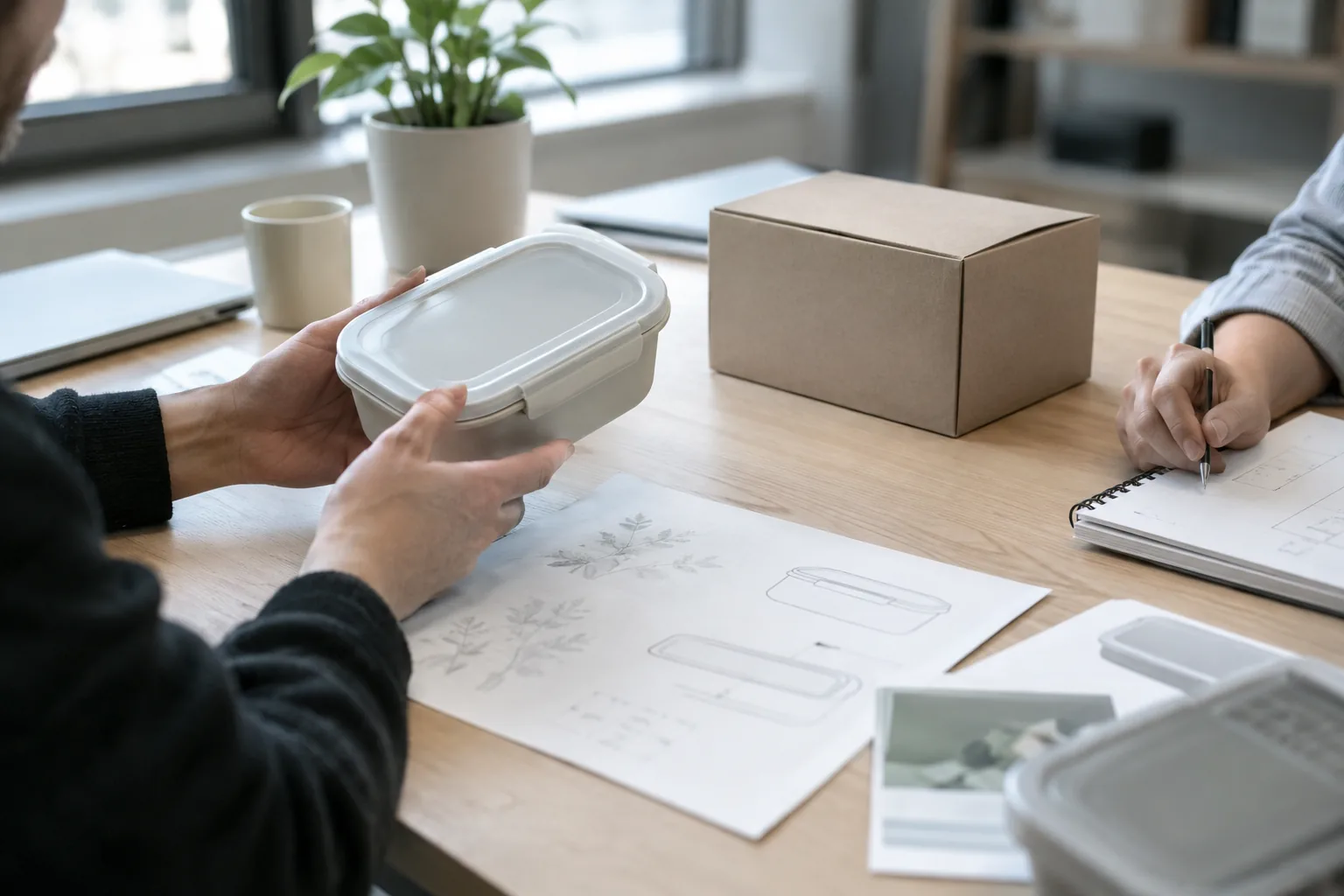
A tableware OEM case study is most useful when it shows how a defined buyer requirement became an approved product, set, or packaging solution. A product photo and a success claim may look persuasive, but they do not tell an importer which parts the supplier handled, what evidence was checked, or whether the work resembles the buyer's own program.
For a B2B buyer, the purpose is not to admire a finished image. It is to evaluate project relevance, communication quality, technical judgment, quality controls, and the limits of the supplier's role before investing time in samples or tooling.
This guide explains what information to request, how to review a case without exposing protected customer data, and which questions reveal whether the example supports a sourcing decision. It is a review framework, not a claim that any specific customer project or result occurred at Naike Tableware.
What a Tableware OEM Case Study Should Prove
A case study should make a project understandable and verifiable at the level the customer has permitted. It should show the buyer's starting requirement, the supplier's agreed scope, the key decisions, and the checks used to approve the selected configuration. If a result is stated, the reader should be able to see how the result was assessed.
For reusable tableware, “the product” may mean more than one molded piece. A project can involve a container body, lid, divider, utensil, cup, textile pouch, retail insert, and shipping configuration. A clear account says which components were included and whether the supplier made, sourced, assembled, or only coordinated each one.
The case should also distinguish a repeatable capability from a one-off outcome. A single approved sample does not by itself establish long-run production performance, a universal compliance status, or a guaranteed result for a different material or market. Buyers should see the boundary between what the example demonstrates and what would need confirmation for their own SKU.
Start With the Project Scope and Buyer Requirement
The opening section should explain what the buyer was trying to launch or improve. It may identify a meal occasion, retail channel, target user, component set, or operational need. A useful description is specific enough to make the design challenge clear without disclosing a protected brand name.
Ask whether the case involved a stock item, a customized existing product, a modified mold, or new tooling. Those routes have different decision points and risk profiles. If the case uses a new design, the description should say which parts were new and which parts were based on existing components or proven interfaces.
The scope should clarify the unit being discussed. “A lunch set” might refer to one container and one utensil, or it could include several pieces, a carry bag, and branded packaging. A case study that lists the bill of materials at a high level is easier to compare with a buyer's own product brief.
Tableware OEM case study scope: what was included and excluded?
Look for an inclusion-and-exclusion summary. It should name the parts the supplier controlled and the work handled by the buyer, retailer, testing laboratory, packaging vendor, freight forwarder, or another partner. If responsibilities changed during development, the change should be noted.
This matters because supplier references can appear broader than the actual engagement. A supplier may have developed the container but not the bag, or coordinated assembly without designing each component. A transparent case does not imply end-to-end ownership when the work was limited to one stage.
Commercial details can be redacted when necessary, but the purchasing basis should still be interpretable. If exact order quantities are confidential, a range or a statement such as “pilot order” may help, provided it is approved and accurate. Do not infer a standard MOQ or price from an unrelated case.
Explain the Constraint That Shaped the Design
A strong case explains what made the project difficult. The constraint could be limited retail shelf space, a required packed size, an existing component interface, a color target, a delivery milestone, or a combination of materials. Without a constraint, a reader cannot understand why the selected design or workflow was appropriate.
Constraints should be concrete but not embellished. “Reduce bulk” is too vague unless the case says whether bulk means storage volume, package dimensions, nesting height, or the number of cartons. “Improve quality” is similarly incomplete without identifying the failure mode or inspection question that prompted the work.
Ask the supplier to separate confirmed requirements from preferences. A buyer may require a specific material or maximum size while remaining flexible about the divider layout. Showing this distinction makes the decision process more credible and helps future buyers understand which trade-offs may be available.
For multi-component sets, the constraint may sit between parts rather than within one part. A utensil may need to fit inside the closed container; a lid may need to serve two bases; a pouch may need to hold a set without excessive movement. The case should describe the interface and how it was reviewed.
Show the Decisions, Not Only the Final Product
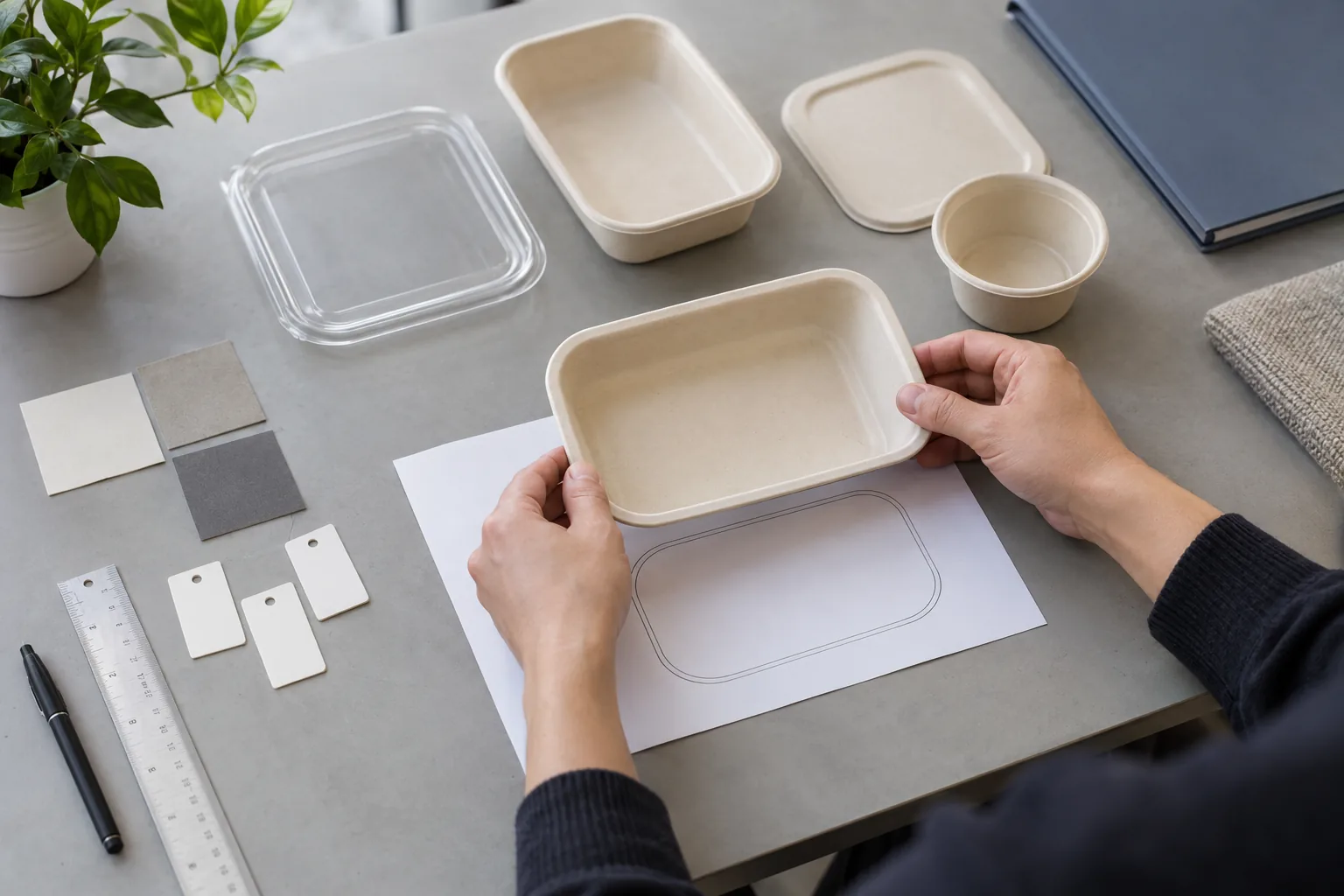
Buyers learn more from the decision trail than from a hero image. A case can explain why one divider arrangement was selected, why a lid interface changed, why a bag was made optional, or why packaging was reviewed after the complete set was assembled. The purpose is to show reasoning, not to claim that one solution suits every program.
Useful case evidence may include approved drawings, dated sample photographs, revision notes, a bill-of-materials snapshot, packaging fit images, and a list of open issues at each milestone. The supplier should identify which files are examples and which were part of the actual project record. Redacted evidence can still be informative if the revision, component, and decision are understandable.
Ask whether the sample shown is a concept sample, a configured sample, a tooling sample, a branded sample, or a production reference sample. These labels are not interchangeable. A picture of an early mock-up should not be presented as proof of final production approval.
Similarly, request clarity about sample conditions. Was the piece hand-finished, made with production-intent tooling, assembled from current components, or photographed before packaging approval? The distinction helps a buyer avoid treating a development visualization as a production guarantee.
Connect Quality Evidence to the Actual SKU
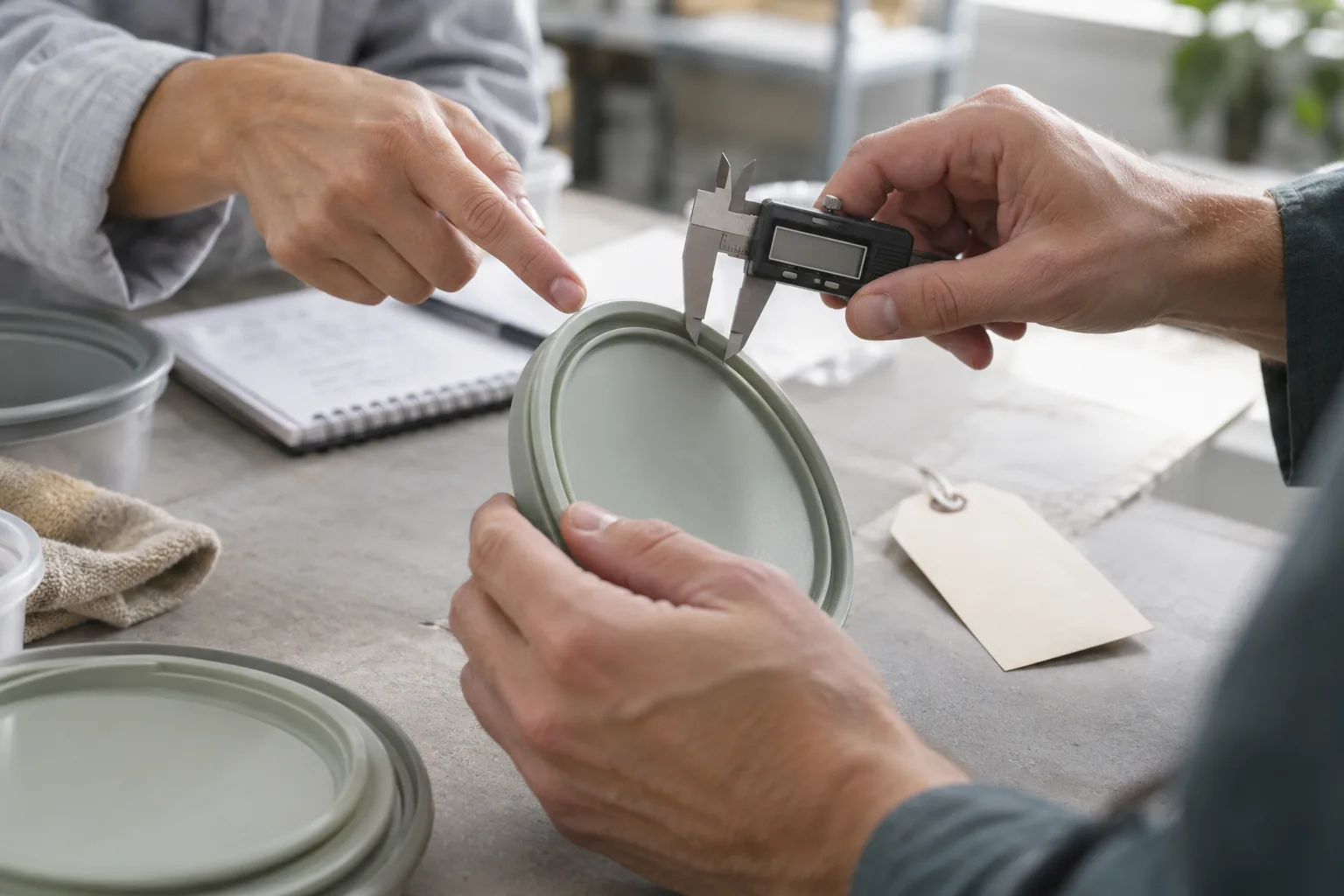
A case study may mention inspection or testing, but the scope should be traceable to the product being discussed. Ask which component, material, color, revision, and intended use were reviewed. A document for one resin, supplier, color, or component should not automatically be assumed to cover every item in a set.
Quality evidence can include incoming-material records, in-process checks, dimensional review, fit assessment, appearance criteria, assembly checks, packaging inspection, or third-party test reports. The relevant evidence depends on the product and buyer requirement. A case study should name the type of check without implying a certification that the source document does not support.
For food-contact or market-specific requirements, the buyer should verify the applicable scope with the supplier and qualified testing or compliance partners. A generic phrase such as “food grade” is not a substitute for identifying the material and finished product, intended conditions of use, destination market, and documentation required for that SKU.
If a case reports a measurable result, ask for the baseline, measurement method, sample size or period where relevant, and approval criteria. If those details cannot be shared, the case should label the outcome as qualitative rather than presenting an unsupported percentage or guarantee.
| Case-study element | Useful evidence | Buyer interpretation |
|---|---|---|
| Project scope | Component list, role split, route from stock to new tooling | Shows whether the supplier's contribution matches the buyer's need |
| Design constraint | Requirement summary and documented trade-off | Reveals how the supplier responds to real limitations |
| Sample development | Dated photos, sample stage, revision notes | Helps distinguish concept visuals from approved references |
| Quality control | Check type, SKU/revision scope, acceptance basis | Indicates whether evidence is relevant to the specific product |
| Outcome | Approved milestone or measured result with method | Separates verifiable delivery from broad promotional language |
| Confidentiality | Redaction note and permission status | Shows that customer information is handled responsibly |
Read Outcomes Without Assuming a Guarantee
The outcome should be tied to a project milestone. It may state that a defined sample was approved, a packaging configuration was selected, or a buyer moved to a next review stage. Those statements are more useful when the case explains who approved them and what version was approved.
Be careful with claims such as “zero defects,” “perfect quality,” “fastest delivery,” or “compliant worldwide.” Without a stated period, denominator, criteria, market, and evidence, such language is not decision-grade information. A buyer should ask what was actually measured and which product or order the claim describes.
Not every case needs a financial metric. A useful result may be a clearer component specification, fewer open sample questions, a validated pack-out, or a documented handoff between product and packaging teams. The case should describe the observable outcome rather than inflate it into a universal performance statement.
For a real commercial example, the supplier should be able to explain what can be verified privately under an appropriate confidentiality arrangement. Public marketing material may need to be anonymized, but the underlying evidence should not be invented or altered to make the story more impressive.
Compare a Documented Case With a Promotional Story
A promotional story emphasizes a finished image and a favorable conclusion. A documented case gives the buyer enough context to assess whether the conclusion follows from the work described. The difference is not the design quality of the page; it is whether the reader can trace scope, decision, evidence, and outcome.
| Promotional-only signal | Decision-grade alternative |
|---|---|
| “A leading brand trusted us” with no project scope | Describe the product category, buyer need, supplier role, and any approved anonymization |
| One polished finished-product image | Show the relevant sample stage, component interfaces, and packaging review with accurate captions |
| “Premium quality” without criteria | Name the check performed, applicable revision, and acceptance basis |
| “Delivered on time” with no milestone context | State the agreed milestone and what event or handoff was completed |
| Broad compliance or test claims | Identify the document type and exact material/SKU scope, or say details are not public |
| Confidential logo shown without explanation | Confirm permission, remove identifiers, and explain what has been redacted |
Images deserve the same scrutiny as text. Captions should describe what the image actually shows, not assign it an unsupported date, customer, test status, or production stage. If a visual is an AI-generated concept illustration, it must be labeled as such and should never be used as evidence of a real customer result.
Use the Case to Judge Supplier Fit
Begin by mapping the example to your own product brief. Compare the intended user, number of components, materials, tooling route, branding requirements, packaging needs, and target market. Similarity in the product category alone is not enough if your project has different interfaces or approval requirements.
Then compare the supplier's role with your internal capability. If your team needs one partner to coordinate a container, utensil, textile bag, and retail pack, the case should show how responsibility was divided and how component versions were kept aligned. If the case covered only the molded body, ask who coordinated the remaining parts.
Finally, note unanswered questions rather than filling gaps with assumptions. A case study can begin a qualification conversation, but it cannot replace a current quotation, sample plan, drawing review, signed specification, or quality agreement. Ask for a project-specific explanation before treating the example as precedent.
When several suppliers share case studies, evaluate them using the same criteria. Do not reward the most dramatic story if another supplier provides clearer evidence. The best comparison is the one that makes scope and risk visible enough for your purchasing, product, and quality teams to discuss together.
Protect Customer Confidentiality and Evidence Integrity
Real case studies often contain sensitive information: customer names, order values, drawings, logos, forecasts, test reports, and launch dates. A supplier should publish identifiable information only with the customer's authorization. If permission is limited, the case can use a category description and remove identifying artwork, labels, and file metadata.
Redaction should preserve meaning while hiding protected details. For example, a buyer may be able to see that a three-piece set was reviewed without seeing the brand, exact price, or full drawing. The supplier should state that details were withheld and avoid changing facts to create a more convenient story.
For private qualification, a buyer can request a reference call, redacted sample records, or a live walkthrough under agreed confidentiality terms. The request should be proportional to the risk and stage of the project. A supplier may reasonably decline to share another customer's private documents while still offering a different form of verification.
Buyers should apply the same discipline to their own briefs. Mark confidential files, limit distribution to relevant project participants, and clarify ownership of drawings, tooling, and artwork before development begins. Clear boundaries build trust on both sides.

Questions to Ask Before You Rely on a Supplier Example
Ask which parts of the case are actual project facts and which details have been generalized or redacted. Ask what the supplier's contracted role covered, what the buyer supplied, and which activities were handled by third parties. These questions clarify accountability without demanding disclosure of protected commercial terms.
Ask what sample and document revision the images represent. Ask whether a shown test or inspection applied to the same material, color, component, and intended market as the product in the story. If it did not, ask the supplier to explain the difference.
Ask how the project outcome was accepted and whether the evidence can be reviewed in a private discussion. If the supplier cannot share records, ask for a process walkthrough or a proposed verification plan for your own project. A transparent answer should distinguish available evidence from unavailable information.
Finally, ask what would be different in your project. A responsible supplier should not promise an identical result based on a prior case. The answer should identify the variables that need review: configuration, materials, tooling, destination market, artwork, packaging, order assumptions, or required testing.
B2B Buyer Checklist for a Tableware OEM Case Study
Use the checklist below to review a supplier example before treating it as evidence for a sourcing decision. A missing public detail is not automatically a failure; it is a question to clarify, particularly when confidentiality limits what can be shown.
| Check | Question | Why It Matters |
|---|---|---|
| Project scope | Which products, components, and services were included? | Shows whether the example matches the required supplier role |
| Buyer need | What user, channel, or operational requirement shaped the project? | Connects the design choices to a real purchasing context |
| Supplier responsibility | What did the supplier make, customize, source, assemble, or coordinate? | Prevents overestimating the supplier's contribution |
| Development route | Was the project stock, customized, modified-tooling, or new-tooling? | Helps compare complexity and the likely approval path |
| Key constraint | What limitation or trade-off drove the main decision? | Reveals whether the case demonstrates relevant problem-solving |
| Sample stage | Is each image a concept, review sample, approved sample, or production reference? | Stops a buyer confusing a visual concept with production approval |
| Revision control | Can the parts, drawings, and packaging be tied to a revision? | Helps teams keep product and pack decisions aligned |
| Quality evidence | Which checks were completed on which components or SKUs? | Connects inspection statements to the actual product scope |
| Outcome | What milestone or result was accepted, and how was it verified? | Separates observable outcomes from promotional adjectives |
| Confidentiality | Is the customer identified with permission, or accurately anonymized? | Protects customer information and supports trust |
| Transferability | What would need to be revalidated for our market and configuration? | Prevents assuming another buyer's result guarantees yours |
Frequently Asked Questions About Tableware OEM Case Studies
What is a tableware OEM case study?
It is a documented account of a buyer-supplier project involving an original-equipment manufacturing scope for tableware or a related set. A useful example describes the requirements, roles, decisions, validation steps, and outcome while respecting customer confidentiality.
Can a supplier share a case study without naming the customer?
Yes. A supplier can anonymize the customer and remove logos, drawings, and commercial terms, provided the remaining information is accurate and the redaction is explained. Buyers can request a private reference or process walkthrough if further verification is needed.
Does a finished-product photo prove manufacturing capability?
No. A finished image may show appearance, but it does not establish who made the product, what the supplier's role was, whether the image is from production, or which quality checks were completed. Ask for scope and evidence tied to the relevant sample or SKU.
What quality evidence should buyers ask to see?
Ask for evidence relevant to your requirements, such as a documented sample review, dimensional or fit check, material identification, inspection criteria, or applicable test documentation. Confirm the scope, revision, component, and destination market before drawing conclusions.
Should a case study include order volume and pricing?
Not necessarily. Commercial details may be confidential. The supplier should avoid implying a standard price or MOQ from a different project and can explain the quotation variables separately for your own configuration.
Can I use another customer's case as a guarantee for my product?
No. A prior example can help you assess process and supplier fit, but your product still needs its own agreed scope, sample approvals, testing plan, and commercial terms. Different materials, components, tooling, markets, and packaging can change the required validation.
Conclusion: Ask for a Verifiable, Relevant Example
A credible tableware OEM case study gives B2B buyers more than a polished outcome. It makes the project scope, supplier role, constraints, sample stages, quality evidence, and acceptance basis clear while protecting confidential details. Its value is the ability to support better questions about your own project.
Use the example to identify what should be confirmed next—not to assume that another buyer's approval or result transfers automatically. Share your configuration, market, target quantity, branding, and packaging direction with the supplier, then agree on a project-specific sample and evidence plan.
Review Your Tableware Project Brief
Share your product scope and the evidence your team needs. Naike Tableware can review the project requirements and clarify which details need a sample, drawing, or market-specific check.
Naike Tableware prepared this guide to help procurement teams review supplier examples with care. The concept images are not customer, factory, testing, or quality records; verify project evidence against the approved scope for your own SKU.