
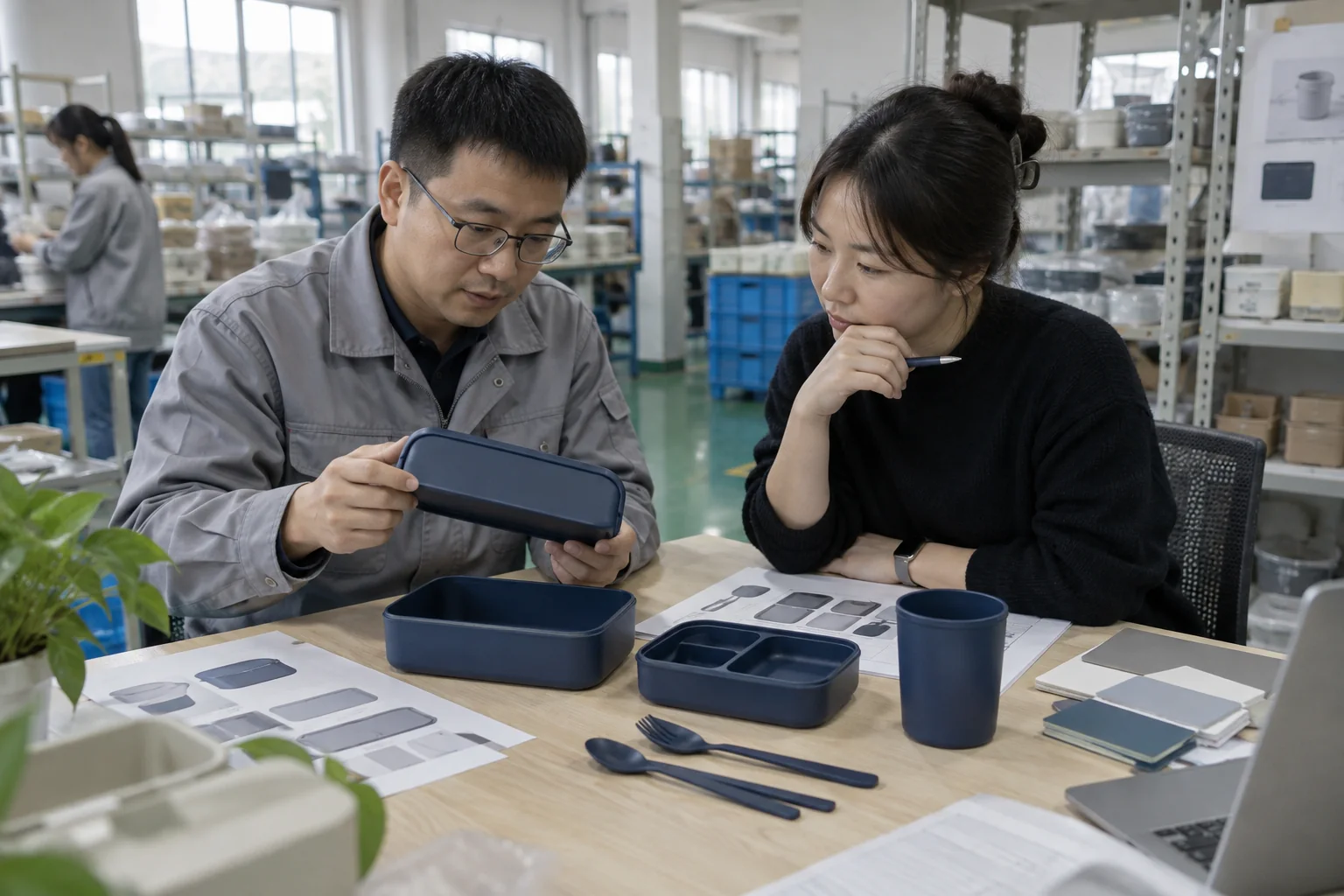
What should a buyer plan for?
Plan on 3–7 working days for an available product sample, 7–15 working days for a configurable set, and about 25–45 days to reach a first T1 sample when a new mold is required. These are planning ranges, not a quotation. The schedule starts only after the component list, material, artwork, sample payment and approval criteria are clear; courier transit and buyer review time are separate.
The custom tableware sample lead time is not one fixed factory number. From our factory-side view at Naike Tableware, the timing depends first on whether the buyer is selecting an available product, configuring existing components or creating a part that needs new tooling.
A reliable schedule also needs a clear starting point and a clear finish line. If the brief, artwork or approval criteria remain open, a supplier may be busy while the project clock has not truly started.
Custom Tableware Sample Lead Time by Development Route
For early planning, we separate projects into three routes. This diagnosis is more useful than asking for the “fastest sample,” because each route produces a different level of evidence.
| Development route | Planning range | Typical deliverable | Factory-side condition |
|---|---|---|---|
| Available product sample | 3–7 working days | An existing physical item for size, material and finish review | Product identity and stock status are confirmed |
| Configurable tableware set | 7–15 working days | Existing components assembled with selected color, logo or simple packaging direction | Existing tooling is used and production-ready artwork is approved |
| New-mold development | About 25–45 days to T1 | A first tooling trial for dimensional, functional and appearance review | Drawing, DFM decisions, steel scope and critical interfaces are frozen |
These ranges are working references rather than delivery promises. A project quotation should identify the route, clock-start condition, included sample work and exclusions for the actual SKU.
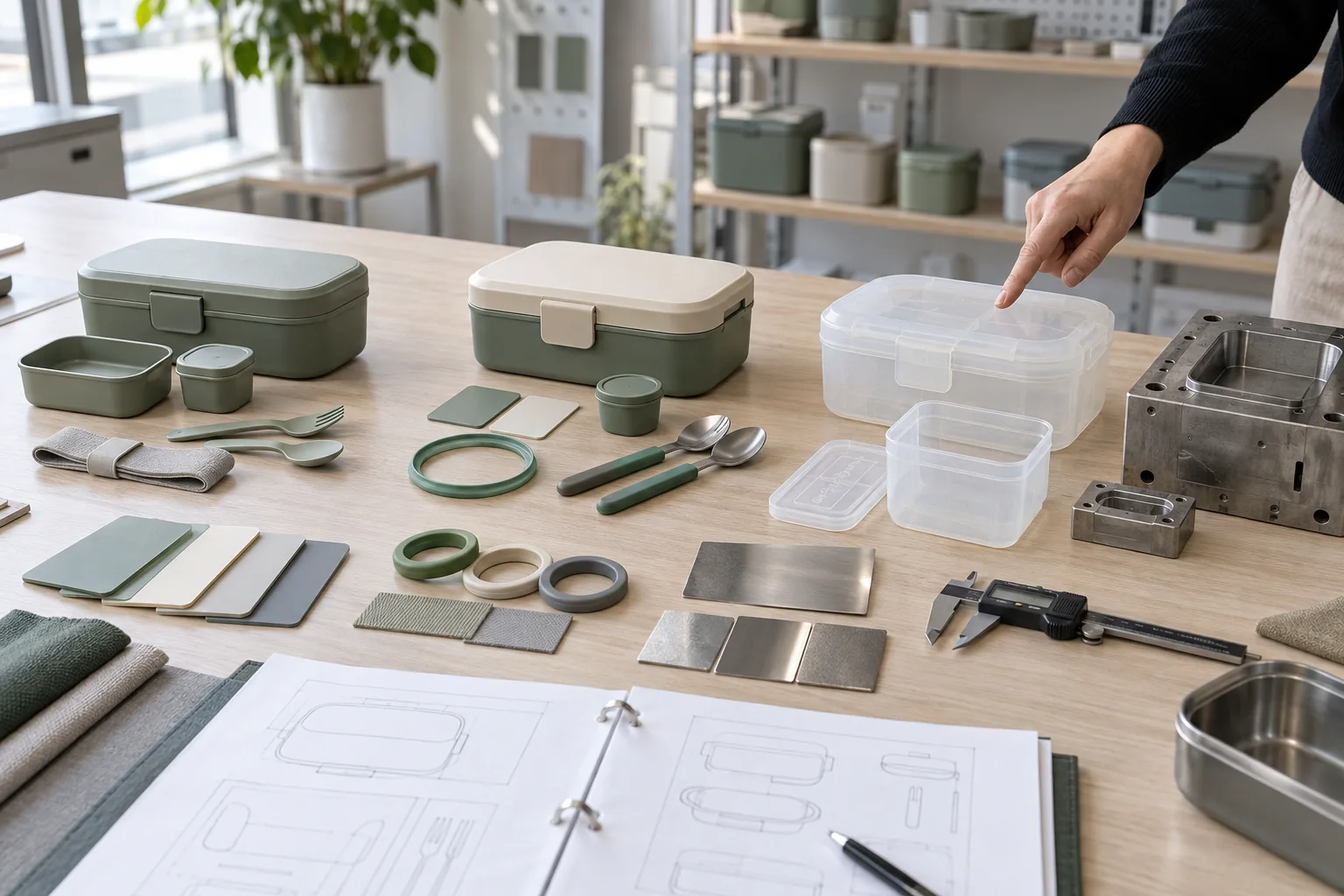
Diagnose the Sample You Actually Need
In factory conversations, the word “sample” often hides several different deliverables. A reference item can answer a material or size question, but it cannot automatically approve a custom color, a fitted bag or a production pack-out.
Reference samples answer selection questions
A reference sample is an existing item used to judge general construction, dimensions, surface finish or quality level. It is usually the quickest route, although its color, branding and packaging may not represent the future order.
Buyers should record exactly what the reference sample is intended to prove. If it only confirms bowl capacity, the team should not later treat it as approval of the lid resin, logo method or retail carton.
Appearance samples settle visual decisions
An appearance sample focuses on color, logo placement, printing or packaging direction. Depending on the process, it may use a substitute material or a non-production decoration method, so the submission note must identify those limitations.
This distinction matters when several stakeholders review the same parcel. A marketing team may approve the visual direction while engineering still has open questions about fit, temperature conditions or production tolerances.
Functional and pre-production samples control risk
A functional set sample combines the intended components so the buyer can open, close, nest, carry and repack the product. A pre-production sample goes further by representing the agreed material, decoration, accessories and packaging as closely as practical.
For a new mold, the first T1 trial belongs to a controlled engineering cycle. It is normal to record corrections after T1, and the schedule should allow time for review, tool adjustment and a new trial when required.
Where Does the Sampling Calendar Really Begin?
Factories cannot schedule a meaningful sample from a product name alone. The clock should begin when the information required for that route is complete, the commercial sample arrangement is accepted and the buyer has nominated who can approve decisions.
How the Custom Tableware Sample Lead Time Starts
For an available product, the start condition may be as simple as confirming the exact item, color, quantity and delivery address. For a configured set, it usually also includes a controlled component list, Pantone references, vector artwork and the proposed pack-out.
For new tooling, the clock normally starts later because the engineering package must be frozen first. Drawings, material shrinkage assumptions, closure interfaces, tolerances, surface requirements and tooling responsibilities should be resolved before machining begins.
What the factory clock includes
The factory clock can include component preparation, color matching, decoration setup, assembly, internal inspection and packing of the sample. It may also include tooling design and a T1 trial when those items are explicitly stated in the project scope.
Courier transit, import handling and the buyer’s internal review are usually separate periods. Keeping those periods separate helps both sides identify whether a delay occurred in manufacturing, logistics or decision-making.
Inside the Factory: Three Routes Through Sampling
Although the three routes share the same objective, they move through the factory differently. Understanding those differences helps procurement teams ask for evidence that matches the work actually performed.
Route one: an available product sample
The team first identifies the exact SKU and confirms whether the requested version is physically available. We then check visible condition, component count and basic function before packing, because a warehouse sample should still reach the buyer in reviewable condition.
This route is fast but limited. It does not prove that every requested custom color, logo, material declaration or packaging configuration can be produced without another approval step.
Route two: a configurable set using existing tooling
Existing molds can shorten development, but a complete set still needs coordination. Components must be compatible in size, color direction, nesting order, utensil retention and carry layout before we can call the group a coherent SKU.
Color and decoration are frequent schedule drivers because they involve approvals outside the molding cycle. A clear Pantone reference, vector logo, print size and position drawing reduces repeated setup and subjective feedback.
Route three: a new molded component
New tooling adds DFM review, mold design, material preparation, machining, fitting and the first injection trial. The T1 sample is then measured and tested at critical interfaces such as lid closure, stacking, seal fit or connection to another component.
A responsible factory does not hide correction time behind one optimistic headline. The buyer should know which findings can be corrected by process settings, which require tool work and which represent a requested design change.
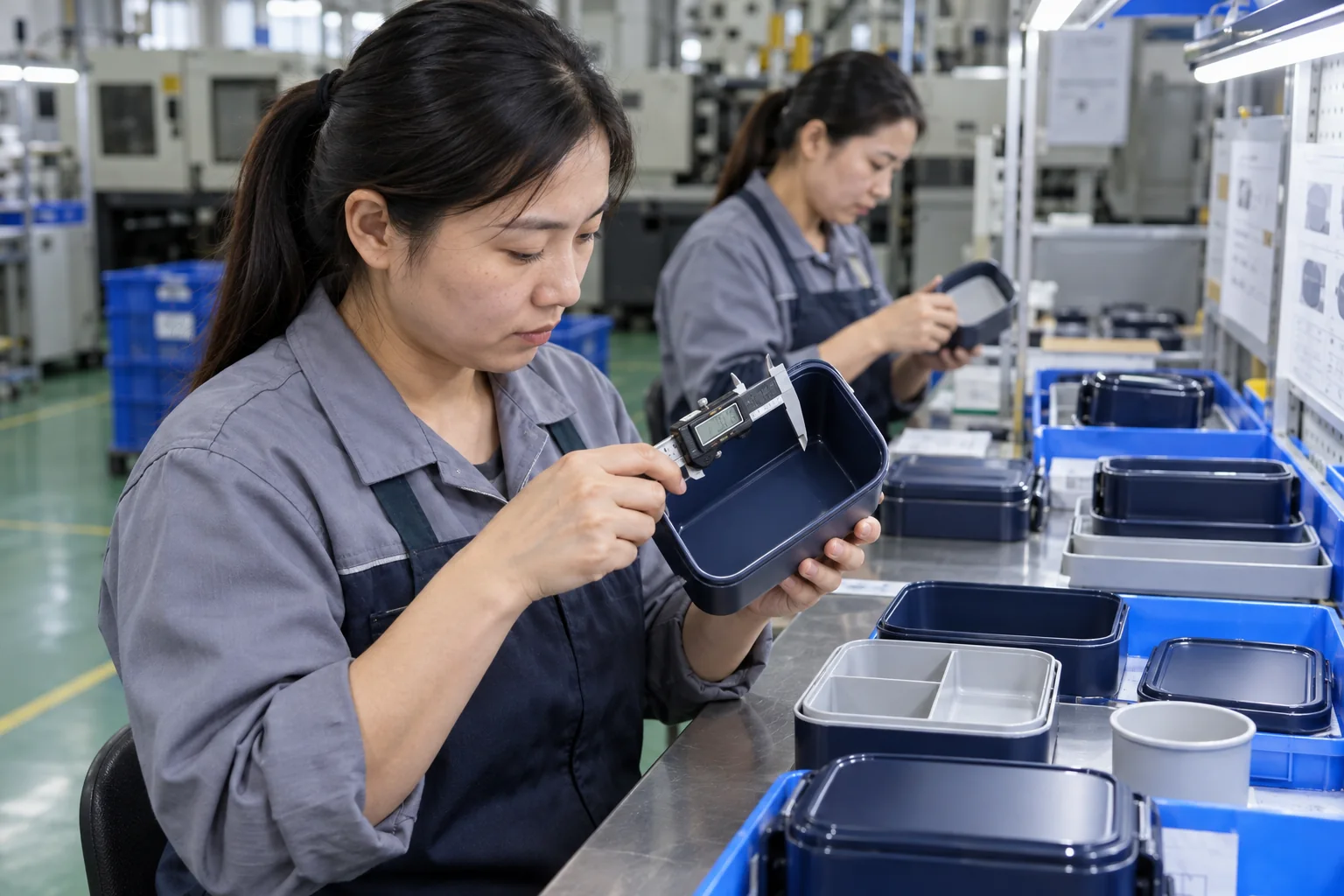
Hidden Delays That Change the Calendar
Most lost time does not come from one slow machine. It comes from an interface that was not defined, a decision that reached the factory late or a sample that was asked to prove more than its original scope.
Component changes affect the whole set
Adding a cup, changing a lid or increasing capacity may alter the nesting stack and the closed height. That change can force revisions to the carry bag, insert, retail box, carton count and freight calculation.
From a factory perspective, the component list is the foundation of the sample. When it changes, the team should issue a new revision rather than quietly placing another item into the existing brief.
Artwork and color decisions arrive too late
A screenshot is not production artwork, and a color name is not a measurable color target. Factories need vector files, dimensions, positions and Pantone or approved physical references before the decoration sample can be prepared consistently.
Color evaluation also depends on material, texture and lighting. The buyer should approve the color on the intended substrate and record the accepted reference, rather than comparing different phone screens.
Bag development starts before product dimensions are stable
A fitted carry solution should follow the verified product stack. If the bag pattern is frozen before the tableware dimensions, divider positions and elastic retainers are likely to move later.
We recommend approving the component arrangement and access sequence before finalizing the bag interior. The custom tableware carry bag guide explains the measurements needed for a useful fit sample.
Compliance questions are added after the sample is finished
Food-contact evidence must match the intended material, finished article, use condition and destination market. Asking for a generic “certificate” at the end can expose a mismatch between the sample and the report scope.
Testing requirements should be part of the brief before materials and colors are locked. Use the portable tableware food-contact testing guide to organize that evidence path.
How Buyers Can Shorten the OEM Tableware Sample Timeline
Speed comes from removing ambiguity rather than removing controls. A factory can move faster when commercial, technical and visual decisions arrive in one controlled package.
Send one revision-controlled brief
Use one component list, one drawing package and one artwork folder with a visible revision number. When an update is made, identify what changed and which previous instruction is replaced.
Separate fixed requirements from flexible choices
Tell the factory which features are mandatory and where an existing component can be proposed. This lets engineering avoid new tooling where it adds no buyer value, while protecting the interfaces that matter.
Nominate one approval owner
Consolidated feedback is faster than separate comments from design, sales, quality and management. One buyer-side owner should resolve conflicts before the revision is returned to the factory.
Approve in the correct sequence
Lock function and component fit before final packaging dimensions, and lock the physical product before a fitted bag. Approve artwork after the usable print area and production method are confirmed.
B2B Buyer Checklist for a Custom Tableware Sample
This checklist is designed for an RFQ or sample kickoff meeting. It helps the buyer and factory identify missing information before the schedule is committed.
| Check | Question | Why It Matters |
|---|---|---|
| Sample purpose | Is this for selection, appearance, function, T1 review or pre-production approval? | The purpose determines the process, evidence and realistic finish line. |
| Component list | Is every piece and quantity per set named in one controlled file? | Missing pieces change nesting, bag fit, packaging and price. |
| Material | Are resin, metal, bio-composite, textile and coating requirements identified by component? | Material affects tooling, color, testing, care and production settings. |
| Use conditions | Are food type, temperature, contact time, cleaning and destination market defined? | These conditions guide material selection and compliance scope. |
| Color | Is there a Pantone or approved physical reference for each custom color? | Verbal color names create subjective approvals and repeated matching. |
| Branding | Are vector artwork, method, size, position and print colors approved? | Decoration setup cannot be controlled from a low-resolution screenshot. |
| Critical dimensions | Which dimensions, capacities, closures and interfaces must be measured? | Critical-to-quality points define the inspection record and acceptance decision. |
| Carry format | Is the real packed stack available before the bag interior is frozen? | Verified dimensions prevent divider, strap and closure rework. |
| Packaging | Is the sample expected to include a mock-up or production-equivalent pack? | The buyer must know whether packaging is conceptual or approvable. |
| Approval owner | Who consolidates comments and signs the final sample revision? | One accountable owner prevents conflicting instructions and silent changes. |
| Logistics | Are courier transit, customs and buyer review excluded from factory lead time? | Separate periods make the project schedule transparent. |
| Change control | How will changes after approval be recorded and revalidated? | Uncontrolled changes weaken the golden sample and production reference. |
What Should Arrive with a Serious Sample Submission?
A sample parcel should contain more than loose parts. The submission needs enough identification for the buyer to connect what arrived with the quotation, specification and open-issue list.
At minimum, the factory should identify the sample revision, component count and intended review scope. When relevant, the submission can also include measured results, material references, color status, decoration notes, packing photographs and a list of known deviations.
The buyer should photograph the parcel on arrival and keep the pieces together during review. If samples are distributed across offices, each reviewer should use the same revision and return comments through the nominated approval owner.
Factory records behind the physical sample
Internally, the factory needs records that connect the sample to the selected process. Depending on the project, those records may include the drawing revision, color formula, printing setup, tool trial notes, inspection results and pack-out reference.
Those records make later questions easier to answer. They also reduce the risk that production follows a newer email while the buyer is holding an older physical sample.
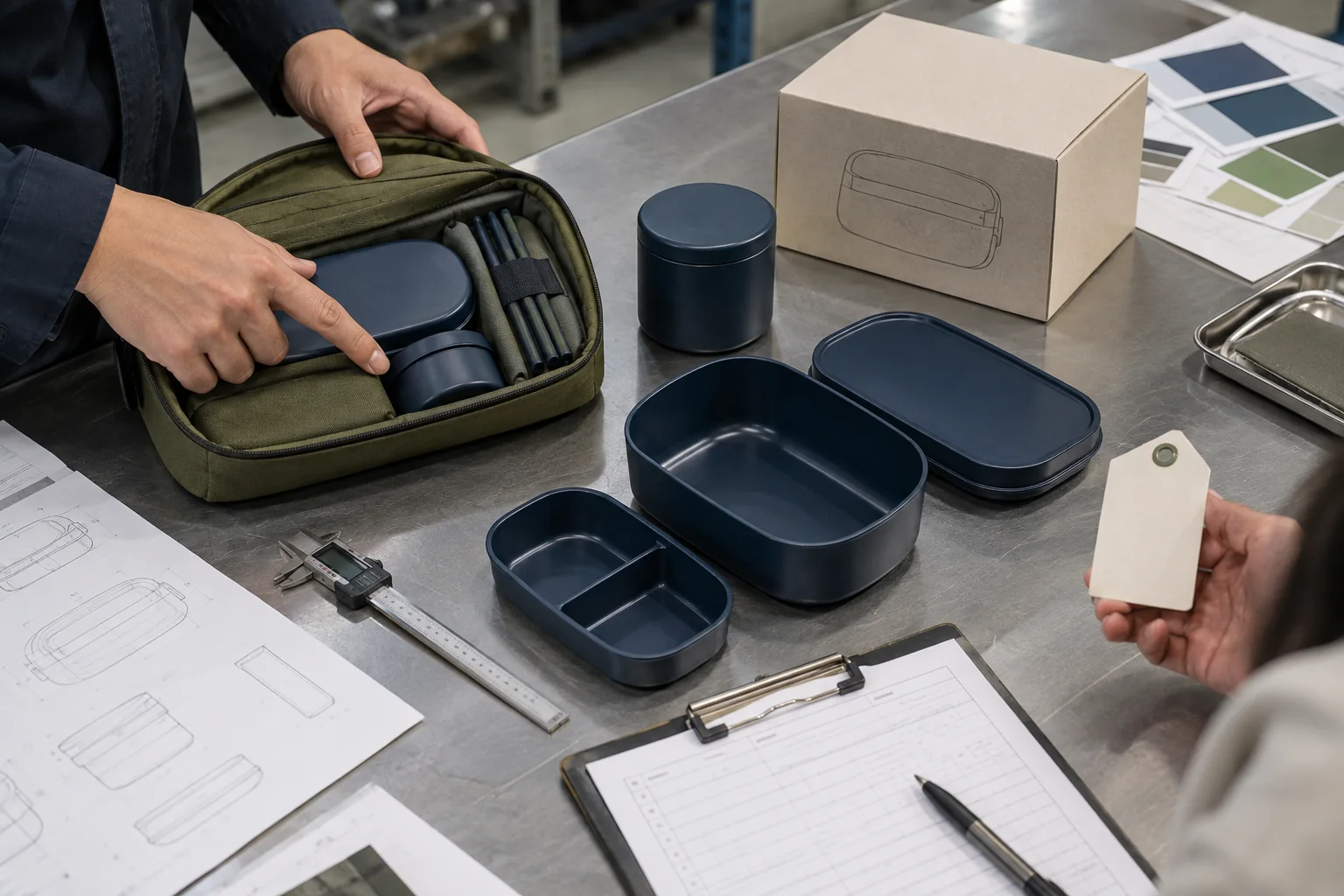
From Sample Review to Mass-Production Approval
A sample is ready for approval only when its open issues are understood and the matching specification is controlled. A photograph, courier record or casual “looks good” message is not enough to serve as a production reference.
Review the complete SKU, not isolated pieces
Open and close every container, inspect food-contact surfaces and check how the pieces nest. Pack the full set into the bag or retail box, then repeat the access sequence as the end user would.
For a multi-material set, review the interfaces between molded parts, metal pieces, seals and textiles. A component can pass its individual inspection while the complete set still has movement, scratching or clearance problems.
Record acceptance and remaining conditions
The approval file should state which revision was accepted and what the sample represents. It should also name any condition that remains subject to production validation, laboratory testing, packaging confirmation or a later pilot run.
If the buyer requests a change after approval, both parties should assess the effect on tooling, function, testing, packaging and schedule. The changed item should not inherit approval automatically from the earlier sample.
Factory insider rule for a golden sample
A golden sample is useful only when the physical item and written specification point to the same revision. Keep the approved sample, component list, artwork, pack-out record and change history together so production and inspection teams can work from one source.
B2B Buyer FAQ About Tableware Sampling
Does custom tableware sample lead time include shipping?
Usually it does not include international courier transit, customs handling or the buyer’s review period. Ask the quotation to separate factory working days from logistics and approval days so the total calendar remains clear.
Can product and packaging samples run in parallel?
Structural concepts and artwork preparation can begin in parallel, but final inserts and fitted packs should use verified product dimensions. Starting production-equivalent packaging too early often creates avoidable rework.
Can a carry bag be sampled before the tableware set?
A visual bag concept can start earlier, but production dimensions, dividers and retainers should follow approved tableware or controlled drawings. The complete packed stack should be tested before the bag pattern is frozen.
What happens if the first T1 sample needs changes?
The buyer and factory record dimensional, functional and appearance findings, then agree which corrections belong to the tool, process or design. A new controlled trial is scheduled after the correction plan is approved.
Is one sample enough to approve mass production?
That depends on the product risk and agreed approval plan. A complete set may need separate function, appearance, packaging and compliance evidence before the buyer authorizes production.
Can Naike quote the sample timeline from a reference photo?
A photo helps us understand the direction, but it rarely defines material, dimensions, interfaces, quantity or approval scope. Send the reference together with the portable tableware RFQ checklist so we can identify the correct development route.
Conclusion: Control the Custom Tableware Sample Lead Time
The custom tableware sample lead time becomes predictable when the sample type, component list, material, artwork and approval evidence are defined before work begins. From the factory floor, the most efficient projects are not the ones that skip controls; they are the ones that make decisions in the correct order.
Send Naike Tableware a controlled brief and mark any undecided item as a question. We can then separate available-product sampling, configurable development and new tooling, and return a project-specific route instead of a generic promise.