
How should buyers plan factory workforce meal kit procurement?
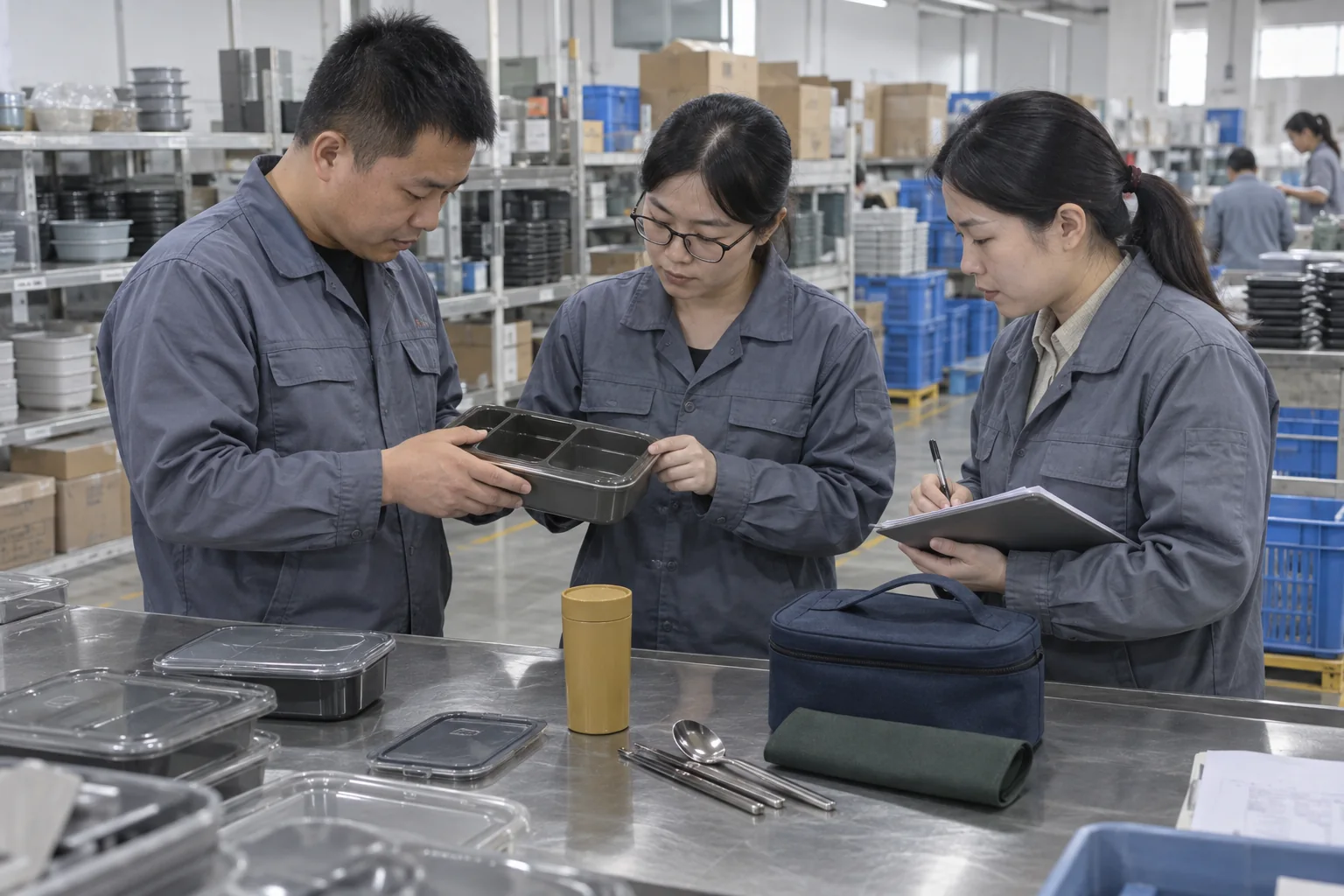
Factory workforce meal kit procurement should begin with shift patterns, peak user count, issue points, meal format, component counting, storage space, return ownership, cleaning and drying capacity, replacement parts and food-contact evidence. Approve one controlled bill of materials, test the complete kit through an actual shift cycle, and pilot issue, use, collection, cleaning and reissue before production.
A workforce meal kit is not only a lunch box. In a managed program it moves through an issue counter, locker or rack, canteen or break area, collection point, cleaning zone, drying rack, inspection station and storage location. A visually compact kit can still fail if lids are lost, cases are closed while damp, crates do not fit the rack, or replacement parts are not controlled.
This guide is a procurement framework rather than a claim about a finished SKU. Final dimensions, capacities, leak resistance, microwave or dishwasher suitability, durability, food-contact status, cleaning validation, MOQ and lead time remain to be confirmed for the exact product, destination and operating process.
Build the Factory Workforce Meal Kit Procurement Brief
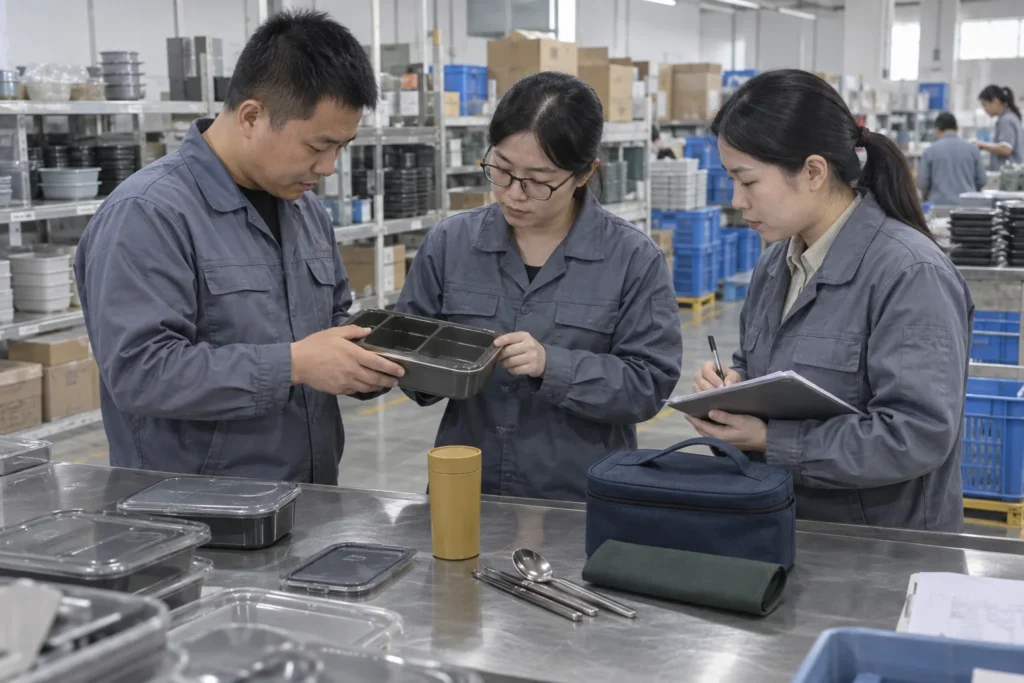
Document the workforce before selecting components. Record the number of people on each shift, overlap between shifts, meal timing, issue location, locker or rack space, walking distance, canteen layout and responsibility for return. Separate permanent staff, temporary staff, visitors and controlled spare stock where the custody rules differ.
Define the meal format. A dry snack, a divided cooked meal and a soup-based meal create different requirements for container geometry, lids, utensils and cleaning. Do not specify performance through photographs alone. State which foods, temperatures, contact times and handling conditions the approved sample must support.
| Program input | Buyer question | Controlled output |
|---|---|---|
| Shift pattern | How many users overlap? | Peak simultaneous quantity |
| Issue point | How are kits identified and counted? | Handoff procedure |
| Storage | Where do cases and crates fit? | Maximum packed envelope |
| Cleaning | How many kits can turn per hour? | Turnaround capacity |
| Destination | Which evidence applies? | Document request list |
Assign owners. Operations approves shift flow and collection. Facilities confirms rack, locker and canteen space. Quality controls the specification and evidence. Cleaning teams validate chemistry, temperature, mechanical action and drying. Procurement controls supplier exceptions, quantities, sample stages and commercial assumptions.
Control the Single-Worker Kit Configuration
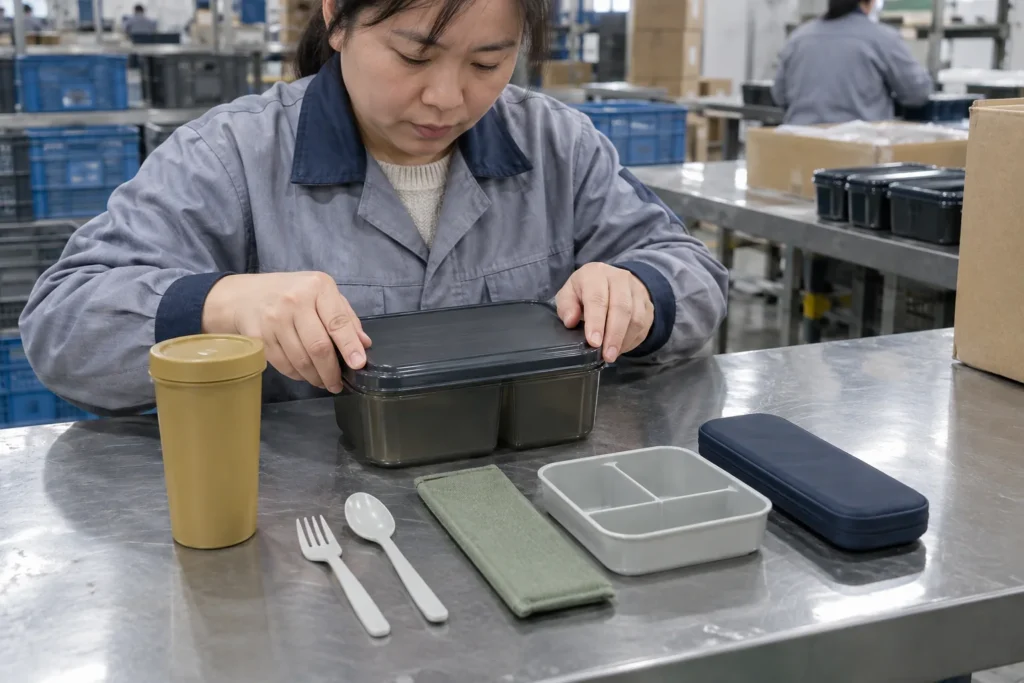
A reference single-worker module can contain one smoke-gray divided PP lunch box with fitted dark lid, one ochre PP tumbler, one stainless fork and spoon in a dark-green washable sleeve, one removable gray insert and one navy semi-rigid handled case. This arrangement supports counting and separation without implying verified capacities or performance.
The companion Single-Worker Factory Meal Kit With Carry Case shows this controlled concept. Every approved version should have a configuration code, bill of materials, drawings, physical color references, packing image and inspection criteria. Final size, weight, volume, materials, cleaning route and commercial terms require approval.
Make every component replaceable
Assign separate part numbers to the box body, lid, tumbler, fork, spoon, sleeve, insert and case. Replacement lids must be checked against the accepted body revision. A visually similar component is not automatically compatible. Recheck closure, nesting, insert clearance, color and supporting evidence after any substitution.
Define whether the kit is individually assigned or held in a shared pool. Assigned kits need durable identification and replacement rules. Pooled kits need stronger count, quarantine and reissue controls. Avoid personal or employee data on product decoration unless the employer has an approved privacy and labeling process.
Validate Issue Crates, Racks and Locker Fit
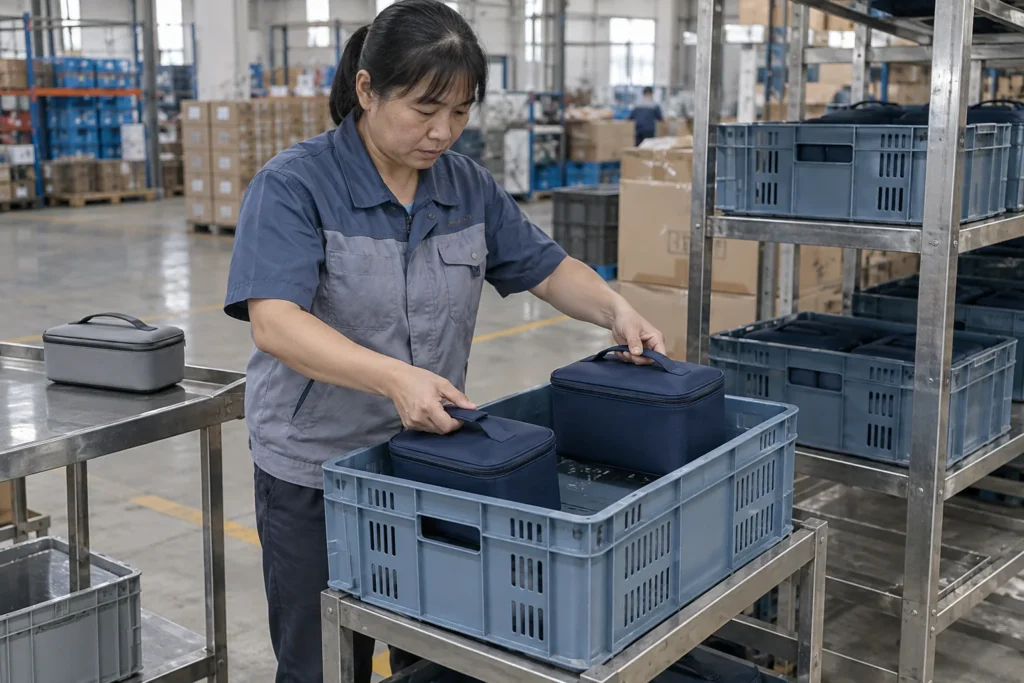
Measure the smallest approved issue rack, locker, collection cart and turnover crate. Test the complete closed case, not an empty shell. Include the handle, zipper path, corner radius, packed depth and finger clearance. Confirm cases can be removed without unloading unrelated items or forcing the rack.
Run the trial during a representative shift change. Load the crate with the intended number of cases, move it along the actual route, place it at the issue point, distribute kits, collect returns and transfer them to the cleaning zone. Record congestion, count errors, lift points, damaged packaging and time required at each handoff.
Crate count should be based on a physical packout. Do not state a fixed case-per-crate value until the final packed dimensions and safe handling method are approved. The same rule applies to pallet patterns and export cartons.
Estimate operating quantity by status
Start with peak simultaneous users. Add kits waiting for issue, in active use, awaiting collection, in cleaning, drying, inspection, repair or redistribution. Then add a controlled reserve based on pilot results. A blanket reserve percentage can hide slow drying, missing lids or uneven shift demand.
Map Collection, Cleaning, Drying and Reissue
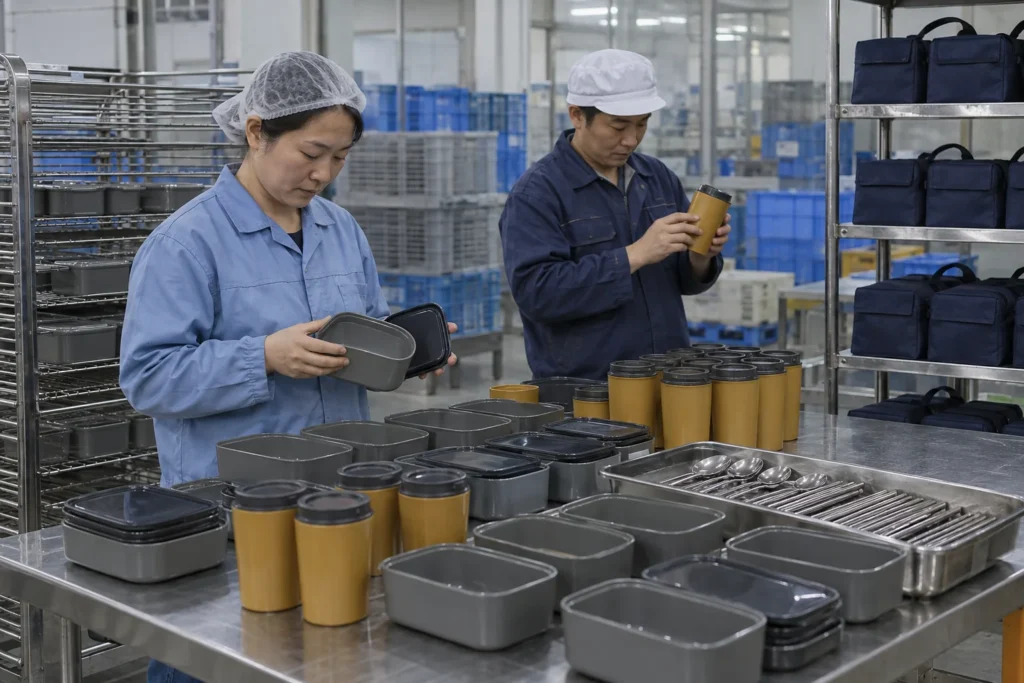
At collection, count the box body and lid separately, then the tumbler, fork, spoon, sleeve, insert and case. Quarantine cracked, distorted, deeply scratched, stained, loose or incomplete parts. Separate rigid food-contact components from textile items because their cleaning and drying processes may differ.
Document the approved washing chemistry, temperature, contact time, mechanical action, rinsing and drying for each construction. A wipe-clean appearance does not prove sanitation or chemical resistance. Avoid closing damp components inside the case. Repack only after every required part is dry and serviceable.
Track opening stock, issued kits, complete returns, loose components, wash failures, quarantine, replacements and closing stock by shift. Analyze repeat losses at the issue counter, canteen, collection cart and cleaning zone. The data should drive changes to identification, layout, training and reserve stock.
Release kits against one inspection standard
Inspection points can include component count, visual condition, box-lid fit, divider condition, tumbler rim, utensil finish, sleeve seams, insert alignment, zipper operation, handle attachment, case shape, color reference and packaging. Keep the approved sample, drawings, packing instruction and inspection criteria on one revision.
Match Materials and Evidence to the Exact SKU
Food-grade PP may be considered for a lightweight box, lid, tumbler and insert; stainless steel for reusable utensils; and coated textile for the case and sleeve. Exact resin, additives, pigments, steel grade, finish, fabric, coating, reinforcement, zipper, thread, foam and adhesive remain project decisions.
For United States programs, review the FDA overview of food-contact substances. For European Union programs, review the European Commission framework for food-contact materials. These sources do not certify this concept.
Request records identifying the tested material or finished article, color, method, conditions, result, laboratory and date. Match evidence to the exact component, food, time, temperature, cleaning route and destination. Internal references include Food-Grade PP, Stainless Steel and Lunch Boxes.
Approve Logo, Color and Packaging Separately
Potential decoration routes include printing or molded identification on PP, laser marking on stainless steel, and woven or printed marks on textile. Each surface requires its own artwork area, process and durability review. Identification should support inventory control without making unverified performance or compliance claims.
Pantone targets guide development but do not replace physical samples. Smoke gray, ochre, dark green and navy display differently on plastic, steel, woven textile and paper. Review all parts together under representative factory and canteen lighting and retain approved references.
Packaging may use a paper band, plain inner carton, molded-paper protection or export master carton. Define component counts, instructions, barcodes and destination information before artwork approval. Trial the complete pack because inserts affect dimensions, weight, unpacking time and waste handling.
Compare Suppliers With One Workforce Program Scorecard
Send each supplier the same RFQ: shift profiles, meal format, bill of materials, storage limits, quantities, colors, decoration, packaging, evidence scope, sample stages and target schedule. Require a list of exceptions and unconfirmed fields. Separate existing-component, modified-component and new-tooling routes.
| Field | Required evidence | Approval question |
|---|---|---|
| Configuration | BOM and packing image | Can every part be counted? |
| Issue fit | Drawing and physical trial | Do cases and crates fit? |
| Turnaround | Cleaning and drying inputs | Can shifts be supplied reliably? |
| Materials | SKU-matched specifications | Does evidence match use? |
| Commercial | MOQ, samples, tooling and timing | Are quotations comparable? |
Existing components may shorten development. Custom molding may improve lid fit, internal division or case geometry, but it introduces drawings, tolerances, tooling trials and validation. Compare verified function, turnaround capacity, replacement support, approval risk and total program cost rather than unit price alone.
Factory Workforce Meal Kit Procurement Checklist
- Shift pattern and peak simultaneous users are documented.
- The complete single-worker module and replacement parts are controlled.
- Issue racks, lockers, crates and collection carts are physically tested.
- Collection, cleaning, drying and inspection owners are assigned.
- Evidence matches each exact component, color and destination.
- Physical colors, decoration and packaging are approved.
- Unverified claims remain “to be confirmed.”
- MOQ and lead time follow final specification approval.
What should a factory workforce meal kit procurement brief include?
Define shift patterns, user count, issue points, component count, storage, return ownership, cleaning capacity, materials, evidence, replacements and approval stages.
How should buyers calculate the number of kits required?
Start with peak simultaneous users, then add kits in issue, use, collection, cleaning, drying, inspection, quarantine and controlled reserve.
Does a lidded box prove leak resistance or safe microwave use?
No. These claims require validation for the exact box, lid, material, food, temperature and use process.
Which documents should procurement request?
Request SKU-matched drawings, bills of materials, material declarations, applicable test reports, packing instructions and inspection criteria.
When are MOQ and lead time confirmed?
After configuration, colors, decoration, packaging, testing, quantity and sample approval stages are defined.
Turn the Shift Brief Into a Pilot
Share shift patterns, peak users, meal formats, issue and collection points, rack and crate limits, cleaning capacity, target markets, branding, packaging, quantity and schedule. Naike Tableware can compare existing-component and custom-development routes.