
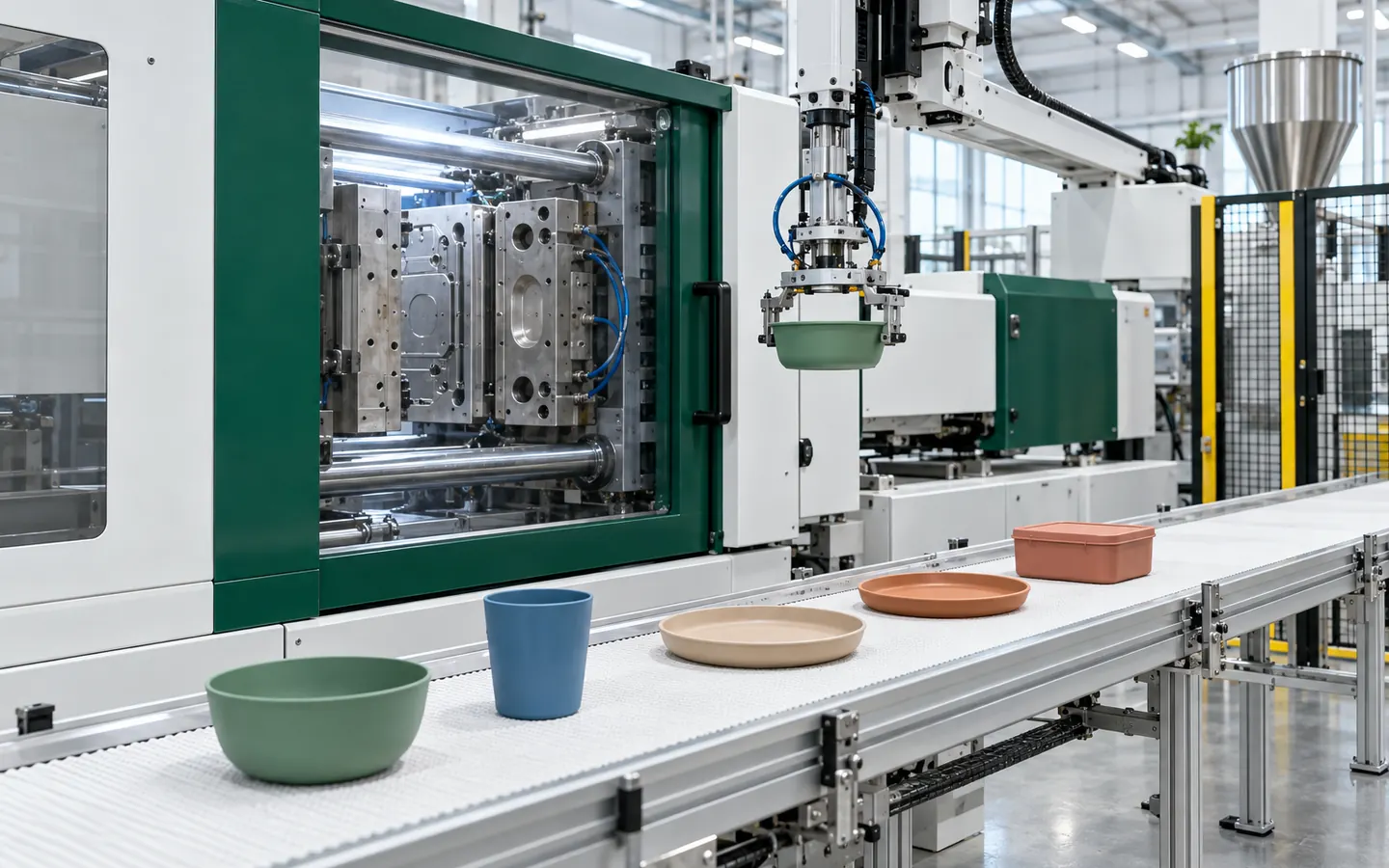
A portable dining set often combines rigid tableware, flexible seals, metal cutlery, textile carry goods and printed packaging. Our role is to coordinate those production routes around one approved configuration.
Materials Working Together
Coordination Points
- Component dimensional interfaces and nesting tolerances
- Color and finish alignment across different materials
- Carry-bag fit, dividers and protection
- Sample approval and consolidated production records
- Final assembly, packout and shipment coordination
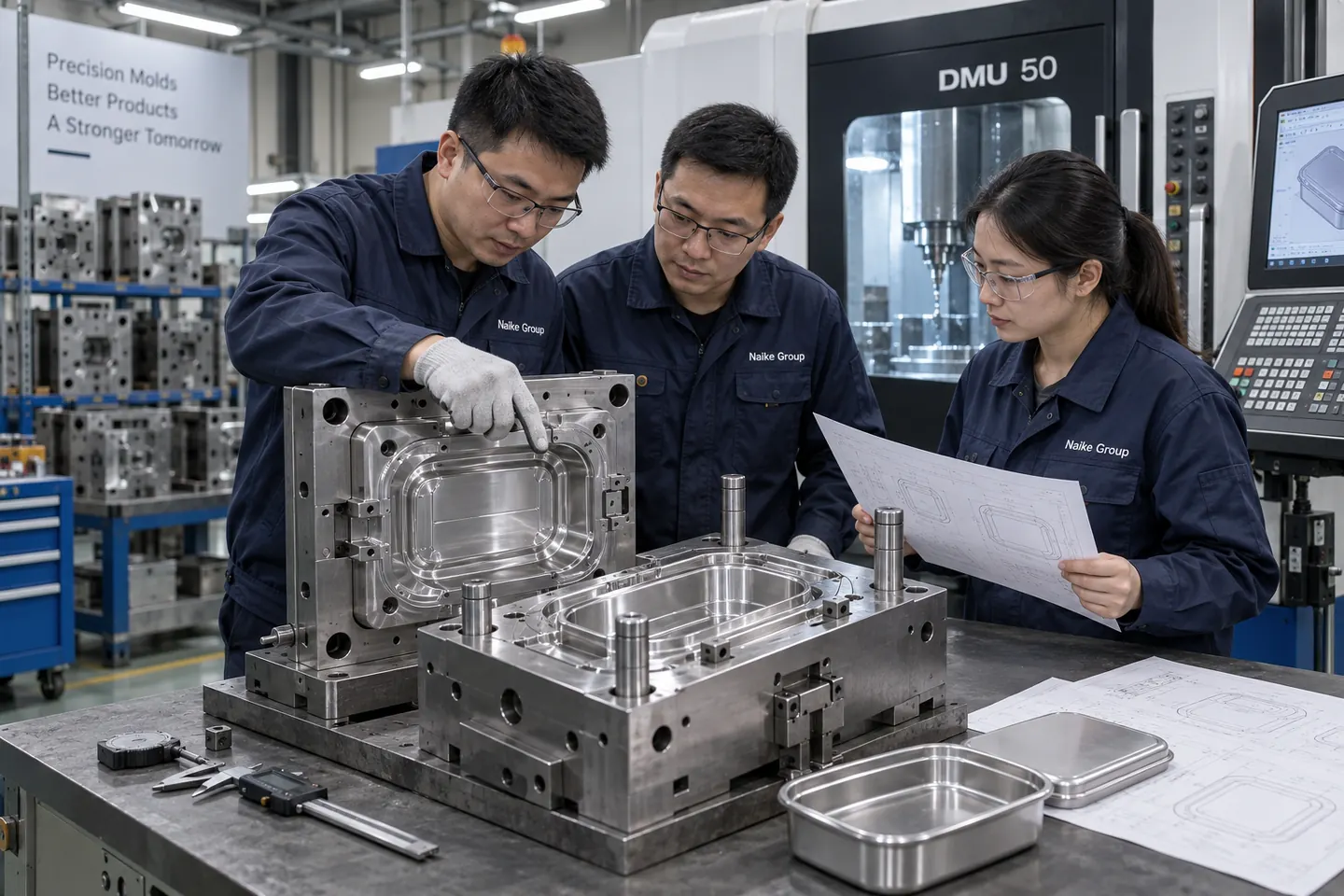
Custom Mold Tooling and Manufacturing Coordination
We coordinate mold design, CNC machining, trial parts, injection molding and component approval around the selected product and wholesale program.
Capability imagery illustrates the workflow. The responsible facility, capacity, tooling route and project evidence are confirmed for the selected SKU and quotation.
Product References for Tooling Review
A new mold is considered only when existing components cannot meet the required geometry or fit. Use the office lunch set to review container-and-bag clearance, the compact dining set to review nesting and case thickness, or the child-sized dining set to review scaled component dimensions. These are sourcing references, not claims that every listed component requires new tooling.
Browse the product categories or use the RFQ checklist to share the drawings and sample requirements needed for a tooling assessment.
What manufacturing capabilities support a custom tableware project?
Naike Tableware coordinates product engineering, existing-mold review, mold modification, new tooling, injection molding, component sourcing, branding, assembly, packaging and export preparation. The exact facility, process route, capacity and evidence are confirmed for the selected SKU and quotation rather than presented as universal claims.
A capability network for brands and wholesale programs
The manufacturing route supports buyers that need more than an off-the-shelf item: multi-component sets, coordinated colors, custom tooling, carry systems, retail packs or repeated export orders. It is most effective when the buyer supplies a clear specification and allows the factory team to separate existing components from new-development work.
How capability maps to the product specification
Engineering and tooling
Drawings, reference samples and dimensional targets are reviewed against available molds. If modification or new tooling is required, the mold scope, trial stages, approval points and ownership terms are defined before production tooling begins.
Molding and component control
Material, color, cavities, process settings and component fit are controlled around the approved SKU. Purchased or multi-material parts must enter the same BOM and inspection route as molded parts.
Assembly and export packout
Logo application, component counting, nesting, bag loading, retail packaging and export cartons are planned as a complete packout. Xiamen Port is the normal export reference, subject to the agreed logistics plan.
Factory-side project gates
A project moves from specification review to drawing or configuration approval, sample build, buyer feedback, final approved sample, production setup, in-process checks, assembly and packing. New-tooling projects add mold design and T1 correction gates. Timing is quoted only after the tooling route, material, artwork and packaging are known.
Evidence and information buyers can request
Ask for evidence relevant to the actual order: business and facility information, product photographs or video, tooling or production records, test-report samples, approved specification, inspection points and packaging details. Send the intended market, quantity and SKU so the team can identify which documents are applicable.
B2B buyer checklist
| Check | Question | Why It Matters |
|---|---|---|
| Tooling route | Which parts use existing molds, modifications or new tools? | It controls cost, sample sequence, ownership and timing. |
| BOM control | How are molded and purchased components tied to one SKU? | A complete BOM prevents missing or mismatched parts. |
| Factory evidence | Which facility and equipment will support the quoted product? | Evidence should correspond to the real process route. |
| Export plan | What packing and shipping conditions apply? | Cartons, labels, palletization and schedule depend on logistics. |
Manufacturing capability FAQ
Can Naike Tableware modify an existing mold?
Yes, when the existing tool and requested structural change are technically compatible. The scope is reviewed before quotation.
Are all products made on one line?
No assumption should be made. The responsible process and facility are confirmed for the selected SKU.
When is production capacity confirmed?
Capacity and schedule are confirmed after the product, tooling, quantity, approval status and delivery window are known.
Last reviewed: September 23, 2026 Reviewed by: Naike Tableware manufacturing team