
Work and Commuting
Daily portable dining products for office lunches, shift work, commuting and employee programs.
Recommended Product Directions
Program Requirements to Confirm
Confirm bag space, packed weight, leak-control needs and access during the working day.
Define portions, reheating, utensils, drinkware and the required number of containers.
Align branding, packaging, quantity and delivery with employee, promotional or retail use.
What defines a practical commuter lunch set?
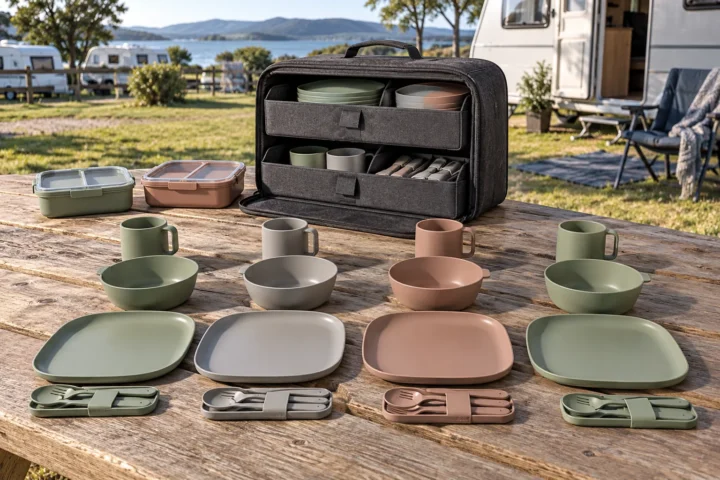
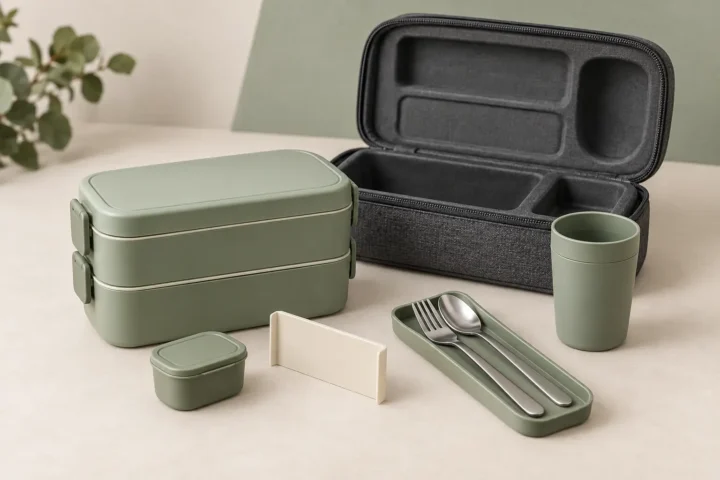
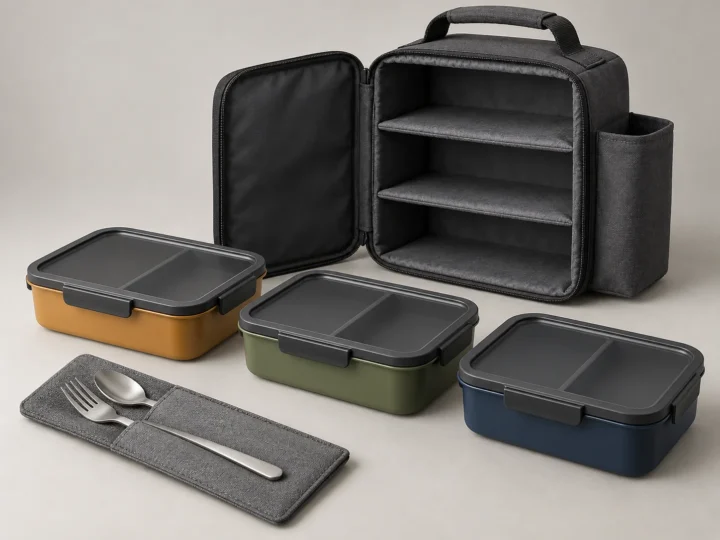
A commuter lunch set should match meal volume, bag space, leak-control expectations, heating or storage routine and the way cutlery and cups are carried. For B2B sourcing, the container, accessories, carry bag, branding and packaging must be approved as one SKU rather than selected independently.
For office retail, employee gifts and workforce programs
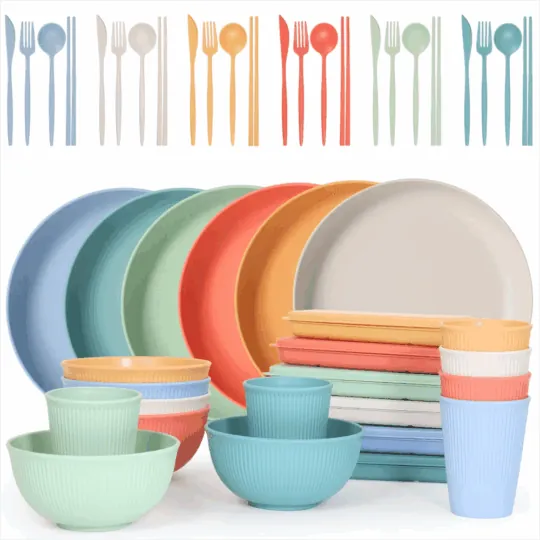
This route is suitable for lifestyle brands, retailers, corporate gift suppliers, employers, distributors and workforce meal programs. A premium office set, compact commuter kit and high-volume worker meal kit require different materials, pack sizes and replacement strategies.
Design around the full workday
Meal and component format
Specify the number of meals, portion separation, condiment needs and whether a cup, bowl or cutlery case is included. Stackable formats can organize several meals but also change height and carry stability.
Material and use claims
Food-contact material, sealing structure, temperature use and cleaning claims must be tied to the selected SKU. Buyers should avoid assuming every configuration has the same microwave, dishwasher or insulation performance.
Branding and delivery
Corporate logos, individual names, gift sleeves, mailer boxes or bulk program cartons each create different artwork and packing requirements. Destination and distribution method should be included before packaging approval.
How a commuter program moves into sampling
We confirm the meal format and select an existing or configurable platform where possible. The team checks container fit, closure, accessory positions, bag volume, logo method and packout. A physical sample then becomes the reference for the finished SKU, packaging and inspection points.
Define the office or workforce brief
Send the user profile, number of meals, required capacity or dimensions, storage and reheating expectations, carry limits, material preference, branding, packaging, quantity, market and delivery schedule. For employee distribution, state whether sets ship in bulk, by location or as individual gifts.
B2B buyer checklist
| Check | Question | Why It Matters |
|---|---|---|
| Meal pattern | Does the user carry one meal, snacks or a full shift? | It determines capacity, stacking and accessory requirements. |
| Carry space | What bag, locker or vehicle space must the set fit? | External dimensions can be more important than nominal capacity. |
| Use claims | Which heating, cooling or cleaning claims are required? | Claims must match the actual material and finished SKU. |
| Distribution | Will orders ship in bulk or as individual gifts? | The answer changes packaging, labeling and carton planning. |
Work and commuting set FAQ
Can an insulated bag be added to an existing lunch box?
Yes, after the packed dimensions, orientation, closure and accessory layout are confirmed.
Can employee names be applied?
Potentially. The method and data workflow need review based on quantity, surface, packaging and fulfillment plan.
Is leak resistance the same for every product?
No. It depends on the container and lid structure, seal, assembly and approved test method for the selected SKU.
Last reviewed: September 23, 2026 Reviewed by: Naike Tableware manufacturing team