
Travel and Picnic
Compact portable dining sets for road, rail, air travel, leisure trips and picnic occasions.
Recommended Product Directions
Program Requirements to Confirm
Define user count, trip duration, transport mode and available storage space.
Compare nesting, packed volume, weight, protection and unpacking sequence.
Confirm materials, cleaning, branding, packaging and market-specific evidence.
How should a travel or picnic dining set be specified?
Specify a travel dining set around person count, packed volume, weight, nesting, carry protection and cleaning conditions. The component list must fit the bag or case without movement, while materials, closures and packaging should match whether the program serves retail, rental, hospitality or promotional use.
For portable meals away from fixed dining facilities
This solution fits outdoor brands, travel retailers, campsites, resorts, mobility programs, distributors and corporate buyers. A two-person picnic kit, family set and compact travel case solve different problems, so the brief should state travel mode, number of users and storage limits.
Balance the set, carry system and use environment
Typical product combination
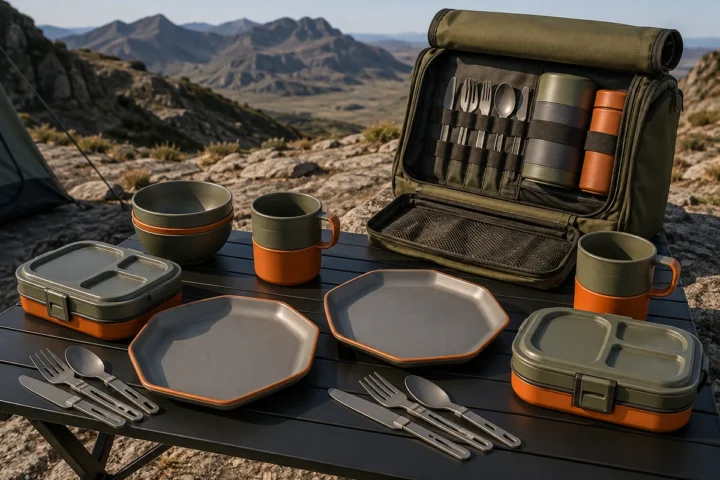
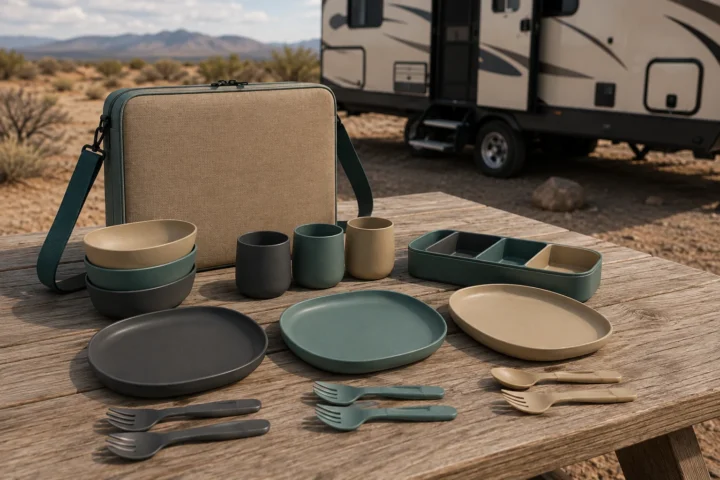
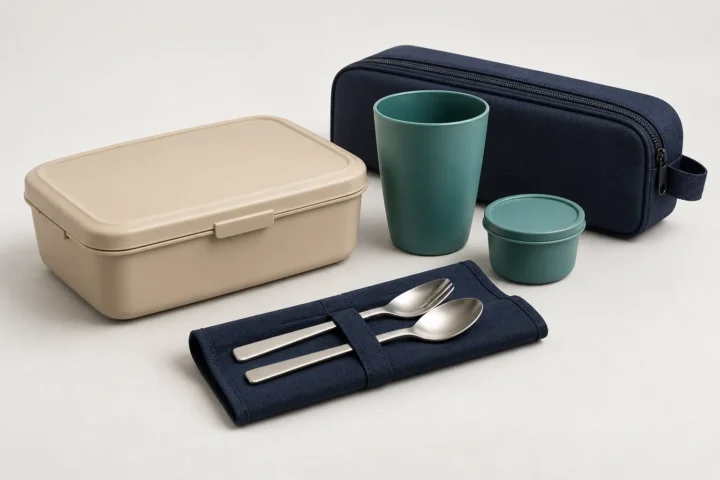
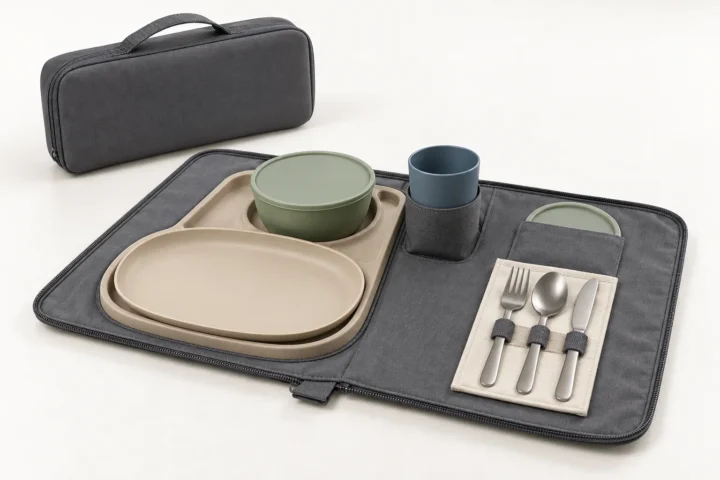
A travel set can include plates or bowls, cups, cutlery, food containers and a carry bag with fixed positions. The layout should prioritize nesting and easy component counting after use.
Material and bag choices
PP reduces weight, stainless steel adds a durable surface, titanium supports premium lightweight programs, and bio-composite can support seals or collapsible parts. Bag insulation, dividers, straps and washable lining depend on the use case.
Key constraints
Packed dimensions, total weight, component rattle, bag fit, moisture handling and replacement pieces are frequent design constraints. These should be tested with a complete physical set rather than isolated parts.
How the complete travel set is validated
We map the component arrangement, check nesting and closure clearances, and confirm how the set enters and leaves the carry case. A configured or tooled sample is assembled in the intended order so the buyer can review handling, pack volume, logo visibility and packaging before mass production.
Useful buyer inputs for travel projects
Provide person count, travel mode, maximum pack size or weight, required pieces, food-contact material preference, bag features, cleaning expectation, market, quantity, logo and packaging. Reference luggage dimensions or storage spaces are valuable when the kit must fit a vehicle, cabinet or rental inventory system.
B2B buyer checklist
| Check | Question | Why It Matters |
|---|---|---|
| Pack volume | What is the maximum closed size and weight? | It controls nesting, component count and bag construction. |
| Component control | How will every piece stay fixed during transport? | Movement can cause noise, abrasion, breakage or a poor unboxing experience. |
| Cleaning | Will parts be washed at home, outdoors or by an operator? | The cleaning route affects material, finish, disassembly and drying. |
| Replacement | Must individual pieces be replenished? | Rental and hospitality programs often require serviceable components. |
Travel and picnic set FAQ
Can an existing dining set be fitted into a new bag?
Yes, after every component is measured and the packed arrangement is approved through a physical sample.
Is insulation always required?
No. Insulation is a separate functional decision based on food holding time and transport conditions.
Can the set be designed for two or four users?
Yes. Person count changes the component list, bag size, weight, MOQ and sample evaluation criteria.
Last reviewed: September 23, 2026 Reviewed by: Naike Tableware manufacturing team