
Family and Outdoor
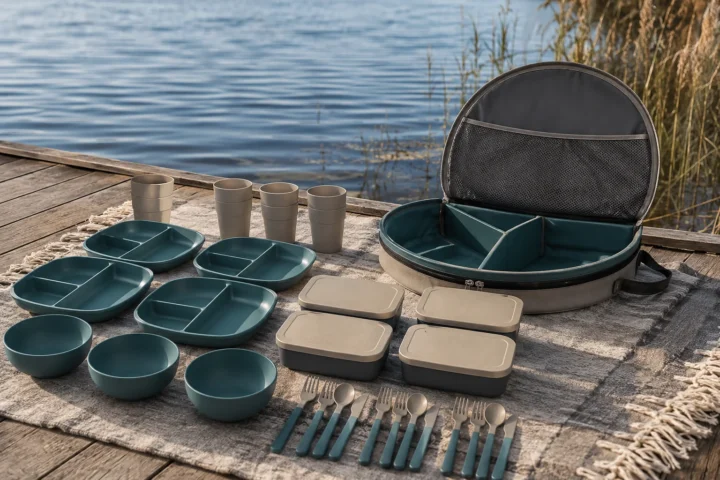
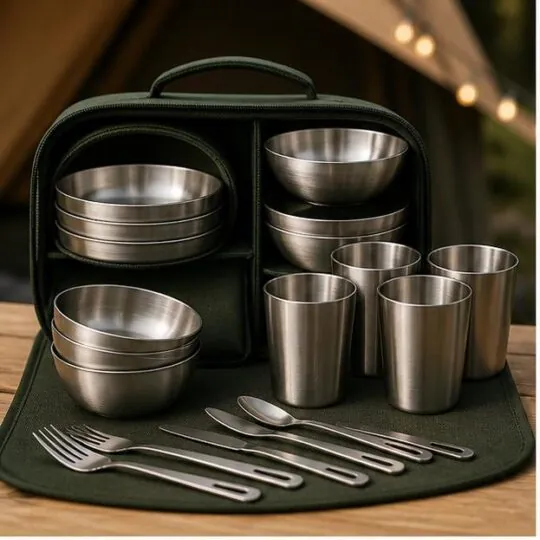
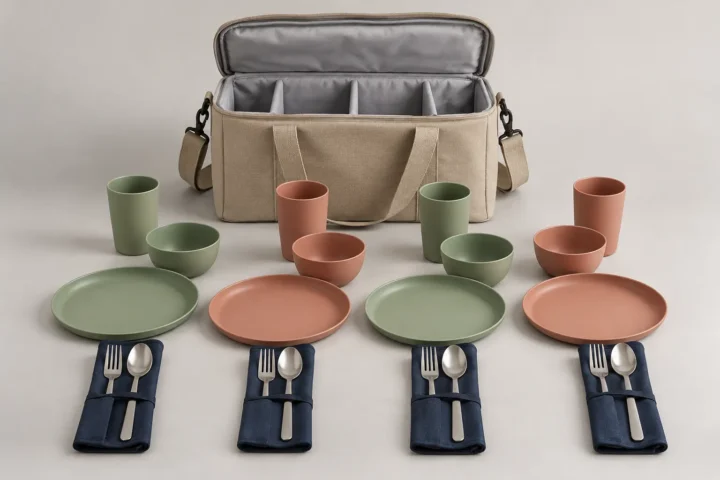
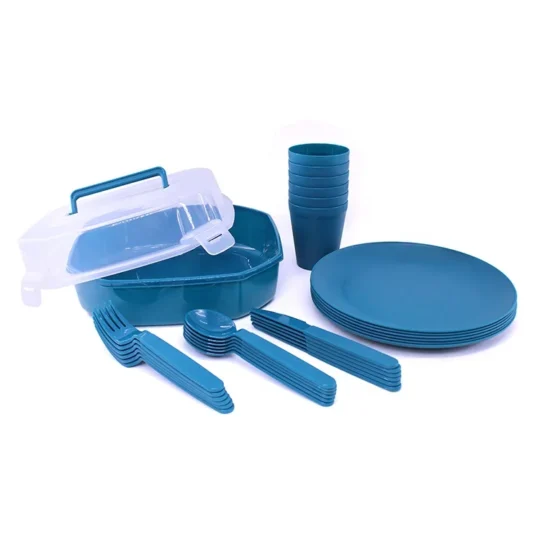
Multi-person portable dining sets, shared serving pieces and larger carry formats for family and outdoor use.
Recommended Product Directions
Program Requirements to Confirm
Define place settings, shared serving pieces, food storage and drinkware requirements.
Review durability, cleaning, stackability, packed volume and carry access.
Align colors, logos, packaging, evidence and quantity with the target channel.
What should a family outdoor dining set include?
A family outdoor set should be defined by user count, shared versus individual servings, stackability, carry capacity and the cleaning environment. Buyers should approve the complete packed set, because component fit, total weight, bag organization and replacement needs matter as much as any individual bowl or plate.
For family retail, camping and shared-meal programs
The format suits outdoor retailers, camping brands, distributors, resorts and family-oriented private labels. It can be configured around two to six users, but adding pieces without a clear serving logic often produces excess weight and poor packing efficiency.
Build a coherent shared-meal system
Set composition
Decide which items are individual, which are shared and whether food storage belongs in the same kit. Plates, bowls, cups and cutlery should nest in a repeatable order that users can understand.
Durability and materials
Food-grade PP supports lightweight color programs, metal options can support durability or premium positioning, and bio-composite may serve seals or compact accessories. The selected surfaces must match cleaning and use expectations.
Carry and retail packaging
A tote, structured case or insulated bag changes internal support, logo placement and shipping volume. Retail presentation and export protection should be developed around the final packed dimensions.
Review the family set as one finished SKU
The factory team checks component count, nesting order, bag fit, closure load, color coordination and packaging. Sampling focuses on the complete handling sequence: unpacking, table setup, repacking and component counting. Any new component or structural change is then separated into its own tooling and approval path.
Define the family and outdoor requirement
Share the number and age of users, meal type, required pieces, maximum carry size, cleaning method, material preference, color range, branding, packaging, market, quantity and delivery goal. State whether the product will be sold as a permanent range, seasonal item or program-specific kit.
B2B buyer checklist
| Check | Question | Why It Matters |
|---|---|---|
| User count | How many adults and children must one set serve? | It determines piece count, capacities and safety expectations. |
| Serving logic | Which pieces are shared and which are individual? | A clear logic prevents redundant parts and oversized bags. |
| Carry test | Can the approved set be packed and closed consistently? | Bag fit must be repeatable in assembly and real use. |
| Program life | Is this seasonal or intended for repeat orders? | Reorder planning affects component and color decisions. |
Family outdoor set FAQ
Can adult and child components be combined?
Yes, provided size, material, labeling and intended-age requirements are defined for the destination market.
Can buyers choose the number of place settings?
Yes. Each configuration needs a confirmed BOM, packed layout, packaging and MOQ review.
Should the carry bag be sampled with the tableware?
Yes. Fit, weight distribution, closure and component retention can only be approved with the complete set.
Last reviewed: September 23, 2026 Reviewed by: Naike Tableware manufacturing team