
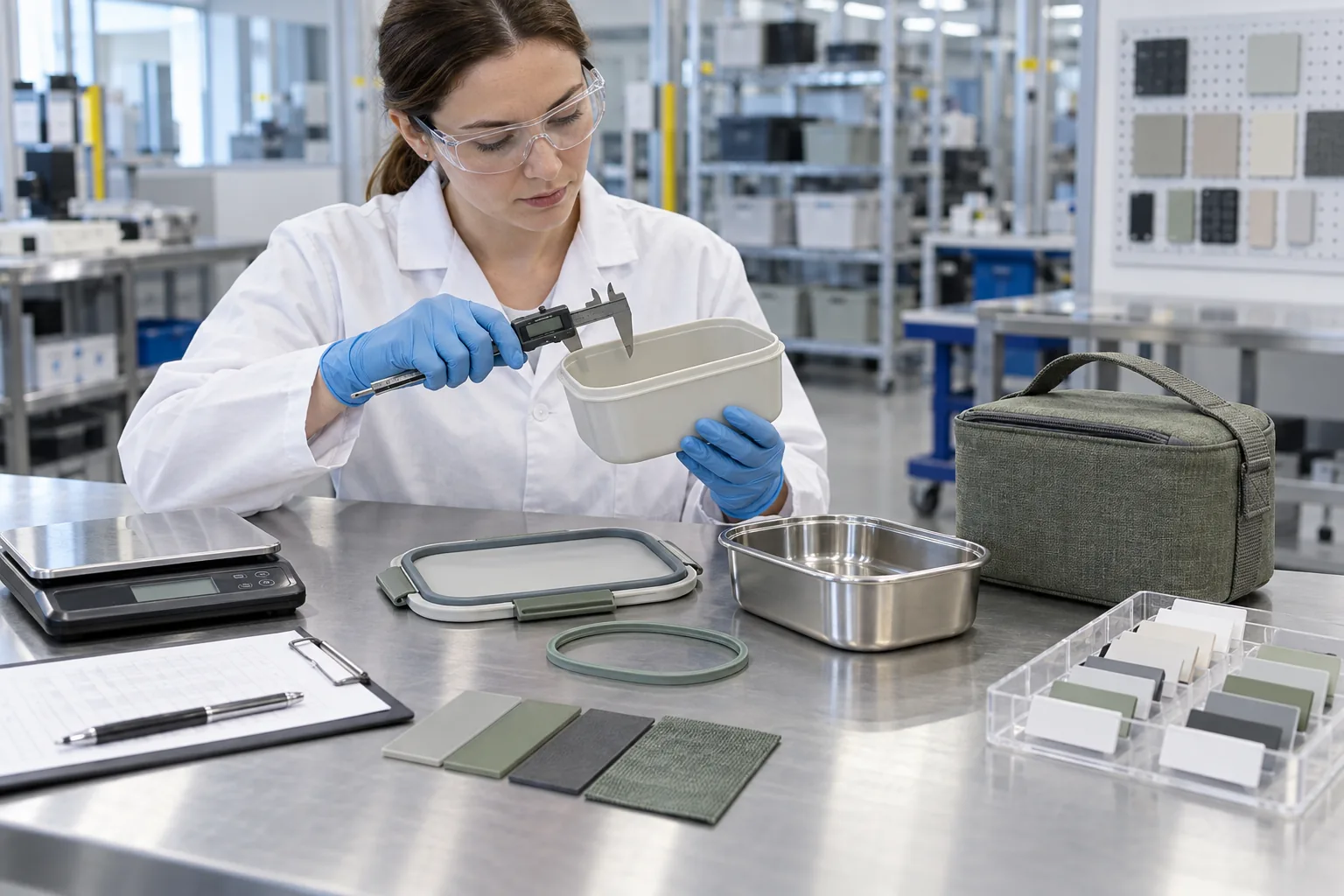
What testing evidence should a portable tableware buyer request?
Request evidence for the exact finished components, intended food-contact conditions and destination market. Identify the sample and revision covered by each report. A material name, supplier statement or certificate from a different product is not a substitute for a SKU-specific review.
Define the test scope before ordering
- List contact parts. Record the container, lid, seal, utensil, coating, print and any other surface that may touch food.
- Describe intended use. Include food type, temperature, contact duration, cleaning method and whether reheating is intended.
- Name the market. Requirements differ by jurisdiction and material. The EU and US should not be treated as one universal test label.
- Identify the sample. Keep its material grade, color, construction and revision linked to the report.
For regulatory background, use the European Commission food-contact materials overview and the US FDA food types and conditions-of-use reference. These explain why intended use and material scope matter; they do not certify any Naike product.
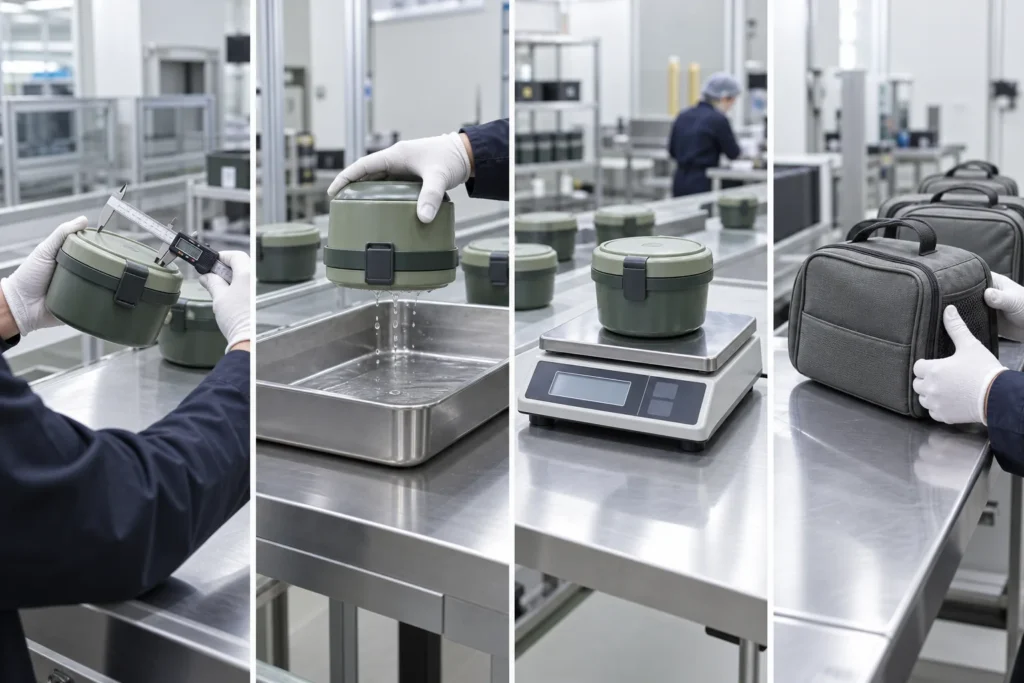
Separate laboratory evidence from product QC
| Evidence | Buyer check |
|---|---|
| Food-contact report | Does it identify the relevant material, article, conditions and market? |
| Approved sample | Are dimensions, appearance, fit and functionality recorded for the same revision? |
| Production checks | Are closure, nesting, packed-bag fit, labeling and traceability inspected? |
Start with the material comparison hub and a concrete bento-set reference. Review quality coordination, then include the required report scope in the RFQ.
Testing buyer questions
Does one report cover every color or decoration?
Not automatically. Check its scope against each changed material, colorant, print or surface treatment.
Is a passing laboratory result the entire approval?
No. The buyer still needs to approve the finished construction, functional checks, packaging and traceability for the ordered SKU.