
Executive Sourcing Summary: When developing custom portable dining sets, retail travel flatware, or corporate amenity gifts, choosing between Grade 1/2 Pure Titanium and SUS304 Food-Grade Stainless Steel represents a critical balance between weight savings, perceived hand-feel, manufacturing budget, and brand positioning. This technical guide provides B2B buyers, product developers, and procurement managers with empirical metallurgical data, cost modeling, surface finishing comparisons, and food-contact compliance parameters direct from an 18-year tableware manufacturer (Est. 2008).
⚖️ Key Takeaways for Procurement Teams
- ✔️
43% Weight Advantage for Titanium: Pure titanium has a density of 4.51 g/cm³ compared to 7.93 g/cm³ for SUS304 steel, making titanium the indisputable standard for ultralight outdoor, expedition, and aviation layover programs.
- ✔️
Substantial Luxury Hand-Feel for Stainless Steel: SUS304 provides an authentic, weighted ergonomic hand-feel (55–65g per utensil) favored by lifestyle retailers, boutique hospitality brands, and corporate gift buyers who associate mass with luxury.
- ✔️
Flavor Purity & Acid Invariance: Titanium builds a self-healing passive TiO₂ oxide barrier that is chemically inert to citrus, tomato sauces, vinegar, and coffee, preventing the slight metallic aftertaste occasionally noticeable in stainless steel.
- ✔️
Budget & MOQ Strategy: SUS304 travel cutlery allows lower production unit costs and flexible entry runs (MOQ 1,000 sets); Pure Titanium requires specialized high-pressure tooling and precision stamping, typically priced 2.2× to 2.8× higher with low factory MOQ of 500 sets.
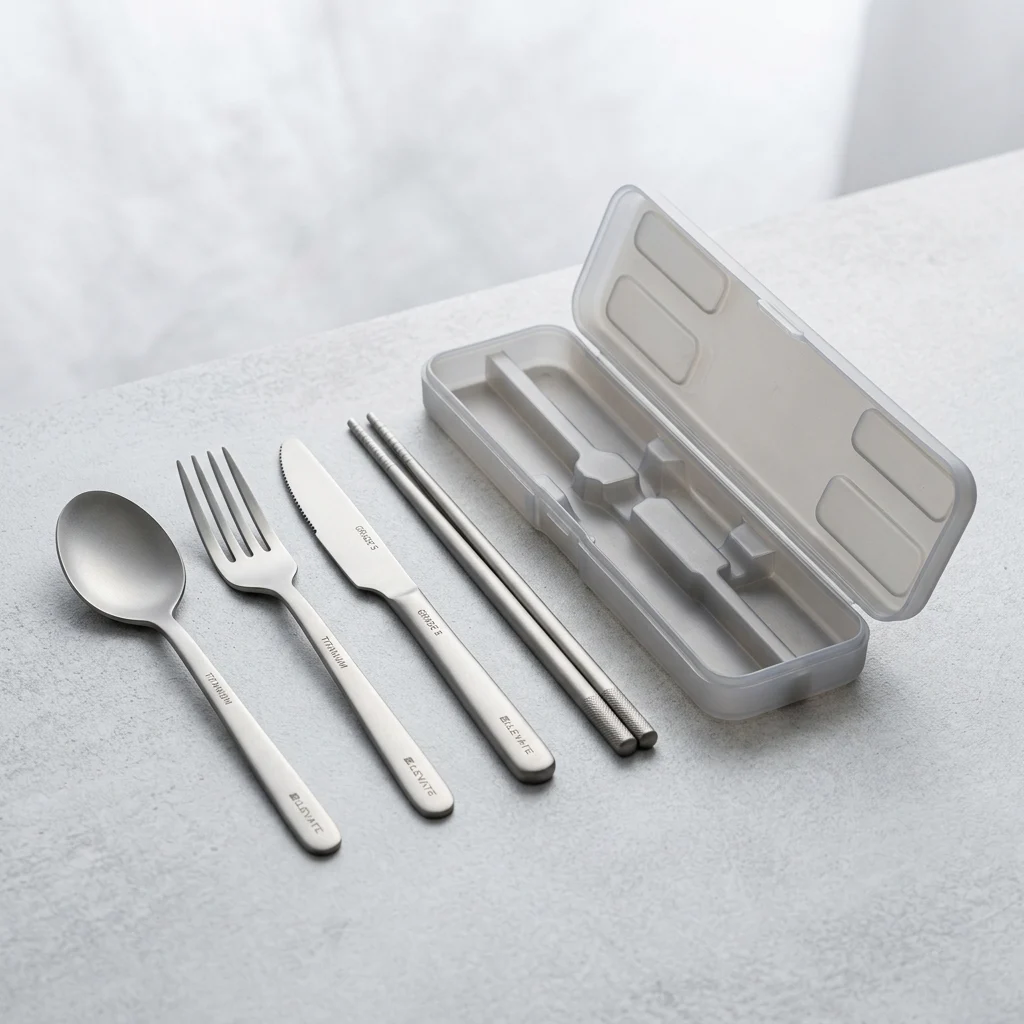
🔬 Section 1: The Metallurgical Divide — Physical & Mechanical Comparison
To make an informed material specification, procurement directors must evaluate the fundamental metallurgical properties governing consumer tactile perception, structural resilience, and long-term durability in transit:
| Performance Metric | Pure Titanium (Grade 1 / 2) | Food-Grade Stainless Steel (SUS304 / 18-8) | Buyer Procurement Impact |
|---|---|---|---|
| Material Density | 4.51 g/cm³ | 7.93 g/cm³ | Titanium cuts gross freight weight by 43%, slashing air-cargo and e-commerce fulfillment fees. |
| Tensile Strength | 345 – 485 MPa | 505 – 650 MPa | Both deliver excellent anti-bending resistance; titanium features higher spring-back elasticity. |
| Thermal Conductivity | 16.3 W/m·K (Low) | 16.2 W/m·K (Low-Moderate) | Neither overheats lips quickly in boiling soups; titanium cools down noticeably faster when removed. |
| Corrosion Resistance | Immune to chlorides, brine, and high-acid food environments | Superior in standard use; vulnerable to pitting in prolonged brine/chlorine soak | Titanium is completely rust-proof even in marine yachting, salt-air camping, and acidic vinaigrettes. |
| Biocompatibility & Allergenicity | 100% Hypoallergenic (Medical Grade implant safe) | Contains 8–10.5% Nickel (trace sensitivities rare but documented) | Titanium appeals strongly to wellness-oriented consumers and nickel-sensitive buyers. |
| Average Utensil Set Weight (3-Pc) | 42 – 52 grams total | 95 – 130 grams total | Substantial difference for backpackers where every single gram is calculated. |
👅 Section 2: Taste Neutrality & Food Acid Resistance
In high-end gastronomy and consumer sensory evaluations, “taste transfer” from metal flatware is a known consideration. Here is why the materials perform differently under real dining conditions:
Pure Titanium (Grade 1/2): Titanium forms an instantaneous, stable passive film of Titanium Dioxide (TiO₂) upon contact with oxygen. This microscopic barrier prevents any atomic ion migration between the metal and food acids. When tasting hot lemon tea, tomato pastas, or vinegar dressings, the diner perceives purely the culinary flavors with zero metallic sensation. Furthermore, titanium is biologically non-magnetic and chemically inert.
SUS304 (18/8 Stainless Steel): Composed of roughly 18% Chromium and 8% Nickel, SUS304 is the global workhorse of culinary flatware. It maintains excellent neutrality under standard neutral and mildly acidic meals. However, when left soaking in high-salinity dressings or marinades for extended periods, micro-ion exchange can occasionally produce a subtle metallic trace for highly sensitive palates.
✨ Section 3: Surface Finishes & Custom Branding Capabilities
Factory-level decoration determines how effectively your brand identity resonates with retail customers. At Naike Tableware, we operate dedicated surface treatment lines for both metals:
🔘 Titanium Surface Treatments
- Fine Ceramic Bead-Blasting: Creates an ultra-smooth, glare-free tactile matte texture that resists fingerprint smudges.
- Electrolytic Color Anodizing: An electrochemical process adjusting the TiO₂ refraction layer to create vivid blue, gold, purple, or rainbow hues without any synthetic paint or toxic dyes.
- Precision Fiber Laser Engraving: Sub-millimeter vector logo application with permanent contrast that withstands hundreds of commercial dishwasher cycles.
🔘 Stainless Steel Surface Treatments
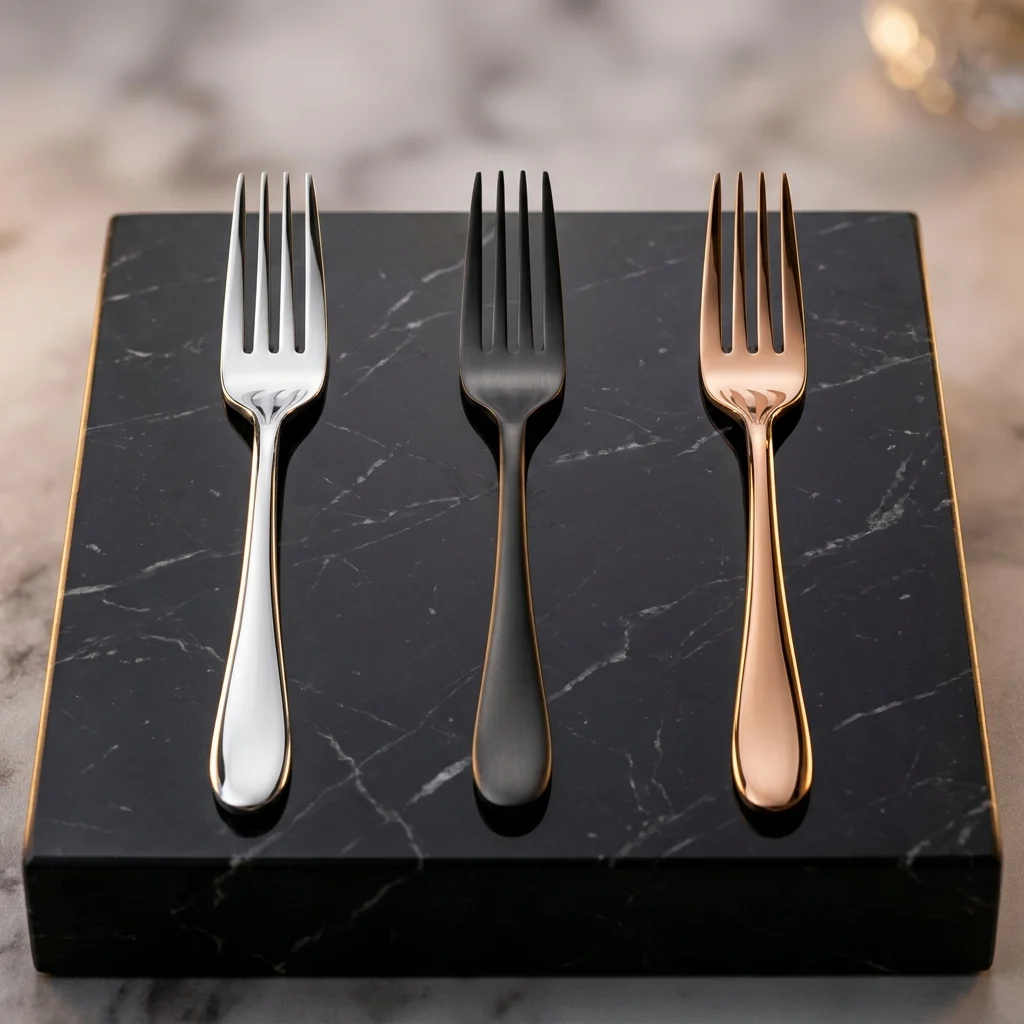
- Mirror Polishing (Grade A+): High-buff automated wheel polishing generating a brilliant, jewelry-like reflective luster.
- Satin Wire-Drawing (Brushed): Linear directional graining providing contemporary urban aesthetics and superior scratch masking.
- PVD Vacuum Titanium Coating: Physical Vapor Deposition applying high-hardness coatings in Matte Black, Rose Gold, and Champagne Gold.
- Tooling Stamped Debossing: Incorporating brand logos directly into the steel die stamping mold for tactile luxury indentation.
🛡️ Section 4: Food Contact Compliance & Global Certifications
International tableware distribution requires flawless regulatory compliance documentation. Naike Tableware subjects every raw material batch and finished set to comprehensive third-party lab testing (SGS / TÜV / Intertek):
- 📑
United States FDA 21 CFR 175.300 / CPG 7117.05: Verified total extractive limits and absence of lead, cadmium, or hazardous chemical migration under extreme simulated food conditions.
- 📑
German LFGB (Sections 30 & 31): Recognized as Europe’s gold standard, requiring rigorous sensory odor and taste neutrality testing along with heavy metal release limits.
- 📑
EU Regulation (EC) No 1935/2004 & DGCCRF (France): Full traceability of raw steel melt and titanium ingot certifications with certified mill test reports (MTR).
💰 Section 5: Commercial Cost Modeling & Sourcing Strategy
When engineering a tableware product line for market launch, procurement leaders should evaluate the following budgeting benchmarks:
| Procurement Dimension | Grade 1/2 Pure Titanium | SUS304 Stainless Steel |
|---|---|---|
| Raw Material Cost Index | Approx. 5.5× to 6.5× per kg vs Steel | Global benchmark commodity pricing |
| Finished 3-Piece Set Cost Ratio | 2.2× to 2.8× of stainless set | 1.0× Baseline cost structure |
| Standard Factory MOQ | 500 Sets (Flexible pilot tier) | 1,000 Sets (Volume production) |
| Standard Sample Lead Time | 7 – 10 Business Days | 5 – 7 Business Days |
| Custom Tooling Fabrication | 25 – 30 Days (T1 Sample) | 20 – 25 Days (T1 Sample) |
❓ Frequently Asked Questions (FAQ for Sourcing Directors)
Q1: Can titanium cutlery be washed safely in commercial dishwashers?
Yes, 100%. Pure titanium does not rust, pit, or discolor in commercial dishwashers. Unlike aluminum, it is entirely unaffected by alkaline detergents, chlorine sanitizers, or high-temperature steam cycles up to 120°C.
Q2: What is the main driver for choosing SUS304 over Titanium for retail brands?
Price positioning and perceived mass. For home-use, office dining, and mainstream retail sets, consumers associate heavier utensils with luxury quality. Additionally, SUS304 sets can be retailed at $12–$25 price points, whereas titanium sets occupy premium $35–$65 brackets.
Q3: How does Naike Tableware eliminate utensil rattling during transport?
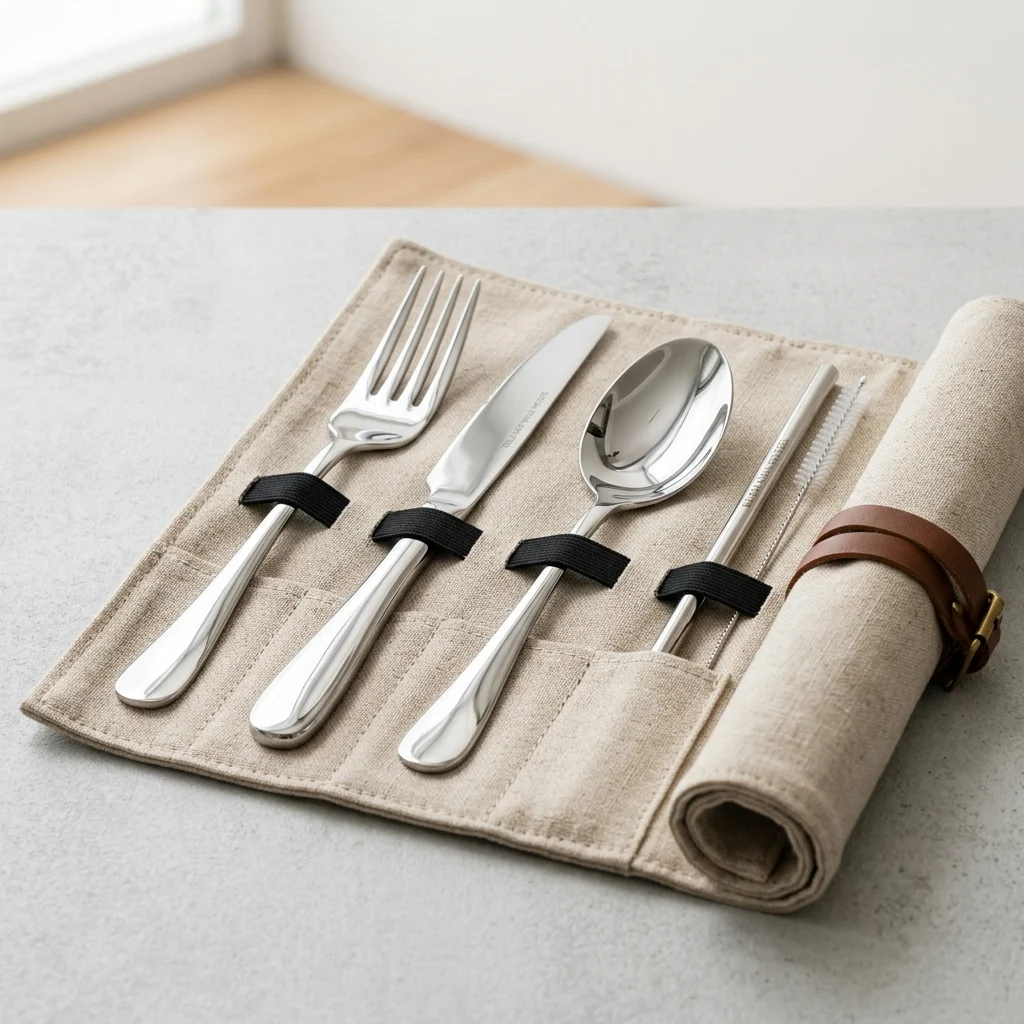
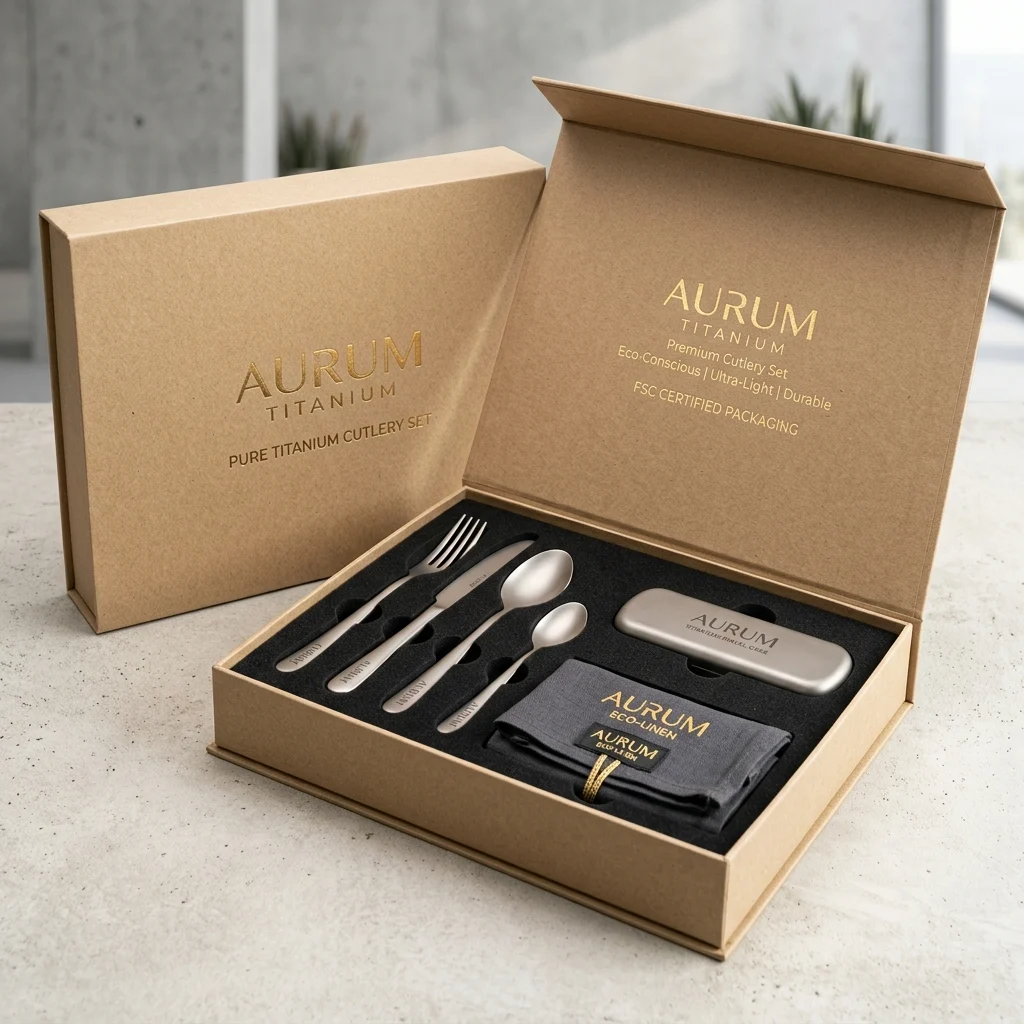
We engineer custom acoustic zero-rattle travel solutions, including precision-molded internal elastomer rib trays, snug-fit roll-up linen pouches with leather ties, and magnetic snap cases tailored specifically to the utensil contours.
Q4: Can we combine different materials in one complete set?
Absolutely. Many of our clients pair a lightweight bio-composite wheat straw or food-grade PP lunch box with SUS304 or titanium cutlery kits, providing optimal ergonomics, weight distribution, and retail margin.
Ready to Engineer Your Brand’s Custom Cutlery Program?
Partner with Naike Tableware (Est. 2008). Benefit from direct factory pricing, in-house tooling, flexible MOQs (500–1,000 sets), and certified global food-contact compliance.
nn