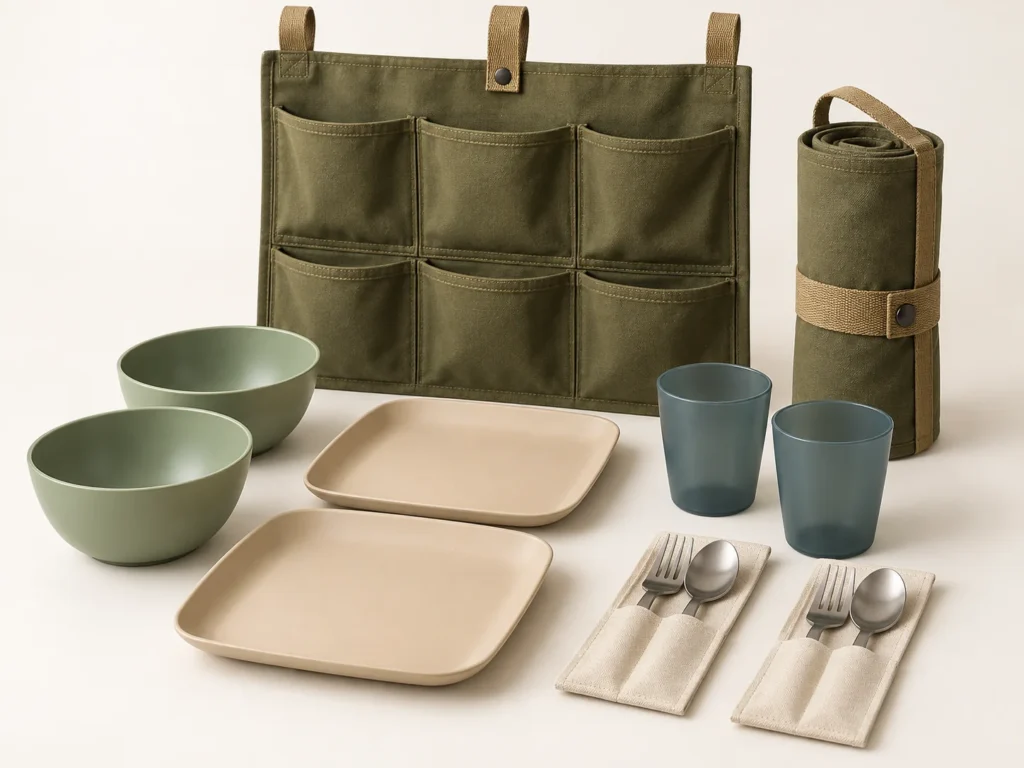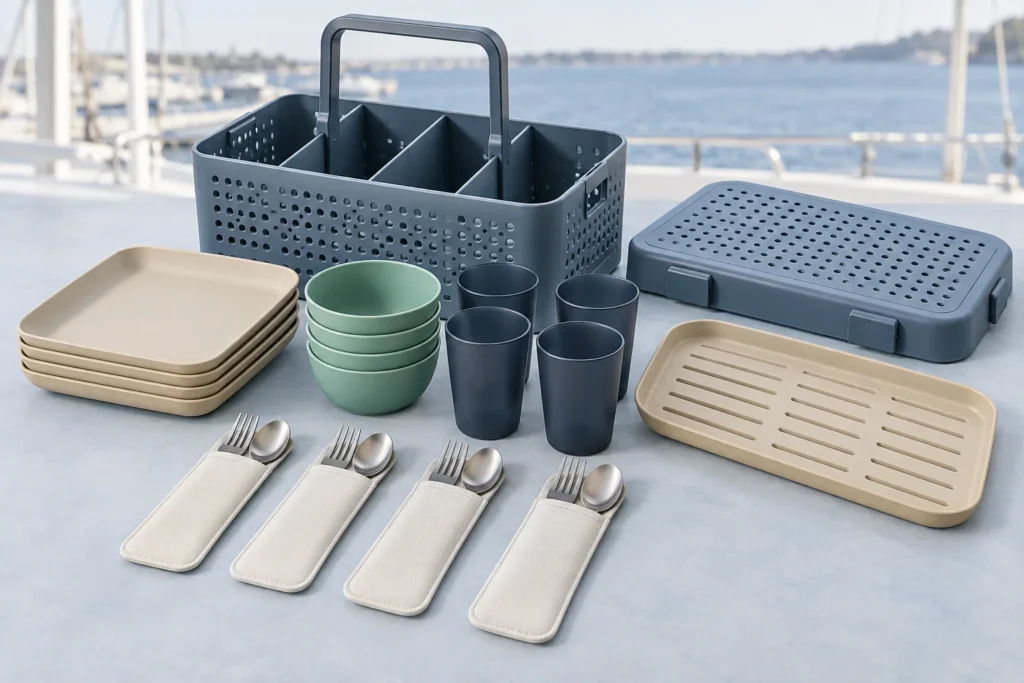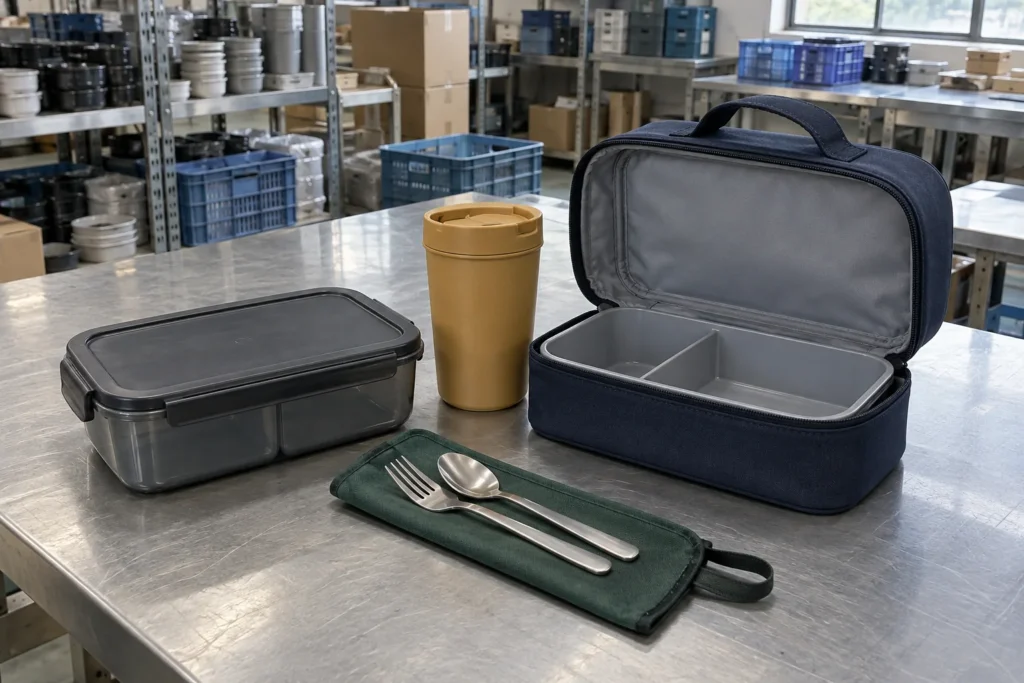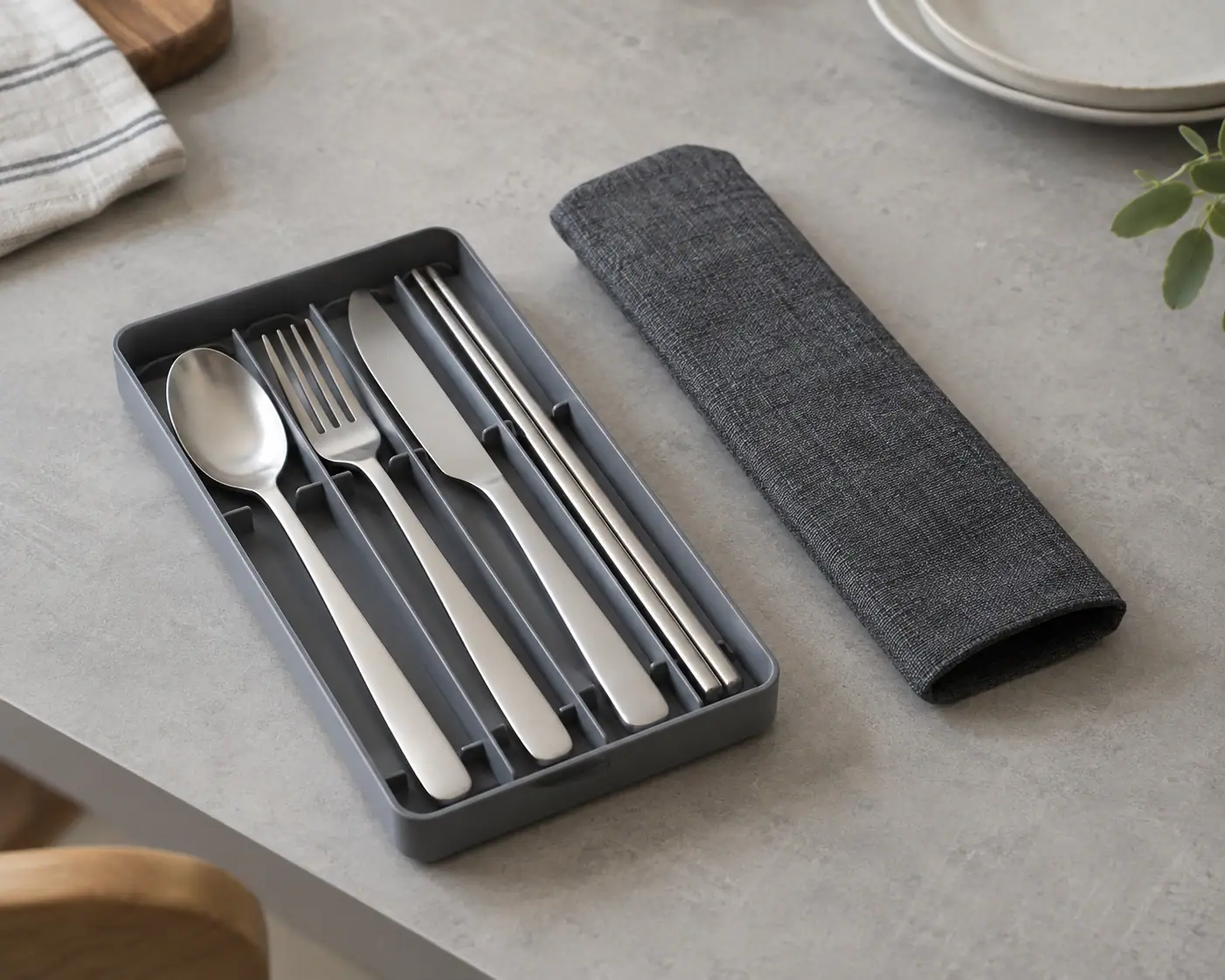
The partitioned cutlery kit below is a configuration for project discussion. Component selection, dimensions, material grades, finish, performance, MOQ, lead time and supporting records must be confirmed for each buyer brief.
A partitioned cutlery kit can make the interfaces in a portable meal set easier to specify. This stainless cutlery configuration pairs a spoon, fork, table knife and chopstick pair with a partitioned PP tray and a removable fabric sleeve. The tray, retaining ribs and sleeve are the engineering focus: the pieces should stay separated, be easy to remove, and fit the chosen pack-out. A buyer can use the configuration as a basis for a tooling discussion rather than assuming a fixed stocked SKU.
Designed For
This configuration is designed for brands, distributors and procurement teams exploring a compact add-on for an office lunch set, employee meal program or portable dining bundle. It is most useful when the buyer needs to compare cutlery length, tray retention, packed width and branding space before approving a new tray or sleeve. It is not presented as a tested or production-ready stock item.
Use Scenarios
In a sample-room review, the team can compare how a full utensil set fits alongside a lunch container or inside a larger carry case. In a retail-bundle planning session, the tray can be assessed as a removable module. For an employee meal program, a buyer might prioritize easy inventory, a clean pack-out and component replacement. Each context still needs its own material, cleaning, safety and target-market review.
Partitioned Cutlery Kit: Complete Set and Structure
- One spoon, one fork, one table knife and one pair of chopsticks, with exact handle profiles open for approval.
- One partitioned PP tray with separate channels and proposed retaining features.
- One removable textile carry sleeve, with closure and lining to be chosen for the project.
- Optional printed retail band, carton or label, quoted separately after pack-out approval.
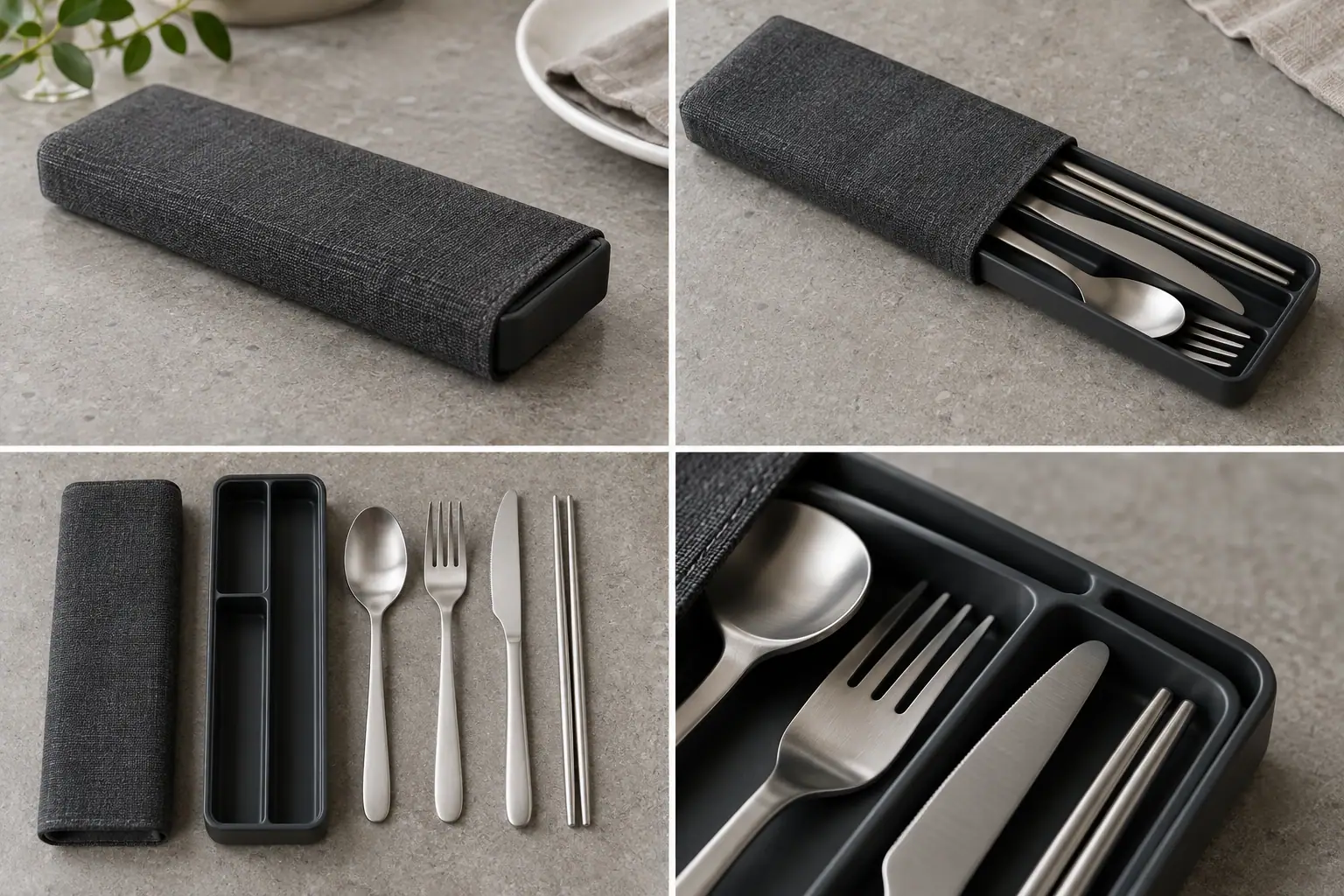
The structural difference is the tray’s component-specific layout. Each channel should be sized to its selected utensil rather than a generic slot. A buyer can specify a shallow finger-access relief, an end stop or a flexible retaining rib for evaluation. These features may affect mold complexity and tool ownership, so the final geometry belongs in a released 2D/3D file pack. For supplier design and tooling rights, review WIPO’s supplier IP agreement guidance and agree project-specific terms. A closed tray should not be described as leakproof or child-safe without relevant design and testing.
The set capability lies in the relation between parts. Confirm that utensil handles do not cross, rattle excessively, scratch an adjacent part or prevent the slide cover from closing. The sleeve should accommodate the closed tray without forcing seams or hiding the intended branding area. If a buyer adds a cup, napkin or lunch container, treat the complete sales unit as a new pack-out and check its dimensions rather than assuming the small tray validates the whole bundle.
Before Packing → Packed → Carrying
Before packing: the utensils are separate for inspection, cleaning instructions and component counting. Packed: each piece enters a defined tray channel and the cover or closure is checked for fit. Carrying: the closed tray enters the textile sleeve or an approved larger bag pocket. A project sample should show the same part revision at each stage so that reviewers do not approve a pack-out assembled from mismatched samples.
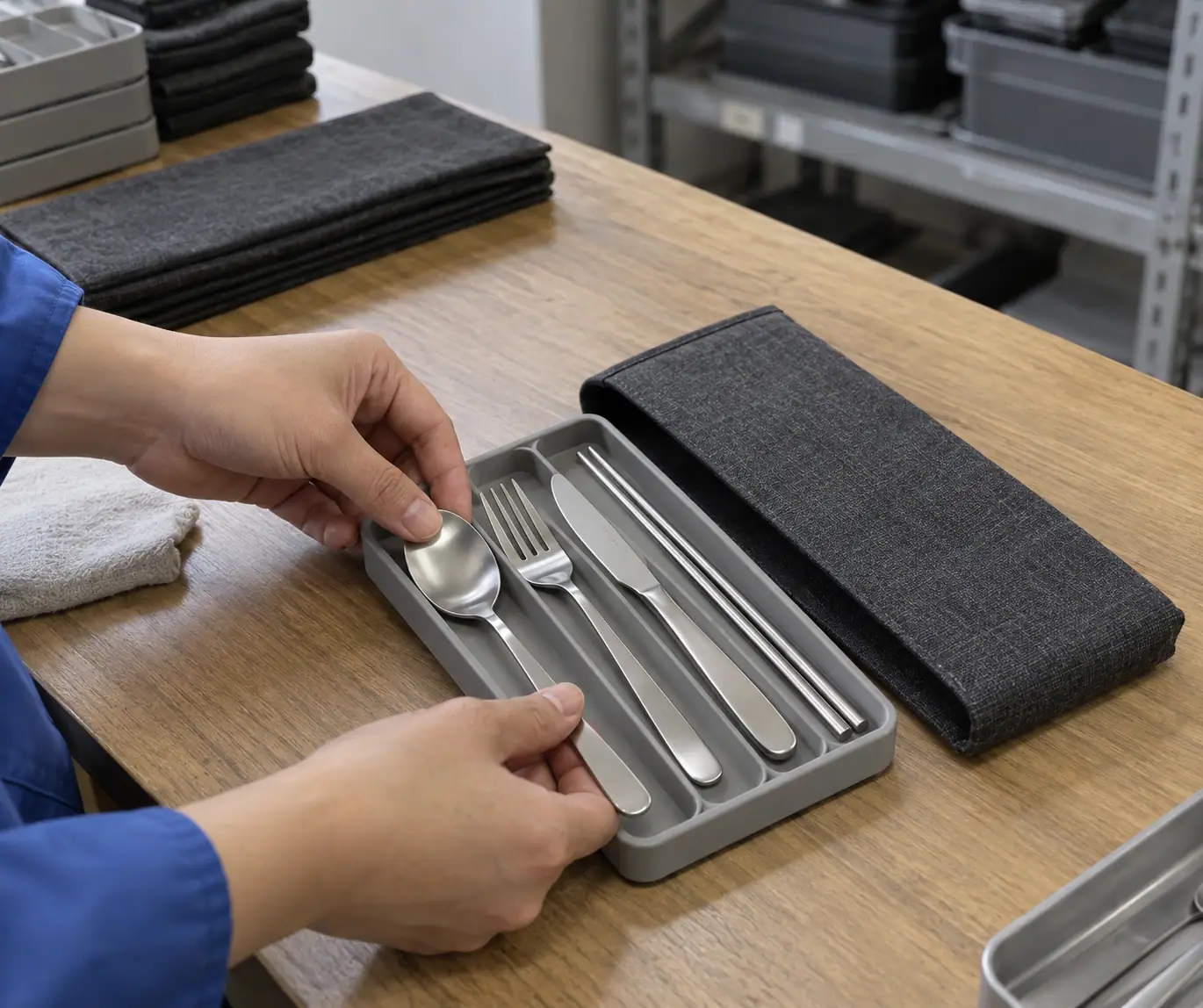
The carry sleeve is a layer of organization, not a substitute for agreed hygiene, cleaning, food-contact or transport requirements. Buyers should specify whether the sleeve is reusable, whether it touches food-contact surfaces, and how it will be presented in a retail carton. A component flat lay, pack sequence and packed view should all be reviewed together before final artwork.
Packed Size, Weight, Volume and Stackability
Packed length, width, height, weight and shipping volume are to be measured on the approved project sample. The values depend on the selected utensils, tray wall thickness, cover route and textile. No numerical dimensions or weights are implied by the images. Request a dimensioned drawing and a physical sample before setting carton counts or logistics assumptions.
Stackability and nesting also require a test with the selected cover and sleeve. Empty trays may nest differently from filled trays; textile sleeves may add unpredictable bulk. Specify whether the buyer needs empty component storage, finished retail-carton stacking, or both. The supplier should report the relevant configuration and measured limits rather than one general “stackable” claim.
Carry Bag Interior Layout
If the kit will enter a larger lunch bag, provide the bag’s internal pocket dimensions, opening direction and any competing modules. A snug fit must still allow a user to remove the tray without bending the bag or damaging the closure. If the sleeve itself is the only carry layer, confirm seam construction, closure method and finished thickness in the sample gate.
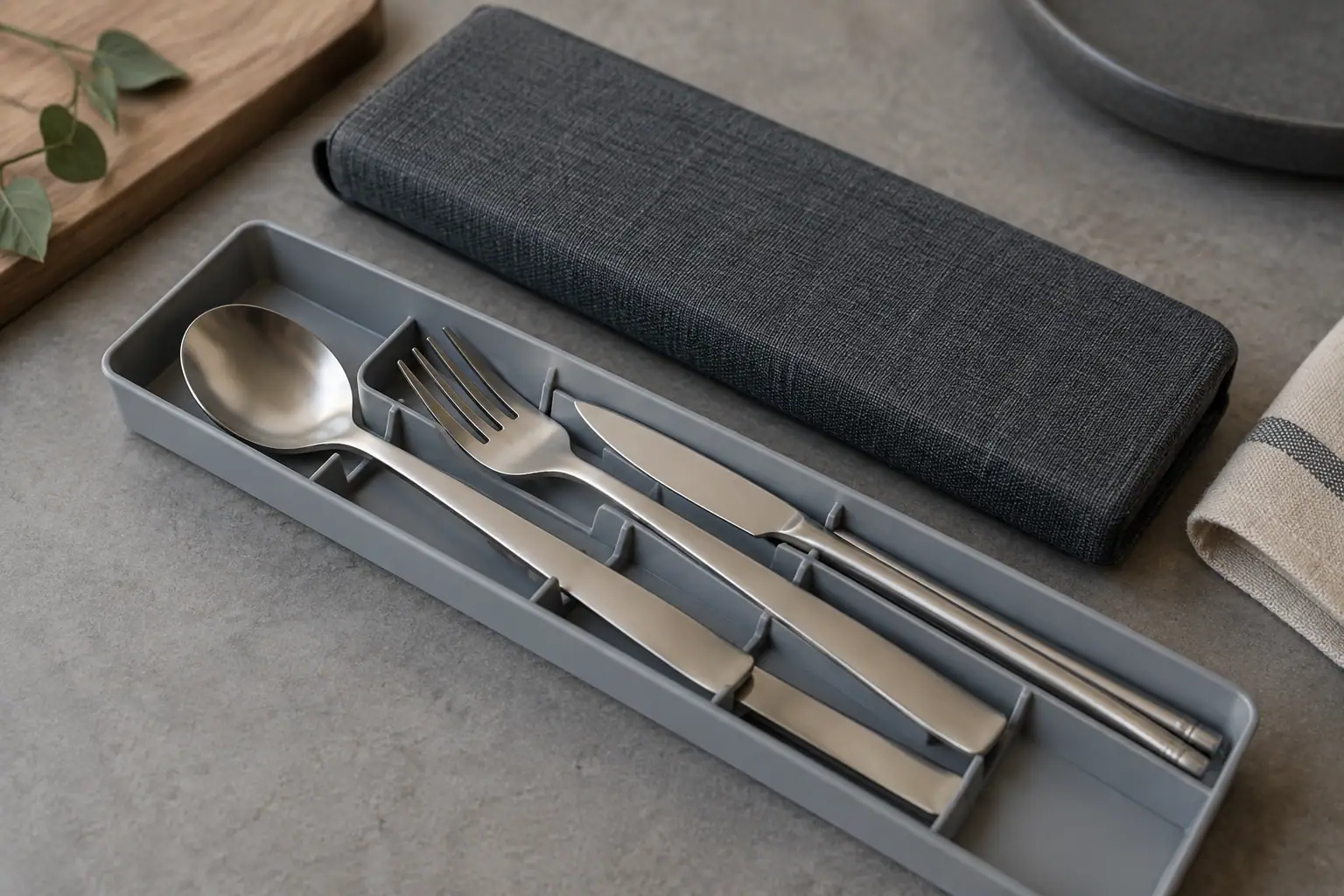
Material Choices, Logo, Pantone and Packaging
Stainless cutlery, PP tray and textile sleeve are working material categories, not locked grades. The buyer should confirm the exact metal grade and finish, resin grade and color, textile construction, cleaning conditions and target market before approval. Material advantages depend on the selected grade, design and use; this page does not substitute a material declaration or SKU-specific test report.
Logo expression comes after the structural layout. A logo may be considered on a flat utensil handle, tray cover, sleeve label or retail carton, but each position has a different readable area and process. Supply vector artwork, placement limits and color references. Pantone can guide a target color, yet a molded tray, textile and printed carton may need separate samples to agree acceptable appearance.
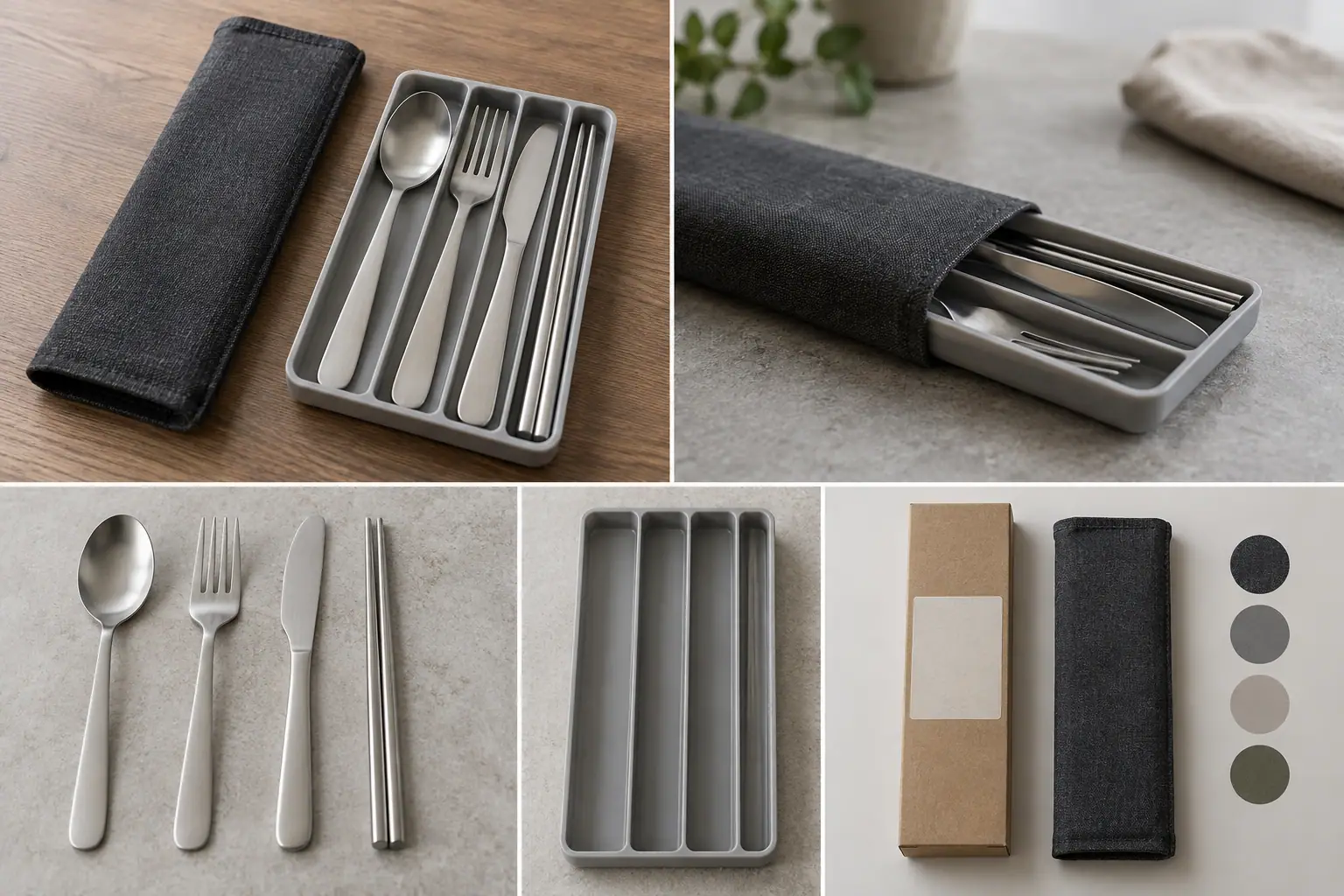
Replaceable components can be discussed as part of the BOM. For example, a project may retain the tray and change only a utensil profile, or revise the sleeve while preserving the approved utensil channels. Any change that alters fit, material evidence or pack-out must receive a new revision and approval. Packaging choices include a blank kraft carton, paper band or project-specific retail pack; artwork and barcode details remain buyer-supplied or separately developed and approved.
SKU-Level Evidence, MOQ, Sampling and Lead Time
Ask for evidence at the level of the finished configuration and intended market: material identity, agreed dimensional checks, fit and retention assessment, packaging review and any applicable third-party testing. The supplier should identify what it can document and what the buyer or specialist must arrange. A generic test report for a different article is not proof for this kit. See the quality and compliance page for the site’s public overview, then confirm the actual SKU record.
MOQ, sample cost, tool cost, sample lead time and production lead time are quotation items, not fixed promises on this page. They depend on whether existing tooling can be used, whether a new tray tool or insert is necessary, and how many materials, colors and packaging versions are ordered. The buyer should send a controlled file pack and target quantity so the supplier can return a comparable route and quote.
Sampling can be staged: review geometry and handle length, check the tray and cover interface, approve sleeve fit, then review the full pack-out and artwork. Changes after any gate should be recorded against the released revision. The related guide, What Files Should a Buyer Send Before Custom Tableware Tooling Starts?, lists the drawings, material choices and approval information to prepare.
FAQ
Can the tray be sized around existing cutlery?
Potentially. Send measured samples or approved drawings for every utensil and identify the critical handle and bowl dimensions. Feasibility depends on the proposed retention and cover design.
Is this a stocked set with published dimensions?
No. It is a configurable development direction. Packed measurements and availability must be confirmed after a project-specific sample.
Can a brand change the sleeve without remaking the tray tool?
It may be possible if the tray and sleeve interface remains compatible. The changed pack-out still needs a fit and packaging review.
What should be sent for an accurate quote?
Send the target market, quantity, component drawings or samples, material preferences, logo files, packaging brief and any must-pass fit criteria. Mark unknowns for supplier review.