The Twin-Bay Retail Lunch Set With Cutlery Sleeve is a configuration for private-label buyers to discuss. The pictured arrangement does not establish an available stock SKU, actual Naike factory sample, approved dimensions, material grades, test results, MOQ or delivery time. Confirm every quoted option against selected components and a complete physical sample.
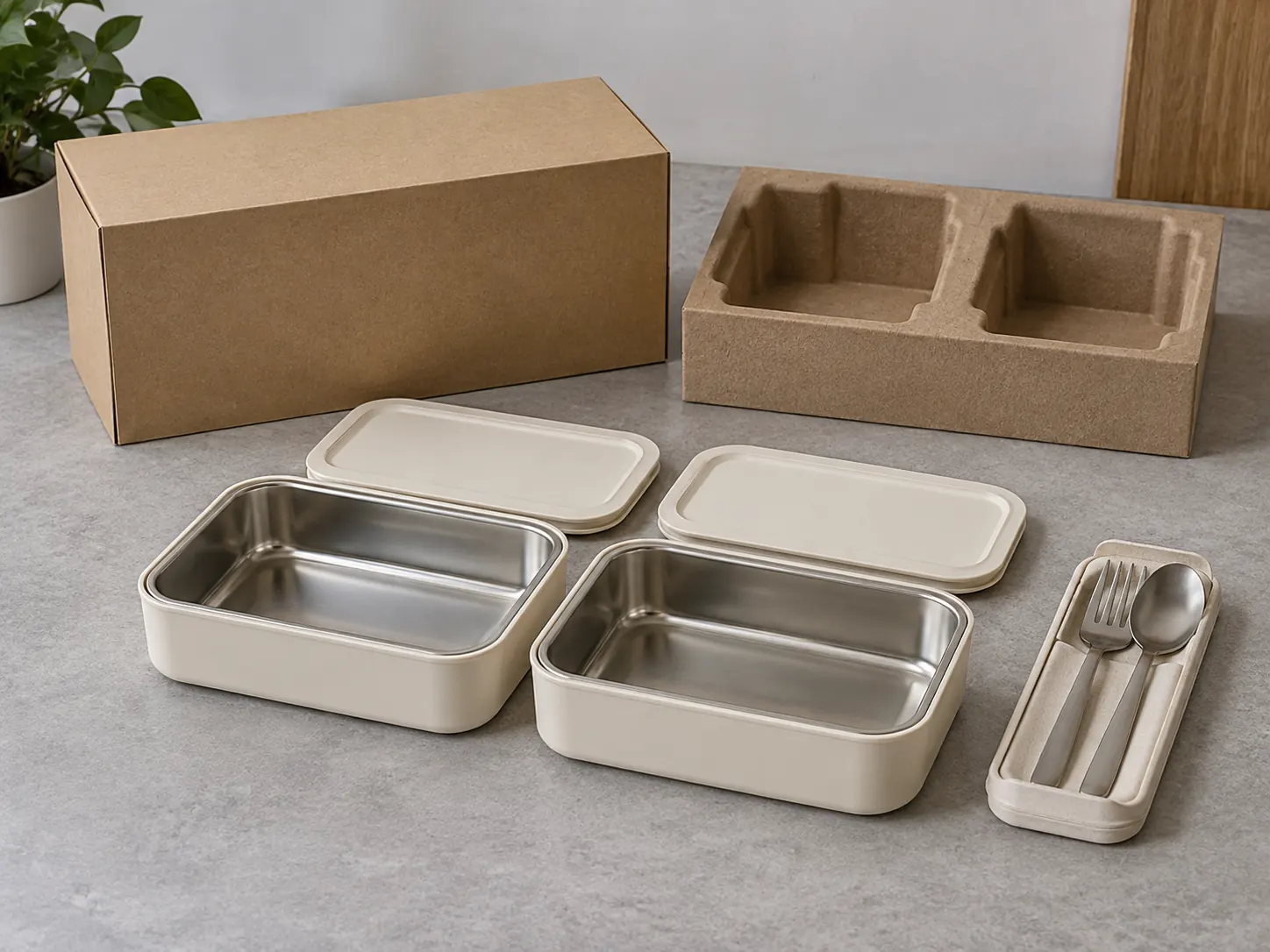
This twin-bay retail lunch set puts two low-profile food containers side by side rather than building one tall stack. Each container can be discussed with a removable stainless inner tray and a flat closure; a slim spoon-and-fork sleeve fits beside the pair. The base retail direction uses a formed paperboard insert and plain carton. A reusable fabric carry bag is optional. Brands can compare the packed unit, material options, logo locations and replacement-part logic before defining a production specification.
Designed For and Use Scenarios
Designed for brands, importers and B2B sourcing teams reviewing a private-label lunchware sales unit. The configuration can be evaluated in a Chinese factory sample room or corporate buyer office for component count, insertion sequence, packaging fit, artwork position and revision control. These are procurement-review scenes, not claims that the pictured set has passed a specific test or entered production.
Private-label retail lunchware programs that want a low, side-by-side set structure.
Buyer sample review, component substitution, packout trial and retail presentation planning.
Two containers, two flat lids, proposed removable inner trays, one spoon, one fork, one utensil sleeve, one formed insert and one retail carton.
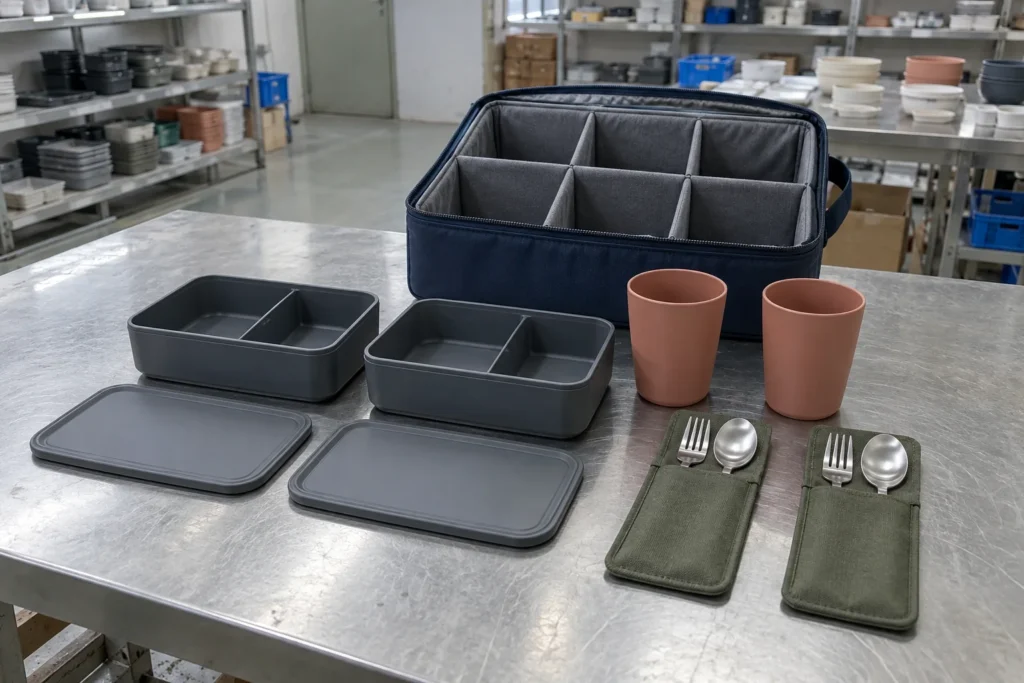
A separate fabric bag with two main pockets and a narrow utensil channel, subject to sample fit.
Set Configuration and Structural Difference
The structural idea is a twin-bay retail lunch set: two equivalent shallow containers remain separate for access and replacement, while the pack holds them horizontally. This differs from a single divided box, a tall stack or a lunch box inside an insulated carrier. A narrow utensil sleeve can occupy its own slot instead of being placed loosely over a lid. Finished geometry, rim engagement and inner-tray interface must be checked with physical samples; the visuals are not dimensional drawings.
List each shell, inner tray, lid, spoon, fork and sleeve separately in the bill of materials. If one tray changes material, color or depth, recheck its lid interface and the space available in both the insert and optional bag. A buyer may instead specify identical single-material containers; that is a different revision, not a silent substitution.
Before Packing → Packed → Carrying
Before packing, confirm the part count and place two assembled closed boxes beside the cutlery sleeve. Inspect each closure and verify that utensils can be removed without disturbing the boxes. For the retail pack, seat the boxes in separate formed cavities, place the sleeve in its recess, then close the carton without compression. Retain a complete packed reference unit after approval.
In the packed state, check whether the insert restrains each part during normal handling and whether the carton opens cleanly. If the optional bag is selected, load the closed boxes side by side and the sleeve into a separate channel; close the zipper without forcing it and inspect the handles. These are proposed approval checks, not published performance results. The retail carton is not itself a carry bag.
Packed Size, Weight, Volume and Stackability
Packed size
Measure length, width and height on the complete approved carton and, if selected, the closed carry bag. Do not infer dimensions from images.
Weight and volume
Record net component weight, retail-unit gross weight and packed volume after material, packaging and variant split are fixed.
Stacking and nesting
Check closed-box stacking, empty-container nesting and carton stacking separately. Inner trays and lids may change each result.
Optional Carry Bag Internal Layout
The optional charcoal fabric carry bag has two main compartments for the closed boxes and a narrow utensil channel. Divider positions, foam or lining, zipper route, handles, seams and wash-care information are development choices. A bag pattern cannot be approved from a carton insert: measure chosen containers, set divider spacing and inspect access, movement and closure with actual components.
If the retail channel does not need a bag, remove it from the bill of materials and quotation rather than implying it is included. If the bag is included, retain a part number and revision for the bag, divider and sleeve. An adjustment to box height or sleeve shape should trigger renewed packout review.
Material Choices and Replaceable Components
An off-white polymer outer shell, removable stainless inner tray, stainless spoon and fork, paperboard insert and kraft carton are proposed choices. Exact polymer and steel grades, pigments, finishes, seals, coatings, recycled content and food-contact suitability are not established by appearance. Specify intended contact conditions and market, then request matched material and test information for the final SKU.
Replaceable parts could include a spare lid, inner tray, utensil sleeve or formed insert. Each needs a fit definition and controlled revision. A visually similar part is not necessarily interchangeable if rim shape, tray depth or carton cavity changes. Document interfaces before listing replacement components for retail service.
Logo, Pantone, Retail Packaging and Tooling
Potential brand positions include the outer lid, cutlery sleeve, fabric label and paperboard sleeve or carton. Compare printing, engraving, molded marking or sewn-label routes only after material and surface are confirmed. Approve Pantone targets on physical plastic, textile and paper samples; screen color cannot be a production standard. Keep the logo artwork version with the sample revision.
The retail pack may use a blank carton with an outer paper sleeve and formed insert. Barcode placement, languages, warnings, leaflet and protective construction depend on channel and destination. A color or artwork change may alter quote and minimum quantity by variant. If new geometry or insert tooling is required, request a distinct tooling scope, sample stages and ownership terms. Naike’s private-label packaging and custom set development pages describe a general service path, not guaranteed options for this configuration.
SKU-Level Quality, MOQ, Sampling and Lead Time
Define inspection criteria for shell and tray dimensions, visible finish, closure fit, utensil edges, sleeve construction, insert restraint, carton count, color and logo position. Ask which checks are visual, dimensional or functional and which records can be supplied for final materials and market. Do not transfer a compliance claim from a different size, color, formulation or component without reviewing applicability.
MOQ should be quoted after structure, material grades, color split, logo process, packaging and optional bag are fixed. Sampling may start with existing components, then a packout mockup, functional fit sample, artwork and color approval, and a signed complete unit. Lead time depends on those stages, tooling and the approved order; this page makes no universal promise. Read how to approve a private-label lunch box set. The RFQ checklist helps keep quotations comparable.
Frequently Asked Questions
Is this exact twin-bay set a stocked product?
This page describes a configurable B2B direction. Availability, physical sample, material grades, colors, MOQ and timing need confirmation against the buyer’s brief. Images are not evidence of a completed production SKU.
Can the boxes use different inner trays?
That is possible if every tray and lid interface is checked. Different depths or materials may change weight, closure, insert fit and packed height. Record the combination in one bill of materials rather than mixing sample revisions.
Is the fabric bag included in every unit?
No. The base direction is two boxes with utensil sleeve, insert and carton. The bag is optional and needs its own pattern, fit and quotation. Request the selected configuration explicitly.
What should a buyer send for a quotation?
Send market, component list, capacity and packed-size targets, materials, artwork, channel, packaging and bag choice, quantity by variant, schedule and required claims. Ask the team to identify available parts, development, evidence gaps and exclusions.
Build a Similar Twin-Bay Retail Set
Send your target channel, contents, carry preference, material and branding brief, packaging format, market and quantity by variant. Request a complete sample and a quote that separates existing components, changes, documentation and new tooling.
Open the Set Inquiry