
What should a buyer plan for?
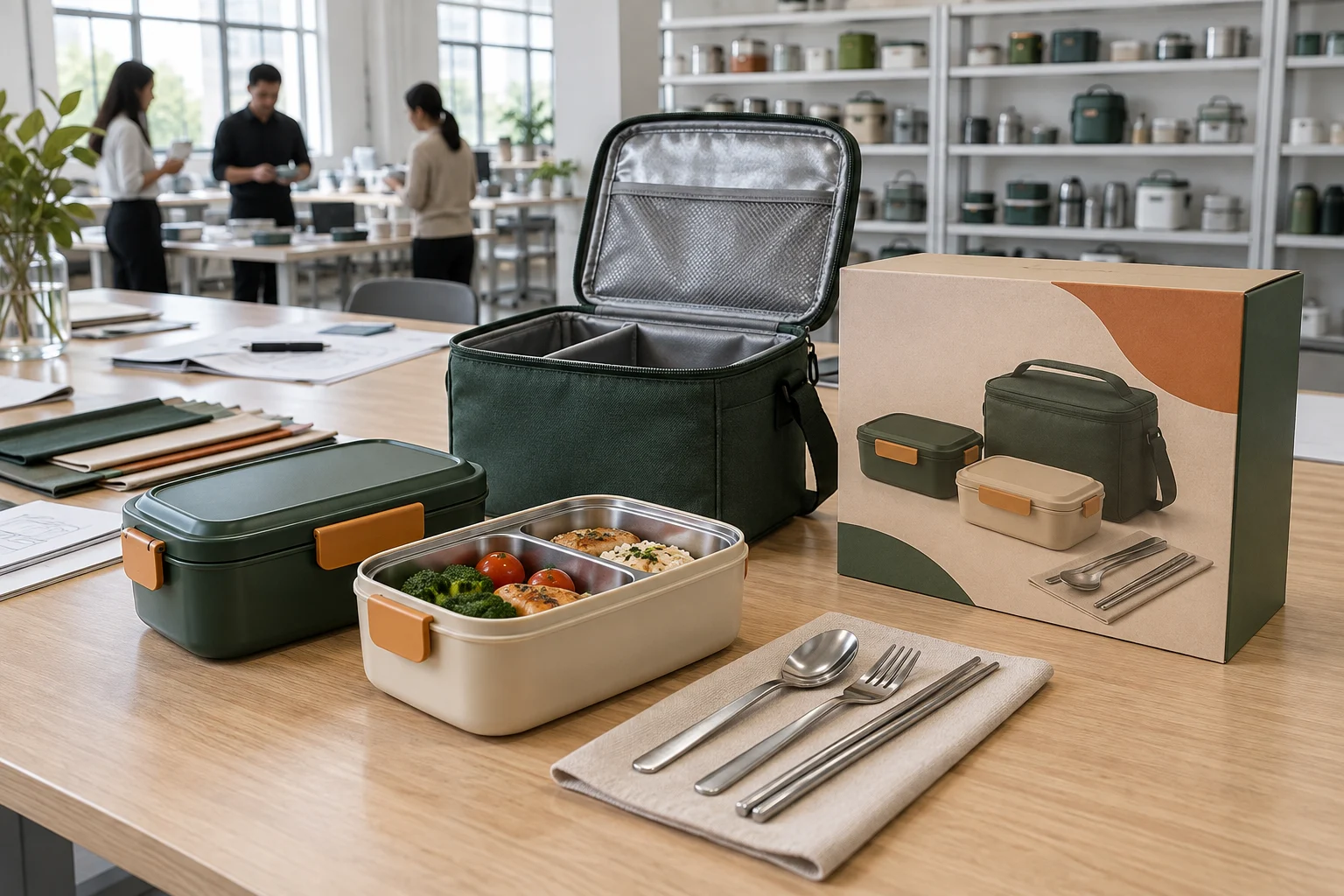
Yes—one accountable lunch set supplier can coordinate lunch boxes, cutlery, fitted bags and retail packaging when the complete SKU is managed through one approved BOM, dimensional interface plan, sample route and quality standard. The supplier may manufacture some parts and coordinate qualified partners for others; the key is clear ownership of fit, color, artwork, testing, assembly, packout and change control.
A capable lunch set supplier can coordinate lunch boxes, cutlery, fitted bags and retail packaging as one commercial SKU. From our factory-side view at Naike Tableware, the real question is not whether every item comes from one machine or one building; it is whether one accountable team controls the interfaces between all components.
For B2B buyers, those interfaces create most of the hidden risk. A container may be acceptable by itself, a bag may be well sewn and a color box may look correct on screen, yet the finished program can still fail because the pieces do not fit, colors drift, artwork uses the wrong dieline or the export carton does not protect the retail presentation.
This guide explains when single supplier lunch set coordination works, what the coordinating supplier must control and which information a buyer must provide. It also shows where a single point of responsibility reduces work without removing the need for buyer approval.
What Does a Complete Lunch Set Supplier Actually Coordinate?
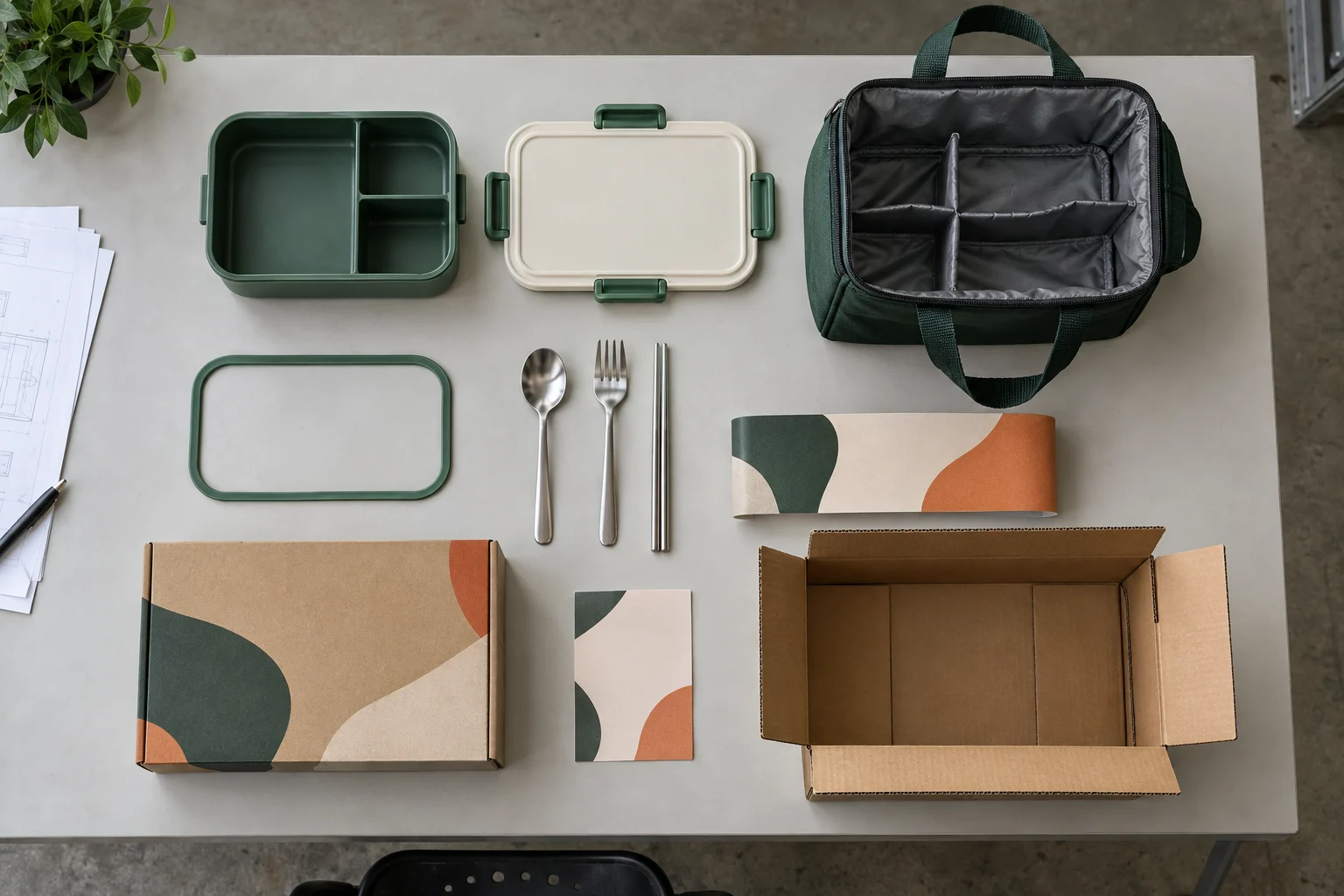
A complete portable lunch program is more than a container with accessories placed beside it. It is a controlled SKU made from molded food-contact parts, metal or plastic utensils, seals, textile carry components, printed packaging and shipping materials that must arrive in the correct quantity and configuration.
The coordinating supplier should translate the buyer’s commercial concept into one bill of materials. That BOM should identify every container, lid, seal, divider, utensil, case, bag, insert, label, retail pack and export carton required for one finished unit.
Lunch boxes establish the dimensional core
The lunch box usually determines the basic volume, footprint and handling sequence of the set. Capacity, compartment layout, lid structure, closure, nesting and food-contact material affect the dimensions that every downstream item must accommodate.
If the container changes after the carry bag or retail insert is approved, the change can move divider positions, box dimensions and carton quantities. For this reason, we normally treat the product stack as the dimensional master for a coordinated set.
Cutlery and accessories create retention questions
Cutlery may sit inside a container, in a dedicated case, under an elastic strap or in a bag pocket. Each position creates different requirements for hygiene, movement, scratching, access and component counting during assembly.
A spoon that appears to fit in a drawing may contact the lid once the bio-composite seal and real molding tolerances are present. The supplier should therefore validate accessory fit with physical components, not rely only on nominal dimensions.
Carry bags convert separate products into a portable system
The bag must match the verified stack, total weight and intended access sequence. Insulation, lining, dividers, handles, straps, zippers and pockets should be selected around the use case rather than added as decorative features.
For a fitted bag, product orientation matters. A lunch set that fits only when operators force a closure or rotate parts differently on each unit is not ready for repeatable production assembly.
Retail packaging turns the set into a saleable SKU
Retail packaging communicates the product while controlling movement and protecting visible surfaces. It may include a sleeve, color box, molded pulp insert, paperboard divider, instruction card, barcode label, display tray or individual mailer.
The packaging must be developed from approved product dimensions and actual component weight. Artwork and structure should meet at the same revision so the printed pack represents what is physically inside.
One Supplier Versus Multiple Direct Suppliers
Neither model is automatically correct for every buyer. A large sourcing organization may have the engineering capacity and regional teams to manage several direct suppliers, while a smaller brand or retail program may gain more control from one coordinating partner.
The comparison should focus on accountability, interface risk and internal workload rather than only the lowest quoted price for each component. A component-level saving can disappear if the buyer must fund additional sampling, consolidation, inspection or rework.
| Decision area | One coordinating lunch set supplier | Several direct suppliers |
|---|---|---|
| Commercial ownership | One team owns the complete SKU quotation, component list and packout assumptions. | The buyer must combine quotations, quantities, terms and revision changes across vendors. |
| Dimensional fit | The coordinator can review the product stack, bag interior and package together. | The buyer must manage drawings, tolerances and physical samples between suppliers. |
| Color coordination | One approved palette can be reviewed across plastic, metal, textile and print substrates. | Each vendor may interpret references independently and ship separate approval samples. |
| MOQ alignment | The supplier can identify the highest constraint and propose a workable set quantity. | Different component MOQs can leave excess bags, cutlery or printed packaging. |
| Testing | Evidence can be organized around the final material list and finished SKU. | The buyer must assemble component reports and identify gaps at finished-product level. |
| Assembly | Components can be received, counted, fitted and packed under one packout instruction. | The buyer needs a consolidator, third-party packer or its own assembly operation. |
| Change control | One revision notice can trigger an impact review across the complete set. | The buyer must notify each supplier and verify that every dependent item was updated. |
| Transparency | The coordinator should disclose which processes are internal and which are qualified partner operations. | The buyer has direct visibility into each vendor but carries the coordination burden. |
A coordinating supplier does not need to claim that every textile, metal and printed item is produced internally. In many real supply chains, specialist processes are more effective when handled by qualified partners.
What matters is whether the lead supplier can identify those processes, control incoming components and accept responsibility for the assembled result. A buyer should be cautious when a supplier offers one invoice but cannot explain who approves fit, color, testing or final packout.
Where Single Supplier Lunch Set Coordination Reduces Risk
The strongest advantage appears at the boundaries between components. These boundaries are difficult to price in a spreadsheet, yet they influence sample rounds, delays and the final customer experience.
Single supplier lunch set coordination controls physical interfaces
The supplier can build and retain a complete product stack during development. This enables real checks of lid clearance, cutlery position, bag opening, divider height, retail insert fit and carton compression.
Drawings remain important, but a physical interface check catches issues that separate suppliers may not see. Surface texture, molded variation, fabric flexibility and the loading sequence can all affect fit even when individual dimensions appear correct.
Color decisions are reviewed across different materials
The same color reference will look different on matte PP, bio-composite, woven fabric, coated metal and printed paper. One coordinating team can prepare a material board or complete sample so the buyer approves the family resemblance rather than expecting impossible visual identity across substrates.
This is particularly useful for retail programs with several colorways. The approval record should state which surface is the master reference and what level of variation is acceptable on the other materials.
Packaging is based on the final assembled product
Packaging suppliers often need confirmed dimensions before cutting an insert or preparing a dieline. When product, bag and packaging are coordinated through one route, the final stack can be measured after component approval and before production packaging is released.
This sequencing reduces the risk of a box that closes only under pressure or an insert that marks a visible surface. It also allows the export carton count to be calculated from the real retail pack instead of an early estimate.
MOQ conflicts become visible before purchase orders are placed
A molded product, sewn bag and printed box may each have a different efficient quantity. The coordinating supplier should expose those constraints and propose how many complete saleable sets can be produced without creating unexplained leftovers.
For example, a custom printed pack may have a different minimum than an existing molded lunch box. The correct answer is not to hide the difference but to show the buyer how standard packaging, shared artwork or phased customization changes the commercial route.
What the Coordinating Supplier Must Control
A single contact person is not enough. The supplier needs documented controls that connect sales commitments with engineering, purchasing, production, quality, assembly and shipment.
A controlled BOM and revision record
The BOM should identify the current component, material, color, logo method, quantity per set and supplier route. When one item changes, the team should assess the effect on other parts instead of updating only the line that received the request.
Revision control is especially important when buyer feedback arrives through email, annotated photographs and messaging applications. One approved record should consolidate the current instruction so production does not follow an obsolete comment.
Interface drawings and approved physical samples
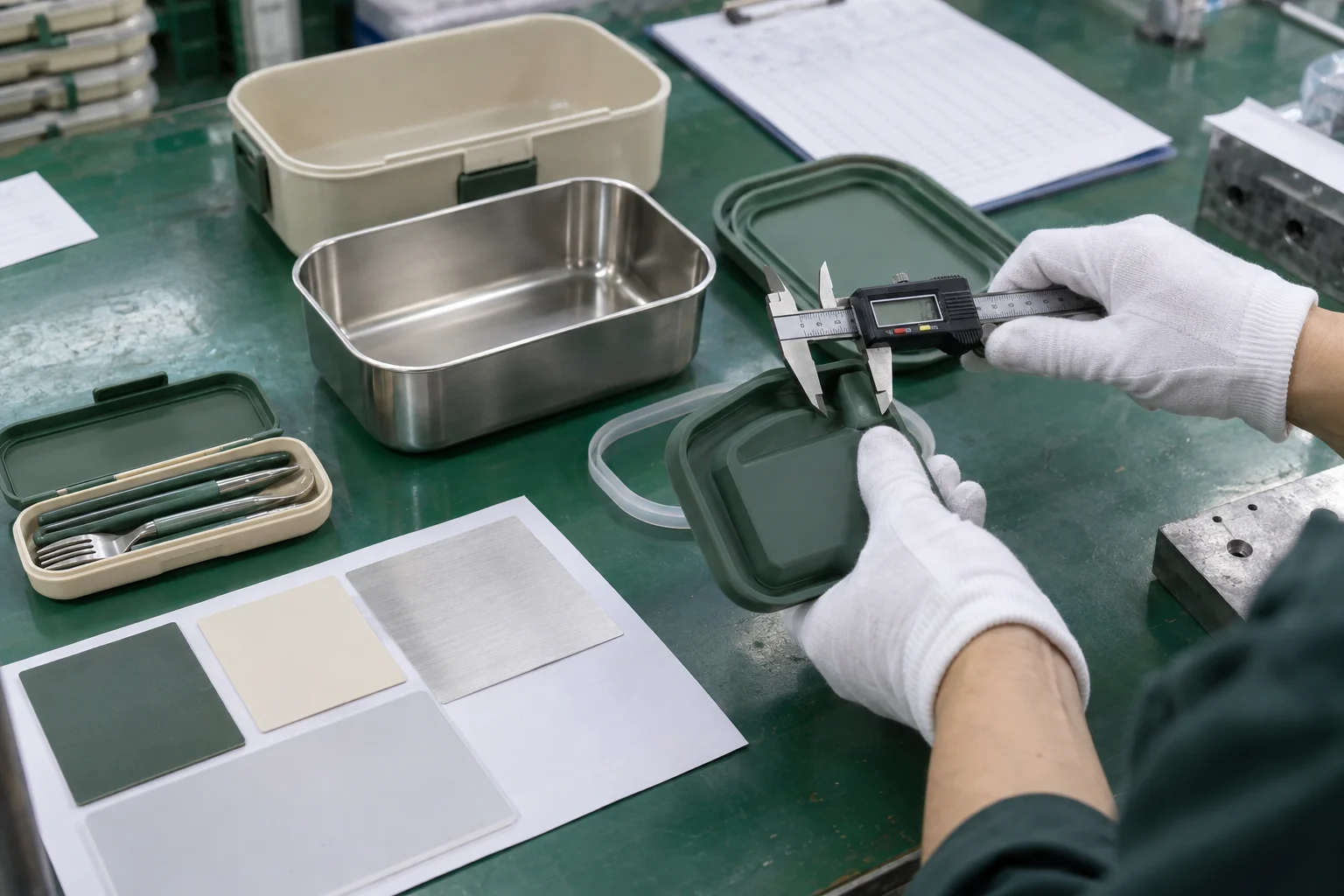
Critical dimensions include more than the external size of the lunch box. The supplier may need to control the stacked height, utensil cavity, lid travel, bag opening, divider location, insert clearance and package orientation.
The physical sample should represent the intended interfaces closely enough for the buyer to approve them. Our guide to custom tableware sample lead time explains why reference, configured, tooled and pre-production samples answer different questions.
Material and food-contact evidence by component
The supplier should map food-contact parts, non-food-contact accessories, textile parts and packaging materials separately. Test requirements depend on the material, finished SKU, intended use and destination market, so a generic certificate should not be presented as universal coverage.
If an existing report is used, the buyer should check whether it matches the actual resin, color, metal, coating or bio-composite component. Any gap should be identified before production rather than discovered during retailer onboarding.
Incoming quality for partner-supplied components
Coordinated sourcing does not remove incoming inspection. It makes it more important because a bag, cutlery case or printed box may arrive from a specialist operation and must still match the approved complete set.
Inspection points can cover material identity, dimensions, color, logo, stitching, zipper operation, print registration, quantity and packaging condition. The final standard should focus on how each component affects the finished SKU.
Assembly and packout instructions
Operators need a clear sequence showing how many pieces enter the set, where they are positioned and which surfaces require protection. Photographs or controlled samples help make the packout repeatable across production shifts.
Final inspection should verify the assembled set rather than count sealed cartons alone. A complete set check can confirm component quantity, closure, bag fit, logo direction, insert placement and retail-box condition.
When One Supplier Is Not Yet the Right Choice
Single supplier coordination is not a reason to ignore capability gaps. Buyers should separate the value of one accountable route from unsupported claims that one factory can perform every specialist process.
A highly technical insulated product, regulated electronic accessory or specialized surface treatment may need a dedicated supplier and direct technical approval. The lead supplier can still coordinate the set, but the buyer may need visibility into the specialist’s evidence and change controls.
The product architecture is still changing
If the buyer has not decided the component list, user, capacity or carry method, asking for one complete quotation may create false precision. The better first step is a structured development review that separates fixed requirements from options.
An existing product may solve most of the brief while one custom component creates disproportionate tooling and timing. The coordinating supplier should show this tradeoff rather than force every idea into a new-development route.
The supplier cannot explain partner operations
Use of qualified partners is normal; lack of visibility is not. A responsible coordinator should be able to explain which parts are molded, purchased, sewn, printed or assembled through each process and how incoming quality is controlled.
The buyer does not always need confidential commercial details, but it does need enough process information to assess risk. Statements such as “we can do everything” are not a substitute for a process map, sample plan and applicable evidence.
The buyer needs direct ownership of strategic components
Some programs designate a specific cutlery supplier, textile mill or packaging converter for strategic reasons. In that case, the lead tableware supplier can coordinate approved components without becoming the commercial source for every part.
The responsibility matrix should state who buys, inspects, replaces and approves each item. This hybrid model can work well when the nominated component is stable and information flows through one controlled project record.
How Naike Tableware Coordinates a Complete Lunch SKU
Naike Tableware is based in Fujian, China, near Xiamen Port, with nearly 20 years of manufacturing and export experience. Our role in a coordinated lunch program is to connect the selected product route with tooling, material, component, bag, packaging, assembly and export decisions.
A project can begin with an existing lunch box, a configurable set, a mold modification or new tooling. We first identify which parts already exist and which require development, then map the dependencies before committing the sample route.
Step 1: define the saleable unit
We ask the buyer to identify the user, sales channel, destination market, quantity and required pieces. This creates the first BOM and prevents optional accessories from being confused with the committed retail contents.
Step 2: choose the product and tooling route
Existing molds can reduce development work when their dimensions and function meet the brief. If a structural change is essential, the team separates mold modification or new tooling from color, logo and packaging decisions.
Step 3: lock critical interfaces before fitted packaging
The component stack, cutlery position and carry layout are reviewed before the bag interior and packaging insert are frozen. This order protects the downstream items from preventable dimensional changes.
Step 4: approve the complete physical SKU
The buyer reviews the product, accessories, bag and packaging together. Open issues and known sample limitations are recorded so visual approval does not accidentally release unresolved functional or compliance work.
Step 5: control assembly, packaging and shipment
Released components are counted and packed under the approved instruction. Final checks cover the complete set, retail presentation and export carton before shipment planning through the agreed route.
B2B Buyer Checklist for a Lunch Set Supplier
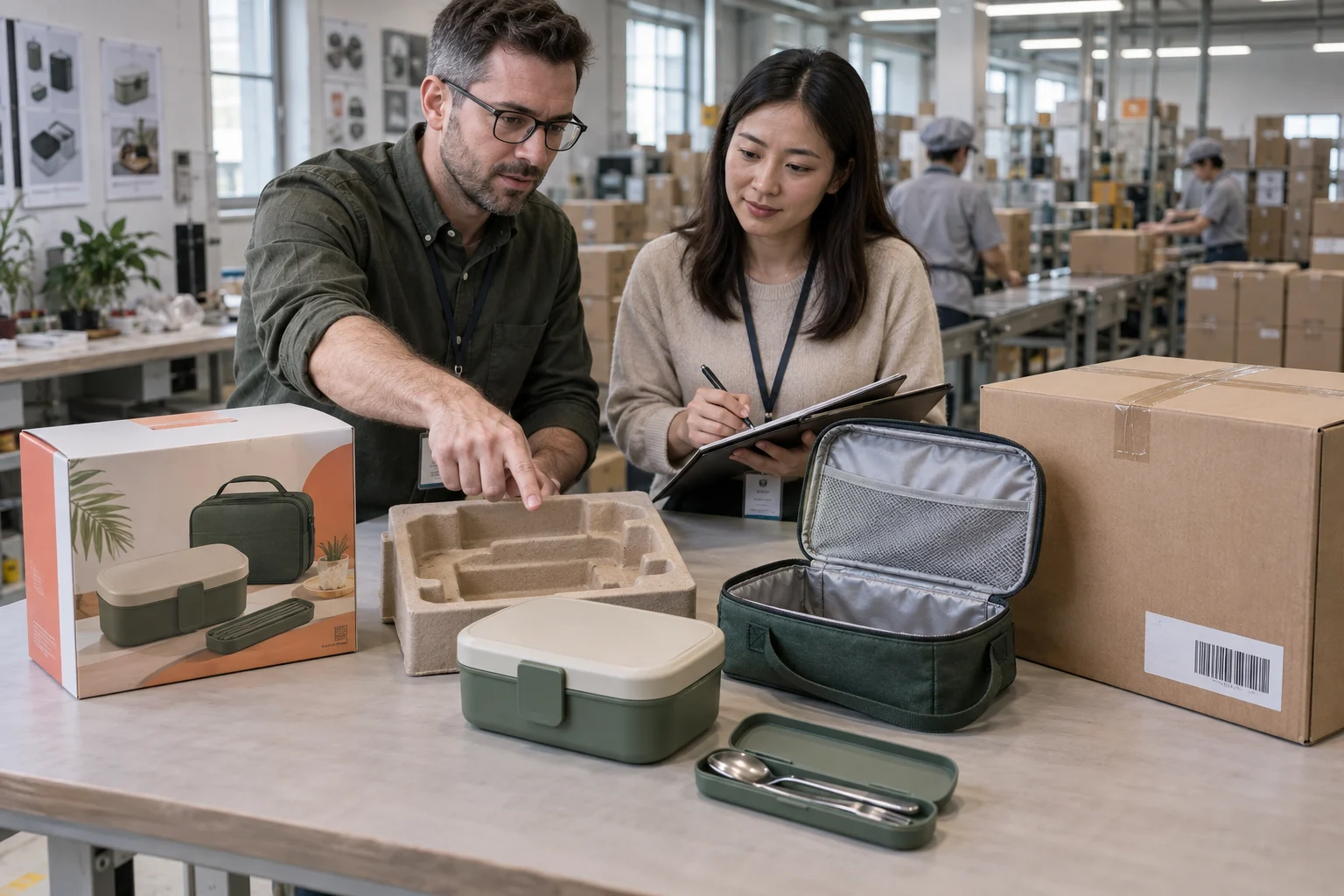
Use this checklist during supplier qualification and before issuing the first complete-set purchase order. It tests whether the proposed single supplier can control the program rather than simply collect component prices.
| Check | Question | Why It Matters |
|---|---|---|
| Complete BOM | Does one controlled list identify every product, accessory, bag and packaging component? | The BOM defines the saleable unit and prevents missing or substituted parts. |
| Process map | Which operations are internal, and which use qualified specialist partners? | Visibility allows the buyer to assess real capability and incoming-quality risk. |
| Dimensional master | Which approved product stack controls the bag, insert and box dimensions? | One master reference prevents different suppliers from designing to conflicting data. |
| Material map | Are food-contact and non-food-contact materials identified by component? | Testing and compliance evidence must match the actual part and market. |
| Color standard | How will color be approved across plastic, bio-composite, metal, textile and print? | Different substrates cannot be judged reliably from one digital screen reference. |
| MOQ logic | Are minimums shown for molded parts, custom colors, bags and printed packaging? | The highest constraint determines how many complete sets can be produced efficiently. |
| Sample route | Will the buyer receive reference, configured, tooled and pre-production samples where needed? | Different samples validate different risks and should not be treated as interchangeable. |
| Quality plan | Who inspects partner-supplied components and the final assembled set? | Component inspection alone cannot verify fit, count or retail presentation. |
| Change control | How are changes communicated across every affected component and document? | A small container change can alter the bag, insert, carton and test scope. |
| Packout approval | Is the loading sequence physically reviewed and documented? | Repeatable assembly protects components and creates consistent customer presentation. |
| Evidence | Can factory, product, testing and inspection evidence be tied to the quoted SKU? | Applicable evidence is more useful than broad credentials with no product link. |
| Release authority | Who approves the golden sample, packaging and shipment? | Named owners prevent production or dispatch against incomplete approval. |
Questions to Put in the First RFQ
A strong RFQ should make the commercial target visible without pretending that every technical choice is final. The supplier needs enough information to diagnose the route and identify where decisions remain open.
Start with the intended user and sales channel, then list every component required per set. Include expected quantity by color, destination market, target dimensions or capacity, material direction, logo, packaging style and delivery objective.
Ask the supplier to separate existing products, configurable work, mold changes and new tooling. This helps buyers compare proposals that might otherwise use the same phrase—“custom set”—for very different scopes.
Request a sample sequence and state what each sample must prove. The portable lunch set components guide can help organize the component decision before an RFQ is sent.
B2B Buyer FAQ About Complete Lunch Set Supply
Must one lunch set supplier manufacture every component internally?
No. A credible coordinating supplier may use qualified specialist partners for cutlery, textile bags or printed packaging. The important requirements are process transparency, incoming inspection, interface control and responsibility for the final assembled SKU.
Can one supplier match the same color across plastic, fabric and printed packaging?
The supplier can coordinate a consistent color family, but different materials and surface finishes reflect light differently. Approve physical substrate samples and define the master reference plus acceptable variation for each material.
How is MOQ calculated for a complete set?
Complete-set MOQ is influenced by the product platform, custom color, mold route, cutlery, bag construction and printed packaging. The supplier should show the important component constraints and confirm the final complete-set quantity for the selected configuration.
Who is responsible if the lunch box does not fit the bag?
Under a true coordinated supply route, the lead supplier should own fit verification against the approved components and sample. The buyer still needs to approve the physical set and record any dimensional or packing requirements before production.
Can testing reports from individual components cover the complete retail set?
Not automatically. Report relevance depends on the material, component, finished configuration, intended use and destination market. Review existing evidence first, then identify whether finished-SKU or additional testing is required.
Should retail packaging be approved before the product sample?
Artwork concepts can start earlier, but production dimensions, fitted inserts and final dielines should follow verified product and bag dimensions. Approving structural packaging too early is a common cause of rework.
Conclusion: Choose a Lunch Set Supplier with Interface Control
One lunch set supplier can coordinate lunch boxes, cutlery, bags and retail packaging successfully when it controls the complete BOM, physical interfaces, materials, sample sequence, partner components, assembly and packout. The benefit is not merely fewer purchase orders; it is one accountable route for decisions that cross product categories.
Single supplier lunch set coordination works best when the buyer supplies a clear commercial brief and the factory responds with a transparent process map. The supplier should state what already exists, what needs modification, which specialist operations are involved and what evidence is required before the SKU can be released.
For a project-specific review, send Naike Tableware the component list, quantity, destination market, logo, packaging direction and delivery goal. We can assess whether an existing platform, configured set, mold modification or new tooling route is appropriate.