
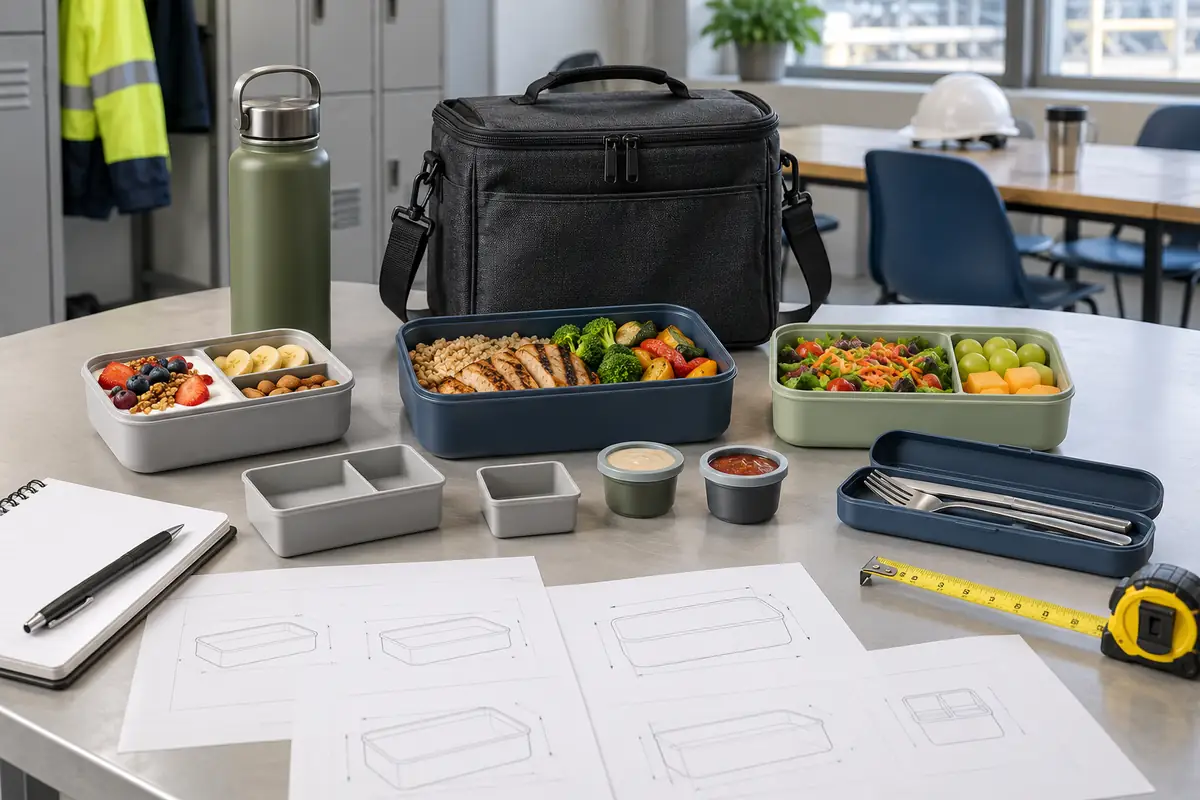
Configure the system around three eating windows
A three meal bento system should translate the shift schedule into three clearly identified meal units, then coordinate capacity, compartment layout, closures, cutlery, carry-bag fit, cleaning and replacement parts. Buyers should approve both each container and the packed system, because three good boxes can still create excessive bulk, confusing identification or difficult handling when combined for one worker.
A three-meal program is not simply a larger lunch-box order. It is a coordinated product system that may be loaded before a long shift, carried through changing environments and opened at separate times. The buyer must decide how users recognize the correct meal, keep unused components organized and return every part after use.
Importers, workforce-program operators, distributors and private-label brands often begin with a request for three containers and one bag. From the factory side, that description leaves the main commercial questions unanswered. The final configuration depends on meal timing, food formats, carry distance, available storage, washing responsibility, replacement policy and the target packed dimensions.
This guide does not prescribe one universal capacity, material, temperature duration, MOQ or test result. Those values must be confirmed for the selected SKU, material route, intended use and destination market. Its purpose is to help buyers prepare a comparable brief and release a system that can be repeated in production.
Translate the shift schedule into three use scenarios
Begin with a simple timeline covering preparation, transport, each meal window, temporary storage and return. Record where the set is likely to be kept between meals, such as a locker, vehicle, work station or shared break area. This reveals whether the dominant constraint is packed size, identification, access, insulation, cleaning or loss control.
Describe each meal by food format rather than by marketing name. A light meal may need separate wet and dry zones, a main meal may need greater depth, and a later meal may prioritize compact storage. When the food pattern is unknown, use a range of scenarios and keep dividers removable until the buyer has field feedback.
State whether food is loaded by the worker, a central kitchen, an employer program or a retail customer. Central loading may need labeling and batch handling, while individual loading may prioritize intuitive nesting and home washing. The same three boxes can require different identification and packaging depending on who prepares them.
Confirm how the program handles heating, cooling and holding. Do not allow the name of a material or insulated bag to imply performance. Any microwave, freezer, dishwasher or temperature-retention statement should be defined and verified for the complete selected product and intended market.
Information a three meal bento system brief should include
Provide the shift length and meal windows, typical food formats, number of users, carry method, available locker or shelf space, cleaning route, destination market and preferred material family. Add the expected order quantity, branding areas, packaging format and target delivery window. This gives the supplier a basis for choosing existing components before discussing new tooling.
Also identify non-negotiable constraints. A maximum bag width, requirement for one-handed carrying, need for individual meal identification or use of an existing bottle can determine the architecture early. Separating required features from preferences prevents a sample from growing in size and cost with every review round.
Choose one platform or three specialized containers
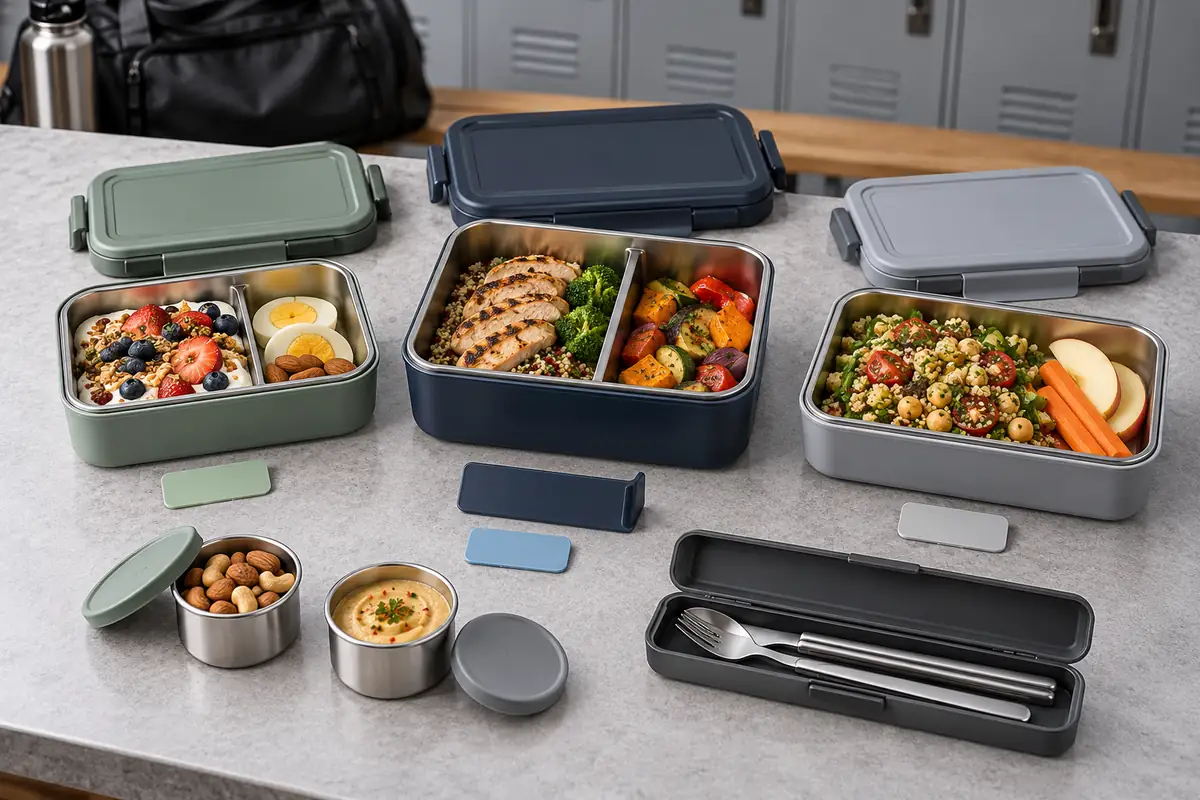
The first architecture uses three identical bases and lids. It simplifies identification of replacement parts, stacking and packing instructions, and it may reduce the number of unique components. The tradeoff is that every meal receives the same footprint and depth even when the food formats differ.
A second architecture uses a shared footprint with different depths or divider layouts. This can preserve a stable stack while allocating more space to the main meal and less to lighter meals. Buyers must verify that lids, seals and latches cannot be mixed incorrectly if components appear similar.
A third architecture uses three fully specialized containers. It offers the greatest freedom for portions and food separation, but it increases component count, visual complexity and replacement-part planning. The carry bag may also need shaped zones or separators to control movement.
Hybrid systems can combine one standard box with two smaller modules. They are useful when a buyer wants the main meal to remain a familiar format while organizing the other eating windows around it. However, the quotation should list every base, lid, divider, cup, seal, band and accessory so the commercial comparison remains complete.
| System architecture | Potential buyer value | Main control questions | Best fit scenario |
|---|---|---|---|
| Three identical boxes | Fewer unique components and simpler replacement logic | Does one capacity suit all meals, and how are meals identified? | Programs with similar food formats and strong standardization needs |
| Shared footprint, different depths | Stable stacking with meal-specific volume | Are lids interchangeable, keyed or clearly controlled? | Programs needing one bag geometry but varied meal portions |
| Three specialized boxes | Maximum flexibility for food separation and presentation | How are parts counted, packed, replaced and prevented from mixing? | Programs with distinct meal formats and managed distribution |
| Main box plus small modules | Compact secondary meals and a recognizable primary container | Can modules move, rattle or become hard to retrieve? | Programs centered on one substantial meal with two lighter eating windows |
Define capacity, depth and compartment logic together
Capacity should be reviewed as usable volume, external size and packed volume rather than one catalog number. Thick walls, rounded corners, divider channels and lid features can reduce usable space. Ask for drawings or measured samples and confirm whether the stated value applies to the base, a fill line or a nominal geometric calculation.
Depth affects both food access and stack height. A deep main-meal box may carry substantial food but become awkward to eat from or clean at the corners. A shallow box can improve access yet consume more bag footprint when its capacity is achieved through width.
Fixed compartments simplify visual separation and can strengthen the base, but they lock the buyer into one portion pattern. Removable dividers offer more flexibility, although they add parts and may not control liquids between compartments. Treat a divider as an organization feature unless the selected design is specifically validated for another function.
Small cups can isolate condiments or side items, but every cup introduces a base, lid and counting step. Decide whether all three meals need them and whether they nest when empty. A purchasing team should measure the operational value of each extra part against packing time and replacement risk.
Review utensils at the system level. One durable cutlery set may serve all meal windows if it can be stored hygienically between uses under the buyer’s operating procedure. Separate sets reduce sharing between meals but increase count, weight and washing responsibility.
Make the correct meal obvious without adding fragile parts
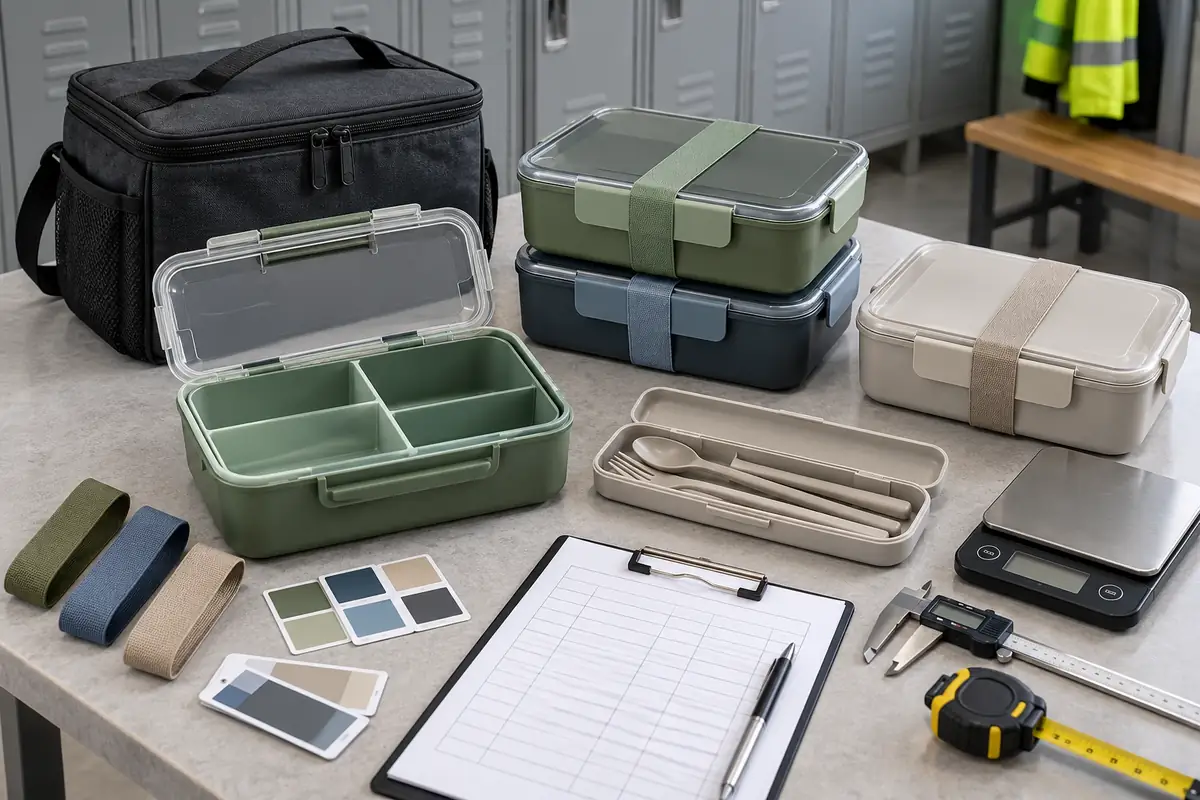
Meal identification can use controlled color families, bands, lid inserts, molded symbols or printed labels. Choose a method that remains visible when boxes are stacked and packed. Identification placed only on the base may disappear at the moment the worker needs it.
Color should not carry the entire instruction when programs include many users, replacement parts or low-light work areas. Pair color with a position, simple molded marker or documented packing sequence where appropriate. Any printed information should survive the agreed cleaning and abrasion conditions.
If the employer or catering operator assigns sets to individuals, define the variable-data route. A removable card pocket, write-on field or label area may be easier to update than permanently printing a person’s name. The selected method should not create an uncontrolled food-contact surface or interfere with washing.
Use revision control for identification parts. A color band that looks decorative can still be a critical operational component if it distinguishes meal windows. List it in the bill of materials and define what happens when one band is lost.
How shift worker meal containers should be differentiated
Differentiate at least the complete closed container, not only its removable divider. Check recognition from the top, side and packed position. The buyer should be able to explain the system in one short instruction without relying on a catalog photograph.
A sample review should include deliberate mixing of lids, seals and bands. If incorrect combinations appear to fit, decide whether the design needs keying, clearer markings or a controlled packing process. Errors discovered during a desktop layout are less expensive than errors found after thousands of sets are assembled.
Engineer the bag around weight, access and contact points
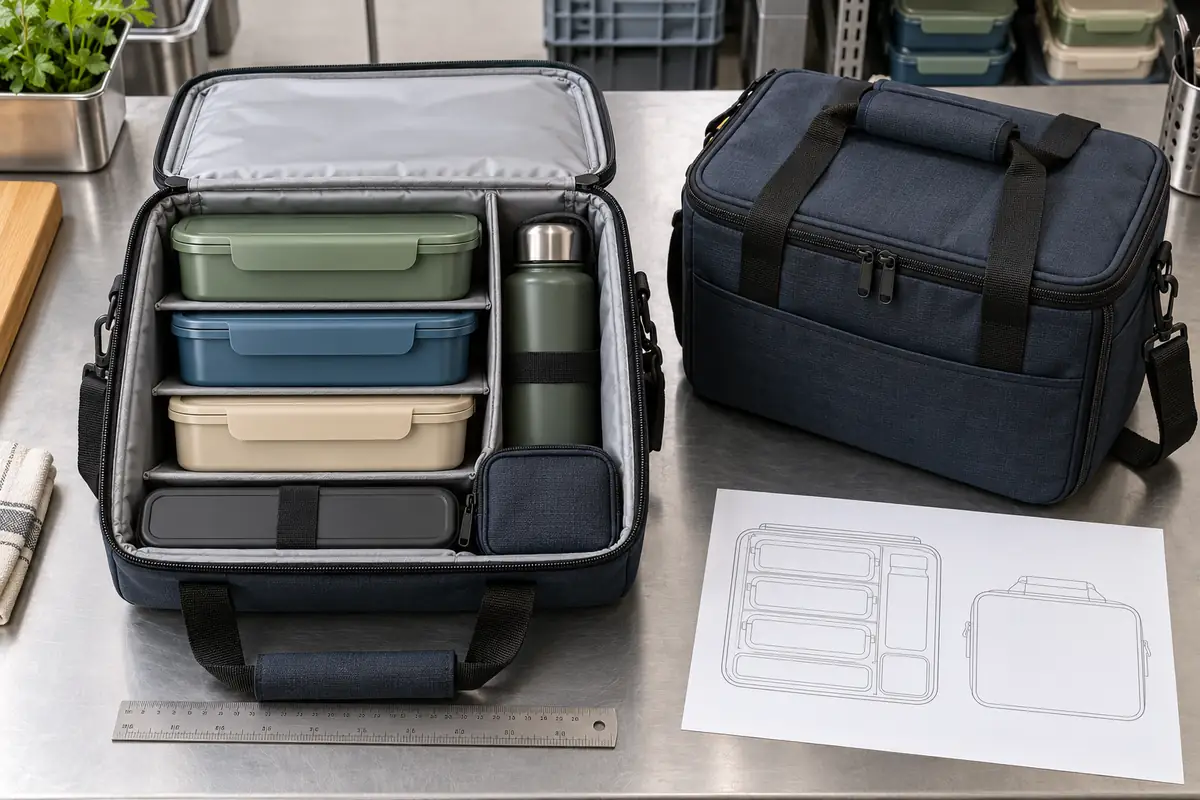
Add the filled weight assumptions for all three meals, the bottle, utensils and accessories. Handle length, attachment points and bag balance should be reviewed under the intended load. A bag that feels acceptable with empty samples can behave differently when fully loaded.
Define the packing sequence and opening sequence. The first meal may need to be accessible without unloading later containers, or the program may prefer a strict top-to-bottom order. The zipper path, lid clearance and divider placement should support that decision.
Control hard-to-hard contact between containers, cutlery cases and bottles. Thin separators, sleeves or fixed channels can reduce movement and visible scuffing, but they consume interior space. Specify whether separators are removable, washable and included in the replacement plan.
Measure both internal usable dimensions and external packed dimensions. Padded walls, seams and zipper corners can reduce space compared with the nominal bag outline. Confirm the closed bag with the real container stack rather than approving bag and boxes in separate meetings.
Review temporary storage after one meal has been removed. Empty space can allow remaining components to tip or rattle, while used containers may need a defined return position. A three-meal pack-out should work at the start, middle and end of the shift.
Specify every food-contact and carry component
List the material for each base, lid, divider, seal, cup, utensil, case, band and bag layer. A broad phrase such as “food-grade material” does not identify the resin, metal, silicone or composite route needed for quotation and evidence review. The bill of materials should connect components to drawings and color references.
Select materials around the intended food, temperature, cleaning and handling conditions. PP, stainless steel, silicone, titanium and composite materials can support different product strategies, but the final decision belongs to the actual SKU and market. Do not transfer a test result or use claim from one construction to another without review.
When several boxes share a lid or seal platform, document the interface dimensions and material pairing. Small changes in shrinkage, stiffness or sealing geometry can affect fit across the system. A common appearance does not guarantee interchangeability.
The carry bag needs its own component map for outer fabric, lining, insulation, foam, zipper, webbing, thread and labels. If the buyer proposes a recycled-content or other material claim, match the wording to the verified component and supply route. The tableware and bag evidence packages should remain linked but clearly scoped.
Confirm destination-market requirements before final artwork. The supplier can assemble available material and product records, while the importer or brand should decide which evidence supports the marketed configuration. Keep claim approval separate from basic product sample approval so open compliance questions remain visible.
Approve the system in stages instead of one oversized sample
Start with a configuration sample using existing components where possible. Its purpose is to test meal allocation, stack geometry, identification and bag volume before custom colors or structures are locked. Mark every temporary component so it is not mistaken for a production approval.
Move next to material and color samples. Review physical swatches or molded parts under consistent light and record Pantone or other agreed references where relevant. Color approval should cover the relationship among three meal units, bands, utensils and the carry bag rather than treating every part independently.
The functional sample should use the intended lids, seals, latches, dividers and carry interfaces. Check dimensions, closure engagement, stack stability, retrieval, loaded handling, cleaning access and the packing sequence. If a new mold or structural modification is involved, record which features remain provisional.
Finally, create a golden sample and revision file for the complete kit. Include the bill of materials, component quantities, approved artwork, color references, packing diagram, inspection points and open limitations. Production release should refer to this combined package rather than separate email approvals.
Buyer checklist for a three meal bento system
| Check | Question | Why It Matters |
|---|---|---|
| Shift map | When and where are the three meals packed, stored, opened and returned? | Connects product decisions to the actual operating sequence. |
| Meal formats | What food types and separation needs apply to each window? | Prevents one generic box from controlling all three meals without review. |
| Architecture | Are boxes identical, shared-footprint or fully specialized? | Determines component count, replacement logic and bag geometry. |
| Usable capacity | How is volume defined and verified on each finished base? | Catalog capacity may not reflect dividers, corners and practical fill level. |
| Identification | Can users recognize each meal from the packed and closed position? | Reduces handling confusion during short breaks. |
| Lid control | Can similar lids or seals be mixed incorrectly? | Interchange assumptions can create fit or replacement problems. |
| Cutlery plan | Is one set shared or does every meal receive utensils? | Changes count, packed weight, cleaning and loss exposure. |
| Loaded weight | What load should handles, straps and the bag base support? | Empty-sample handling does not represent the working system. |
| Pack-out | What is the approved order for boxes, bottle and accessories? | Controls access, movement, closure and training instructions. |
| Mid-shift state | What happens after one or two containers are removed or used? | The system must remain organized throughout the shift. |
| Cleaning | Who washes each part, and can all corners and removable pieces be accessed? | Extra components add operational work as well as function. |
| Replacement parts | Which lids, seals, bands and cups can be reordered separately? | Supports program continuity without replacing complete sets. |
| Evidence | Do material and product records match every selected component and market? | Generic documentation may not cover the final assembled SKU. |
| Golden sample | Is one complete packed kit retained under a controlled revision? | Gives production and inspection one reference for the full system. |
Build the RFQ around one complete worker allocation
Ask suppliers to quote one full allocation, not an assortment of unrelated unit prices. The RFQ should state the quantity of each base, lid, seal, divider, cup, utensil, case, band, bottle option, bag part and packaging item. This makes omissions visible and supports a true packed-cost comparison.
Separate the standard, modified and new-tooling routes. An existing box family may solve most requirements, while a custom divider, identification band or bag insert closes the remaining gap. Buyers can then compare development risk and lead-time factors without assuming that every part needs a new mold.
Request sample timing and production timing separately. A configuration sample built from existing parts answers different questions from a tooled sample in final material and color. The quotation should identify what each stage proves and which decisions must be made before the next stage.
Include the destination market, required evidence review, branding locations and retail or distribution packaging. A workplace program shipped in bulk cartons has a different pack-out from a private-label kit sold individually. The external packaging plan should be selected after the complete system dimensions are confirmed.
Frequently asked B2B questions about three-meal systems
Should all three meal boxes use the same capacity?
Not automatically. Identical boxes simplify component control, but meal formats and portions may differ. Compare operational simplicity with usable capacity, stack height and food-separation needs before standardizing.
Is one cutlery set practical for a full shift?
It can be when the buyer’s operating procedure supports storage and cleaning between uses. If that route is unclear, separate utensils may reduce cross-use handling but will increase component count and packed weight.
Can identical lids be shared across different-depth bases?
They can only when the selected design is engineered and approved as an interchangeable platform. Verify dimensions, engagement, seals and replacement coding on finished samples rather than assuming a similar outline will fit.
How should the three meals be identified?
Use a method visible on closed and packed containers, such as controlled colors, bands, molded markers or labels. Review durability, washing, replacement and the risk of mixing parts before approving the identification system.
What should buyers send for an accurate quotation?
Send shift timing, food formats, target capacities, user count, material preference, bag limits, destination market, quantity, branding, packaging and required delivery window. Mark mandatory constraints and acceptable alternatives so suppliers can propose comparable configurations.
Conclusion: release one system, not three separate boxes
A successful three meal bento system connects shift timing, meal-specific capacity, component architecture, visible identification, loaded handling, bag pack-out, materials, evidence, cleaning and replacement planning. Each container must work independently, while the full kit must remain practical before, during and after the shift. That combined release is what makes supplier quotations and production inspection comparable.
Send the intended shift scenario, food formats, approximate capacities, carry constraints, quantity, destination market, branding and packaging target for review. Naike Tableware can then assess existing component routes, configurable options and the technical details that need sample confirmation.