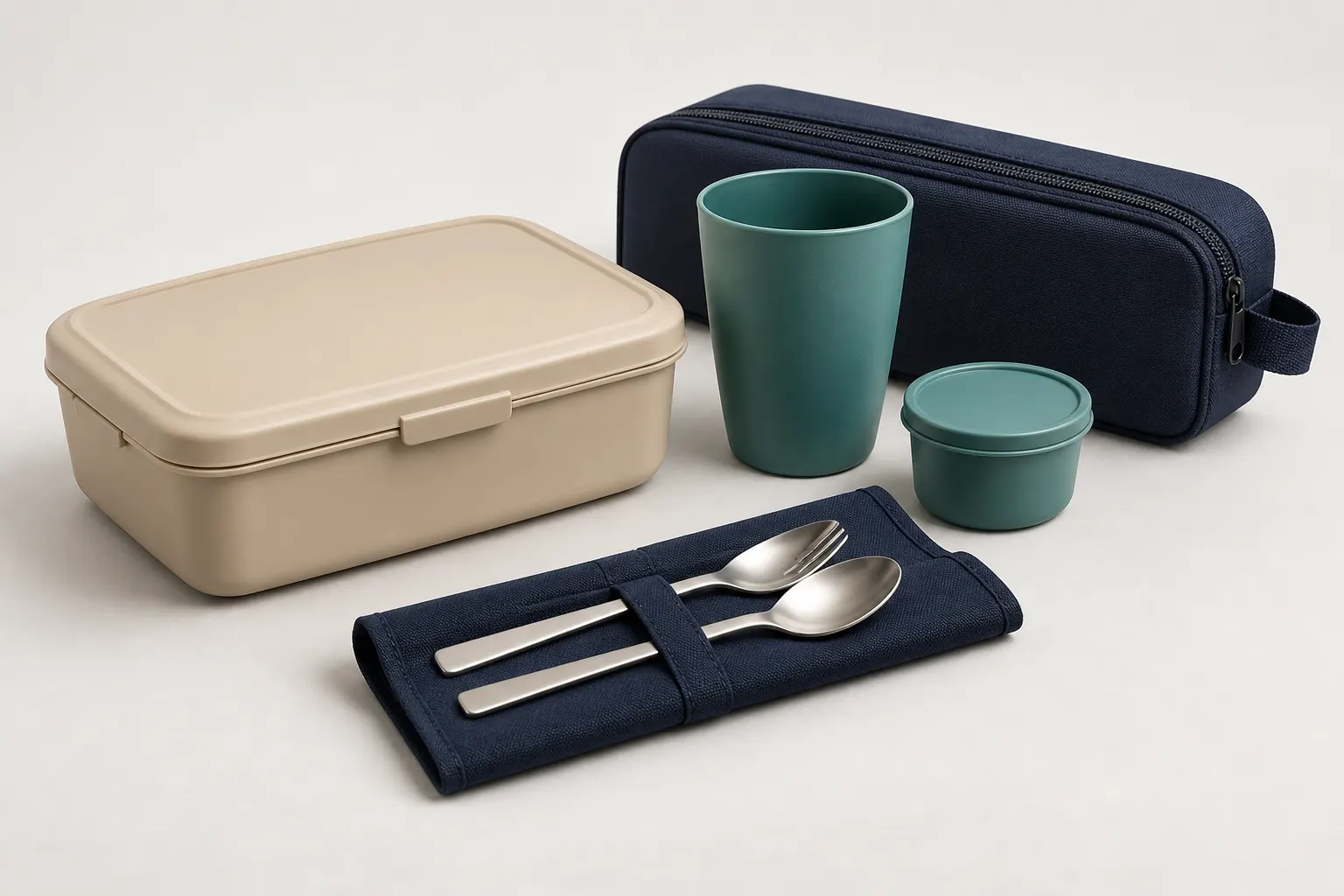
This page presents a configurable product direction for buyer discussion. Images are original visual references and do not represent a verified production SKU, customer order, test report or certification. Final dimensions, materials, compatibility, performance, tooling, MOQ, sampling and lead time are to be confirmed for the project.
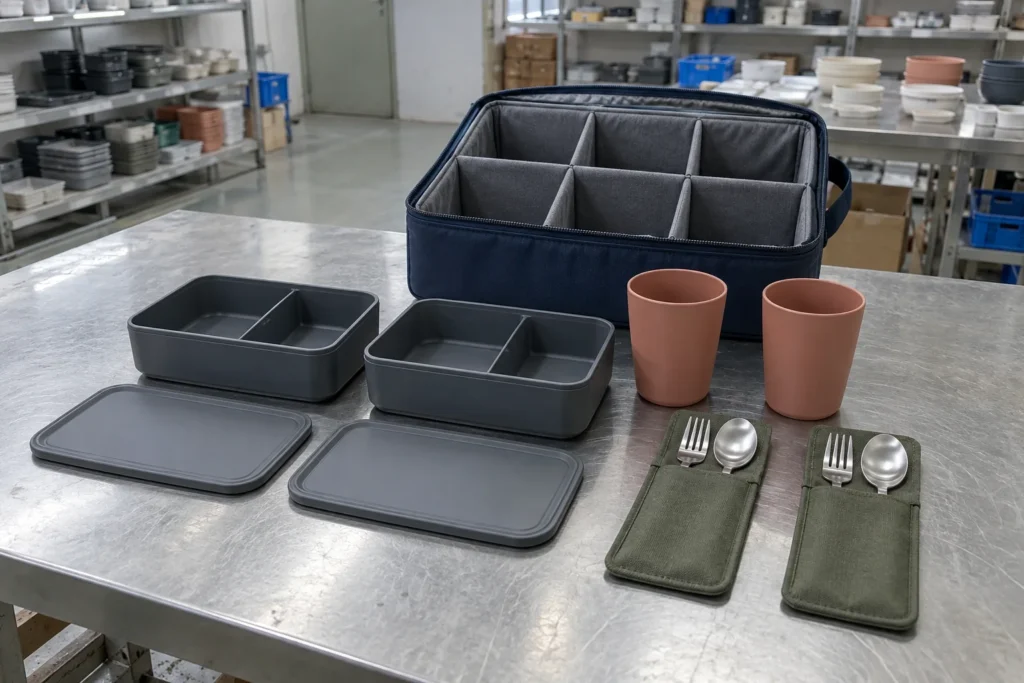
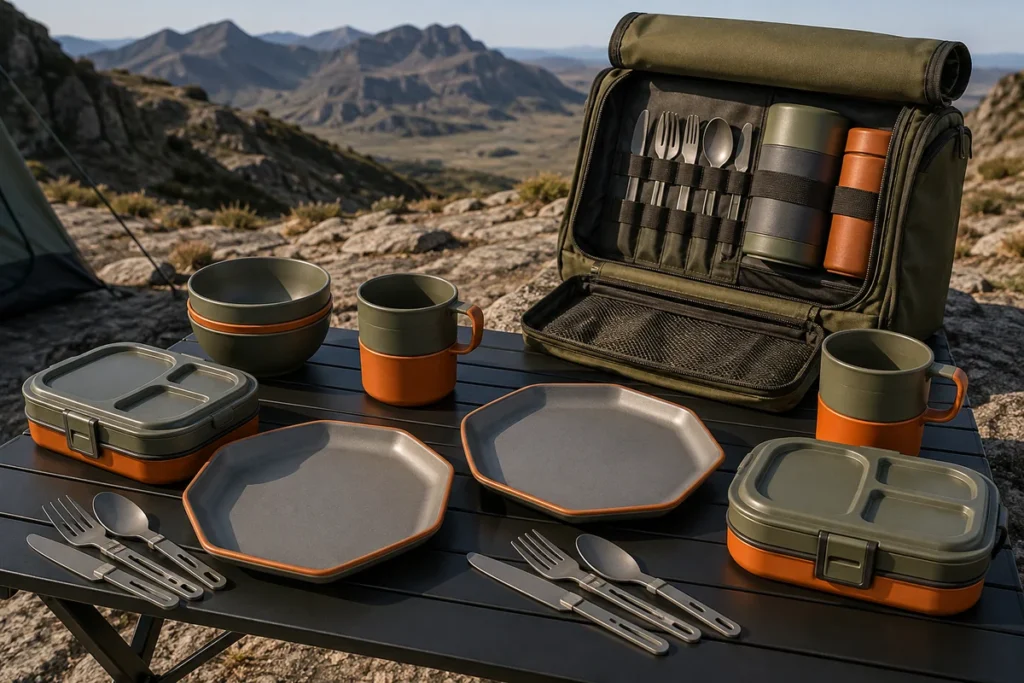
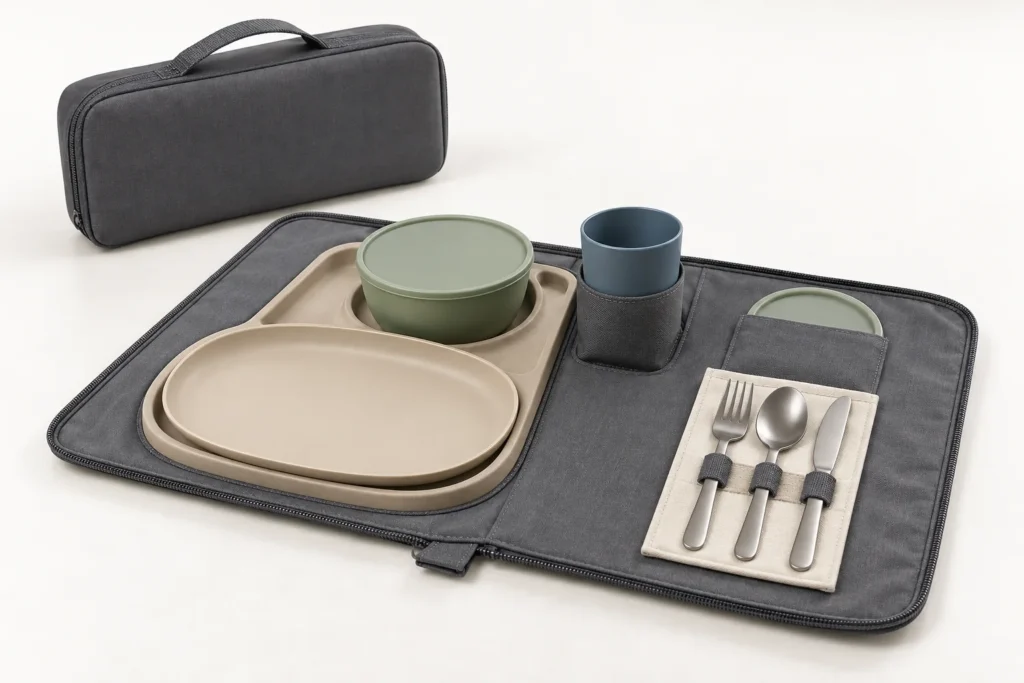
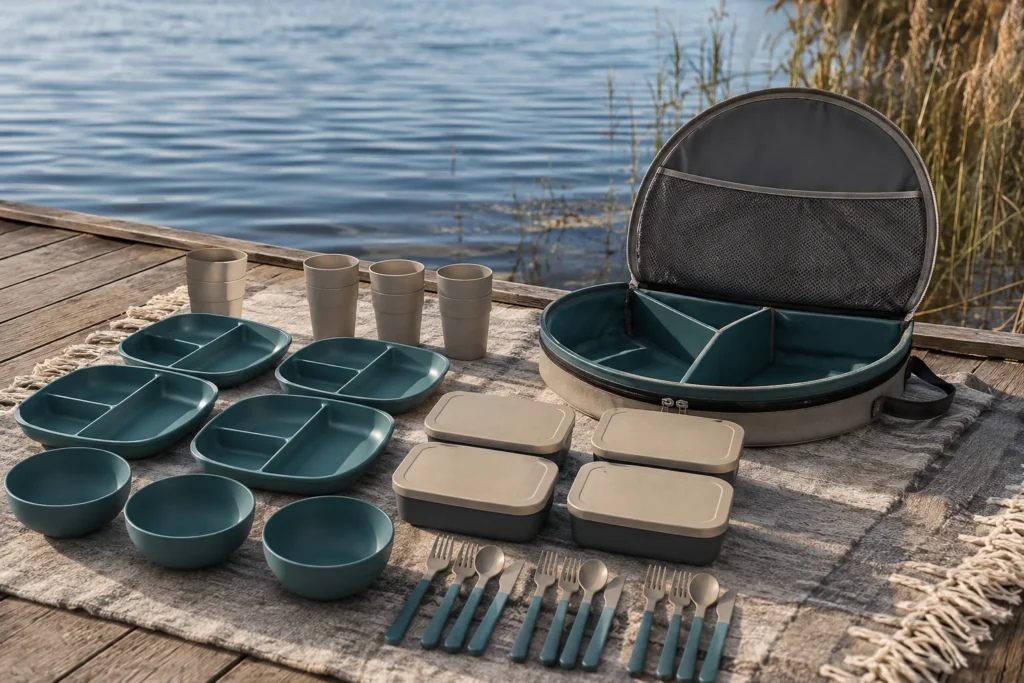
Compact Rail Meal Service Set is a configurable one-person passenger dining set built around a low-profile PP tray, teal cup and sauce pot, stainless-steel fork and spoon, roll-up textile sleeve and slim fitted carry case. The concept supports rail, coach, crew and charter-service discussions where table space, packing order and collection flow matter.
Product Contents
Compact Rail Meal Service Set Applications
The concept is designed for one passenger in reserved-seat, premium carriage, sleeper, charter, coach or crew-meal programs. The compact rail meal service set should be matched to the operator’s actual menu, table and collection route. It can be discussed as an essential service set or a fuller presentation route. No universal leak, temperature, microwave, dishwasher or durability claim is made before the final construction and use conditions are verified.
One passenger or crew member.
Rail, coach, charter, sleeper and crew meals.
PP tray and lid, cup, sauce pot, fork, spoon, roll sleeve and fitted case.
Control fit, service sequence, return handling and brand surfaces.
Compact Rail Meal Service Set Configuration
The proposed core is the low-profile rectangular tray and protected cutlery. The cup, sauce pot, sleeve and case can be specified as required, optional or replaceable modules. Every compact rail meal service set variant needs its own controlled component list. Every substitution changes the packed dimensions, balance, cleaning route, packaging and inspection reference. Compatibility to be confirmed by project sample and drawing.
Tray, lid and protected cutlery.
Add cup and sauce pot for the confirmed menu.
Add sleeve, fitted case and presentation packaging.
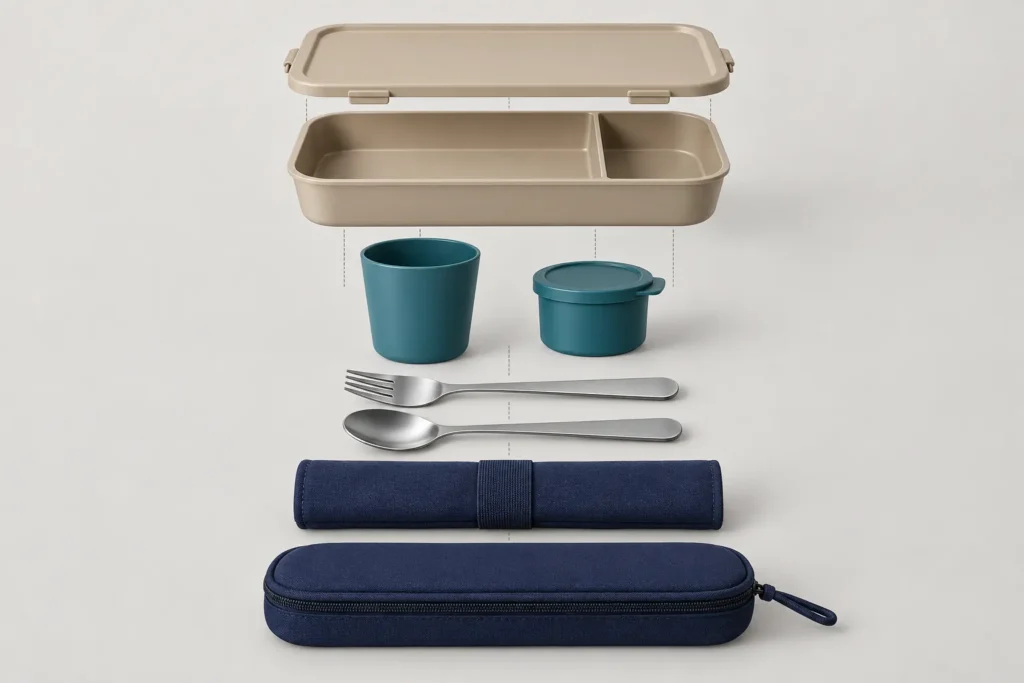
Before Packing → Packed → Carrying
The approved bill of materials controls the packing sequence. Before packing, confirm each tray, lid, cup, pot, utensil, sleeve and case. When packed, place every item in its fitted position without forcing walls, hinges or zippers. During carrying and service, close, move, open, arrange, collect and repack the complete system, then record the accepted compact rail meal service set sequence.
Product Parameters and Packed Size
| Primary product | Low-profile rectangular passenger meal tray with rounded corners and snap lid. |
|---|---|
| Proposed materials | Food-grade PP components, stainless-steel cutlery and textile sleeve/case; exact grades to be confirmed. |
| Packed size | To be confirmed for the project after final configuration and case approval. |
| Weight and volume | To be confirmed from the approved physical sample and packing method. |
| Stackability / nesting | Alignment, lid clearance, contact surfaces and stability to be confirmed by sample and drawing. |
| Carry layout | Fitted tray bay and dedicated accessory positions; geometry to be confirmed. |
Carry Bag Internal Layout
The slim navy case is proposed with a fitted main bay for the closed tray and separate positions for the cup, sauce pot and rolled utensil sleeve. Develop the case around approved component dimensions. Review zipper clearance, handle attachment, textile and lining specifications, component movement, cleaning route, access sequence and packaging protection.
Materials for the Compact Rail Meal Service Set
PP is proposed for molded food-contact shapes and coordinated color; stainless steel for reusable cutlery; and textile construction for the sleeve and case. The compact rail meal service set material schedule must identify each part separately. Exact resin, additives, color, steel grade, fabric composition, coatings and construction remain subject to confirmation. Any recycled-content statement requires applicable documentation for the final material and supply chain.
Food-contact and functional evidence must apply to the exact selected SKU, intended use and destination market. Buyers can review the FDA food-contact substances overview and European Commission food-contact materials framework when defining the project evidence list.
Logo Pantone and Packaging Customization
Potential decoration routes include printing or molded marks on PP, laser marking on stainless steel, a woven or printed textile label and graphics on a paper sleeve or carton. A compact rail meal service set branding plan should map the decoration method to every approved surface. Feasibility and durability depend on the selected surface and process. Pantone direction requires physical approval because plastic, textile, steel and paper display color differently.
Packaging can be reviewed as a blank kraft carton, paper sleeve, molded-pulp insert or service-specific pack. Final artwork, barcode, instructions and market information are to be confirmed. Trial the packaging with the final configuration because inserts affect external size, protection and loading efficiency.
Replaceable Components and Custom Molding
Existing components should be compared first. A different cup, pot, sleeve or case can be reviewed where the service brief requires it, but the complete system must be revalidated. Modified geometry or new tooling can be evaluated when required capacity, stacking, closure or table-fit conditions cannot be met with available components. Tooling feasibility, cost and schedule are to be confirmed from drawings and expected volume.
MOQ Sampling and Lead Time
| MOQ | To be confirmed by configuration, color split, decoration, packaging and assembly route. |
|---|---|
| Sampling | To be confirmed after the service brief and approval stages are defined. |
| Lead time | To be confirmed after samples, testing, quantity, packaging and shipping plan are approved. |
| Custom tooling | Reviewed after drawings and expected volume are available. |
Quality Inspection and SKU-Level Compliance
Potential inspection points include dimensions, visual condition, lid fit, stacking, accessory count, case layout, zipper and handle operation, logo position, color reference, packaging and packed-set verification. The compact rail meal service set inspection plan must follow the approved design and intended use. Functional and food-contact tests should be chosen for the exact final SKU and market.
The accepted sample, drawings, bill of materials, artwork, packing instruction and evidence list should share one revision. Unknown fields remain “To be confirmed for the project” until documented approval.
Buyer FAQ
Can the configuration be changed?
Yes. Required, optional and replaceable components can be reviewed, with compatibility confirmed by sample and drawing.
Are packed dimensions and weight confirmed?
They are to be confirmed after the final components and case layout are approved.
Can colors and packaging be customized?
Color, logo and packaging routes can be reviewed against the selected materials and process, subject to sample approval.
What are the MOQ and lead time?
They are confirmed after configuration, decoration, packaging, testing and quantity are defined.
Read How to Specify Reusable Rail Meal Kits for Passenger Service, compare Portable Dining Sets, review Set Engineering and check Food-Grade PP.
Build a Similar Set
Share the route, menu, required components, table and cart limits, material direction, cleaning process, branding, packaging, quantity, markets and schedule. The B2B team will identify existing-component and project-development routes.
Open the Project Inquiry