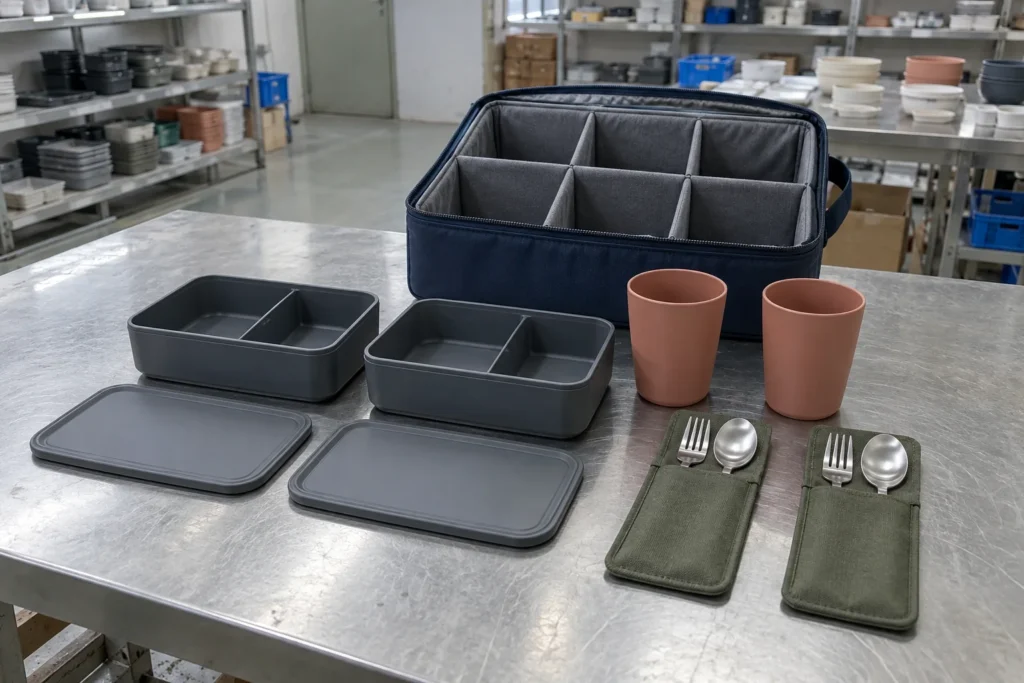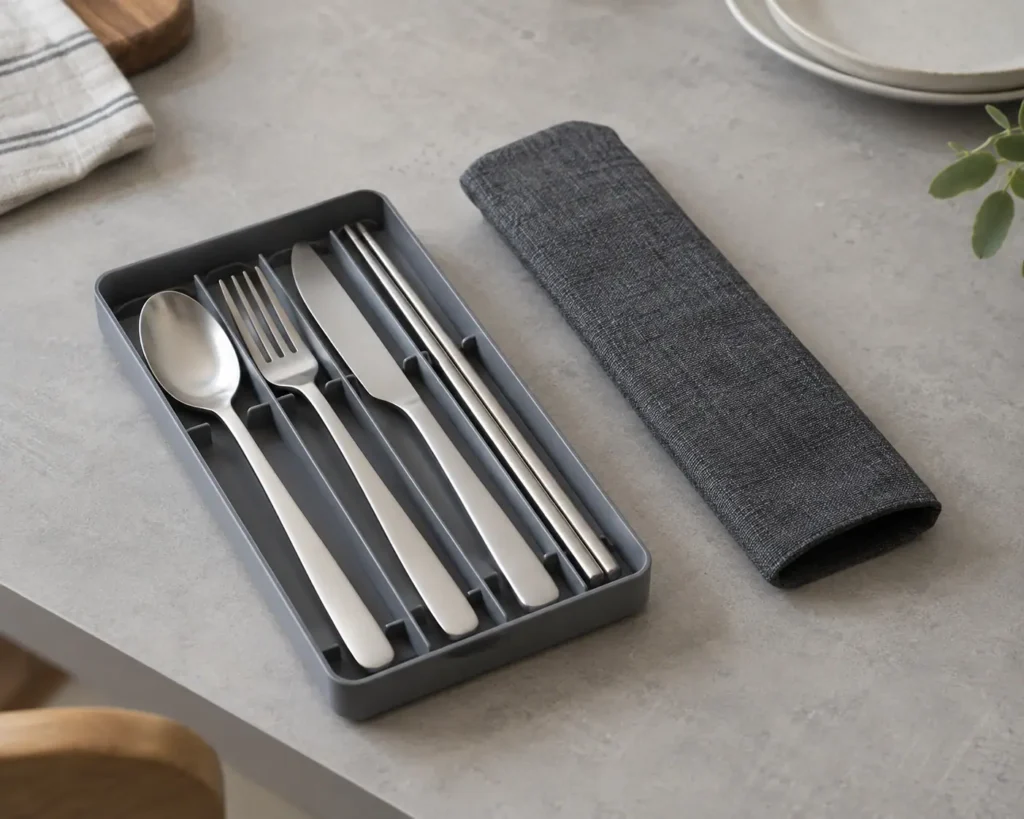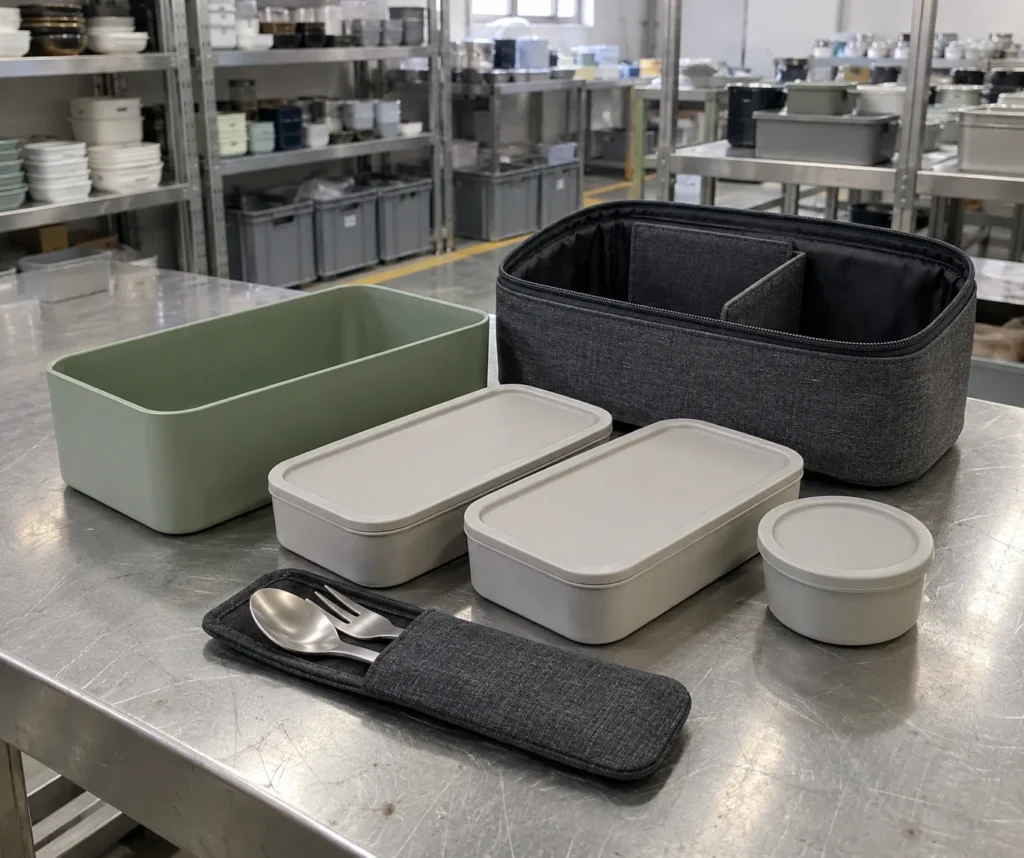
This page presents a configurable product direction for buyer discussion. Images are original visual references and do not represent a verified production SKU, resort order, test report or certification. Final dimensions, materials, compatibility, performance, tooling, MOQ, sampling and lead time are to be confirmed for the project.
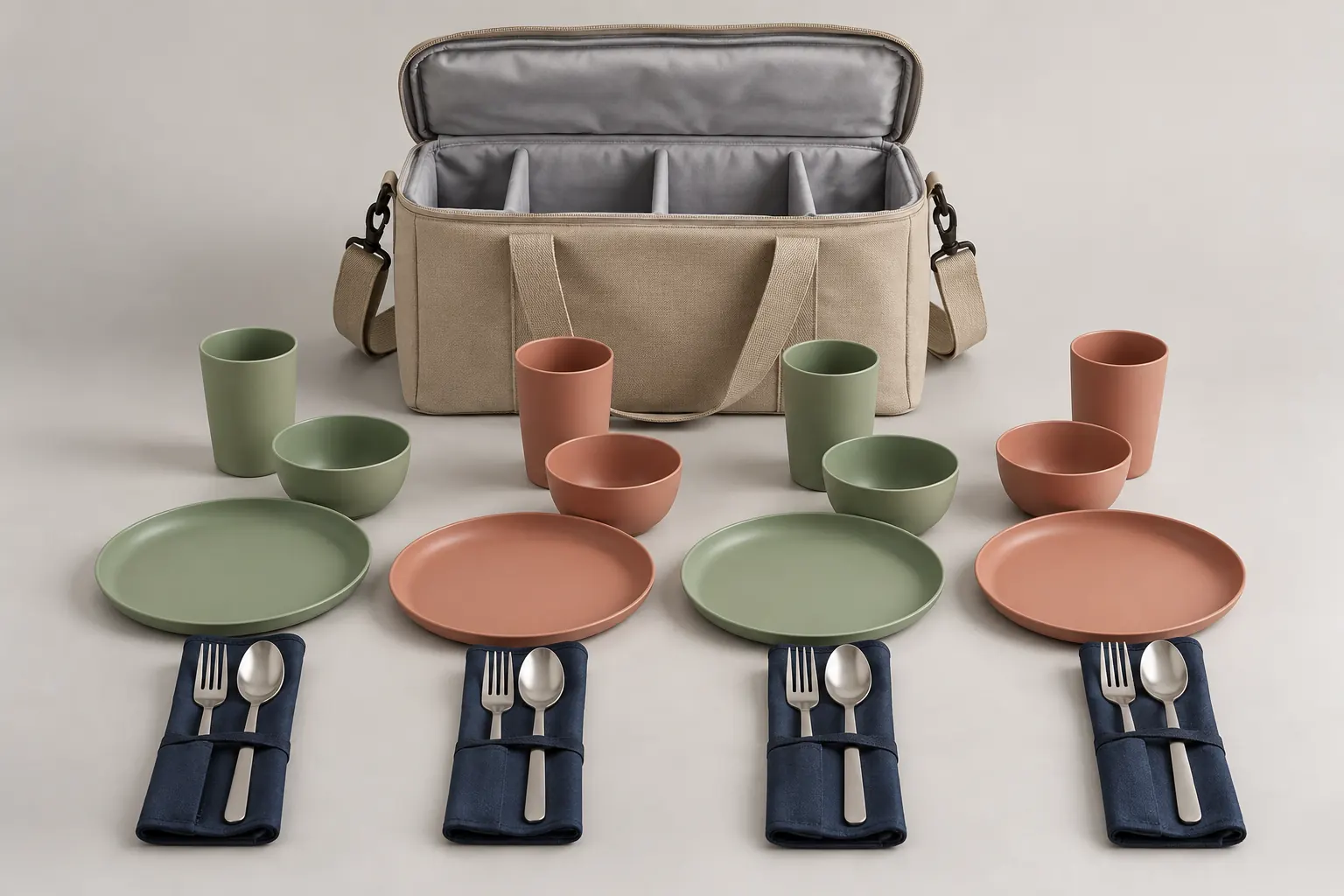
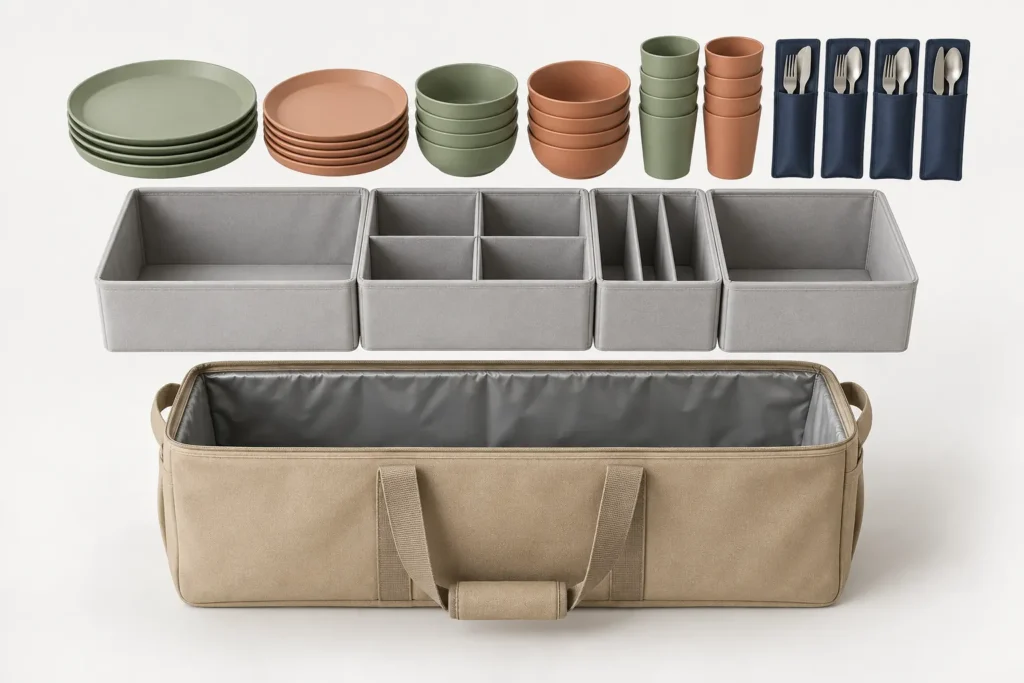
Resort Guest Picnic Kit is a configurable four-person reusable dining system for hotel and resort lending programs. The concept combines alternating sage and terracotta PP plates, bowls and cups, stainless-steel fork-and-spoon pairs, navy textile utensil sleeves and a sand-beige insulated tote with removable light-gray dividers. It is organized around controlled issue, guest carrying, return inspection and component replacement.
Product Contents
Resort Guest Picnic Kit Applications
The resort guest picnic kit is designed for hotel gardens, beach areas, villa terraces, family reservations, curated picnics and other controlled guest-use zones. The complete route should be approved by the resort, including where staff issue and receive the set. No universal claim is made for leak resistance, hot-food holding, dishwasher use, microwave use, freezer use or outdoor exposure before the final materials and conditions are verified.
Four guests in a controlled resort lending program.
Garden, beach, terrace, villa and reserved picnic service.
Four plates, four bowls, four cups, four fork-and-spoon pairs, four sleeves, removable dividers and one tote.
Control nesting, component count, return inspection and brand surfaces.
Resort Guest Picnic Kit Set Configuration
The proposed core includes four complete place settings. Plates, bowls and cups alternate muted sage and soft terracotta to support visual sorting. Each stainless fork-and-spoon pair is protected by a navy sleeve. The insulated tote uses removable light-gray dividers so the resort guest picnic kit can be packed to an approved reference.
Components may be treated as required, optional or replaceable only after the buyer approves the bill of materials. Changes to plate depth, bowl profile, cup shape, utensil length, sleeve construction or divider position can change nesting, pack balance and inspection. Compatibility is to be confirmed by project sample and drawing.
Before Packing → Packed → Carrying
Before packing, staff compare every component with the controlled resort guest picnic kit inventory. Plates and bowls are nested by approved order, cups occupy their assigned divider bays and protected utensils remain separate from food-contact surfaces. When packed, the tote should close without forcing tableware, dividers or zippers. Carrying comfort, balance and handle loading are to be confirmed with the final physical sample.
Packed Size Weight Volume and Nesting
| Packed length × width × height | To be confirmed after final component and tote approval |
|---|---|
| Net set weight | To be confirmed for the project |
| Gross packed weight | To be confirmed with packaging |
| Packed volume | To be calculated from approved external dimensions |
| Stackability / nesting | To be validated with molded samples and the final color/material route |
Nesting is a system relationship rather than a general product claim. Rim geometry, taper, wall thickness, utensil length and divider clearance affect the result. The resort guest picnic kit should be tested in the exact packing order the operating team will use.
Insulated Tote Internal Layout
The sand-beige tote concept uses a light-gray lining and removable dividers for plate, bowl, cup and utensil zones. Final insulation construction, food-contact separation, seam finish, cleaning route, zipper, handles, shoulder strap, pocket and divider attachment are to be confirmed. A buyer should approve the empty tote, loaded tote and returned-used-set workflow separately.
Materials for the Resort Guest Picnic Kit
PP is proposed for the molded plates, bowls and cups; stainless steel for reusable cutlery; and textile construction for sleeves, dividers and the insulated tote. The resort guest picnic kit material schedule must identify every part. Exact resin, additives, color, steel grade, fabric composition, insulation, coating, thread, zipper and hardware remain subject to project confirmation.
Food-contact and functional evidence must apply to the selected SKU, intended use and destination market. Buyers can review the FDA food-contact substances overview and European Commission food-contact materials framework when preparing the evidence list. These resources do not certify the concept.
Logo Pantone and Packaging Customization
Potential branding routes include printing or molded marks on PP, laser marks on stainless steel, woven or printed labels on sleeves and tote, blank kraft belly bands, hangtags and cartons. A resort guest picnic kit branding plan should map each mark to the chosen material and cleaning exposure. Pantone direction requires physical approval because plastic, textile, metal and paper render color differently.
Packaging can be reviewed as a kraft carton, paper band, protective insert or service-specific transport pack. Artwork, barcode, language, guest instructions and market information are to be confirmed. Trial packaging with the final nested kit because dividers and protection affect external size and loading efficiency.
Replaceable Components and Program Continuity
Plates, bowls, cups, utensils, sleeves and dividers can be reviewed as replacement SKUs. Availability depends on the final molds, colors, materials and production route. The buyer should define acceptable color variation between production batches and decide whether a replacement part or full set is required when a component changes.
Quality Inspection and SKU-Level Compliance
Potential inspection points include dimensions, visual condition, rim and edge quality, nesting, component count, divider fit, zipper and handle operation, logo position, color reference, packaging and packed-set verification. The resort guest picnic kit inspection plan must follow the approved sample and intended use. Functional and food-contact tests should be selected for the exact final SKU and destination market.
The accepted sample, drawings, bill of materials, artwork, packing instruction, replacement list and evidence schedule should share controlled revisions. Unknown fields remain “To be confirmed for the project” until documented approval.
MOQ Sampling and Lead Time
MOQ depends on existing components versus new tooling, color requirements, decoration, tote construction, packaging, testing, assembly and total quantity. Sampling may involve component confirmation, color samples, decorated samples, loaded-tote review and final approval. Sampling time and production lead time are to be confirmed after the specification is complete.
Buyer FAQ
Can the configuration change?
Yes, with a controlled bill of materials and packing reference for every approved variant.
Are packed dimensions and weight confirmed?
They are to be confirmed after final components, dividers and tote construction are approved.
Can colors logos and packaging be customized?
Potential routes can be reviewed for the chosen materials and processes, subject to physical approval.
What are the MOQ sampling time and lead time?
All are confirmed after configuration, tooling, decoration, packaging, testing and quantity are defined.
Read How to Plan a Resort Picnic Kit Lending Program, compare the existing PP Family Picnic Dinnerware Set, browse Travel & Picnic Sets and review Food-Grade PP.
Build a Similar Set
Share the guest profile, use areas, component list, carrying limits, issue and return process, cleaning route, materials, branding, packaging, quantity, markets and schedule. The B2B team will identify existing-component and development routes.
Request a Program Quote